

Alternatives to Tuning Engines
Tuning Engines is a unified platform to securely govern, optimize, and deploy any AI model through one API with transparent pricing.
Explore 20 alternatives to Tuning Engines. Compare features, pricing, and find the best fit for your needs.
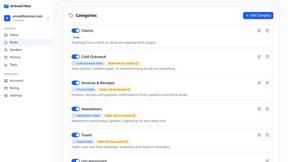
AI Email Filter
AI Email Filter sorts incoming mail into folders using plain-language prompts you write. Works with any IMAP mailbox; bring your own LLM if you want.
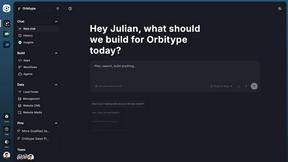
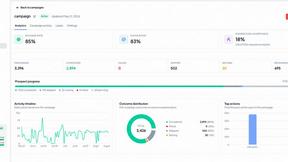
OutreachGenie
Plan and review LinkedIn prospecting, outreach flows, post previews, and campaign progress in one workspace.


benchmark.directory
An independent directory of 146 AI tools. Every listing was paid for, set up and used on real work. Nobody can buy a place or a score.

saasgrow.ai
A curated directory of SaaS growth tools. Every listing is screened and scored before it goes live — no pay-to-rank, no filler.

Tools Network
ools Network is a curated directory of the best AI tools across 25+ categories. Compare ratings, pricing, and features to find the right one, fast.



Postqued
Schedule and publish social content across 10 platforms with one dashboard, API, and MCP built for teams and AI agents.
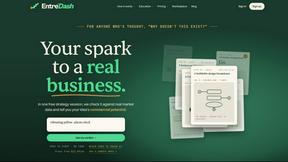
EntreDash
Turn daily annoyances and raw ideas into inventions, products, and businesses. EntreDash provides a virual personal advisory board using AI automation

Wisegrid
Spreadsheet-native work management with AI formulas, dashboards, automation, reporting, and project views for growing teams.

Groniz
Run your social media on autopilot with AI agents. Post & schedule to 32+ networks from Claude Code, Codex, or Console.
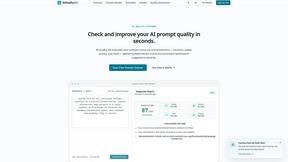
AIQualityHQ
AIQualityHQ is a free browser-based tool that instantly evaluates your AI prompts for structure, safety, privacy, and accuracy.

EchoLeads AI
EchoLeads AI uses intelligent voice agents to automate cold calling, qualify leads, and schedule appointments across phone, SMS, and WhatsApp.

Creatorlanehq
Creator Lane is the official Meta toolkit that turns your Instagram comments into sales with auto-DMs, a storefront, and payouts.

TenderLead
TenderLead scores UK public sector tenders against your firm so you only spend time on the right ones.
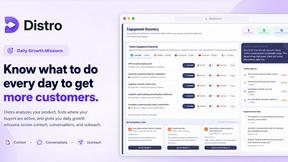
Distro
Distro is an AI operator that maps buyer intent, drafts in your voice, and turns questions into content you approve.

Polymarket Trading Bot For Crypto
A Polymarket trading bot that automates a proven arbitrage and hedging strategy on 5-15 minute Bitcoin Up or Down markets.

About Tuning Engines Alternatives
When evaluating tools for managing AI systems at scale, you are likely looking at platforms that provide structure and control over your machine learning workflows. Tuning Engines is a unified AI control and governance layer designed for teams building production intelligence. It falls into the category of automation and orchestration, specifically focusing on bringing together the full AI lifecycle—from inference and model routing to fine-tuning, evaluations, and policy enforcement—into a single governed platform. This helps organizations move beyond isolated experiments into a secure, observable, and cost-aware operating layer. Users commonly look for alternatives to Tuning Engines for several practical reasons. Pricing structures can vary widely, and some teams may need a more budget-friendly entry point or a different billing model. Feature requirements also differ; a smaller team might not need the full depth of governance controls, while a larger enterprise might require deeper integration with legacy systems. When choosing an alternative, you should prioritize what matters most for your specific workflow. Look for a solution that offers the right balance of developer-friendly APIs, robust admin controls like role-based access and audit trails, and the ability to connect with your existing tools and agents. The goal is to find a platform that scales with your team without adding unnecessary complexity.
FAQs about Tuning Engines Alternatives
What is Tuning Engines?
Tuning Engines is a unified AI control and governance layer for teams building production intelligence. It acts as an orchestrator that brings together the full AI lifecycle, including inference, model routing, fine-tuning, evaluations, and policy enforcement, into a single governed platform. It is designed to help organizations move beyond isolated AI experiments into a secure, observable, and cost-aware operating layer where models can be trained, evaluated, and used by agents and tools at scale.
Who is Tuning Engines for?
Tuning Engines is built for both developers and administrators working with AI systems in production environments. Developers benefit from OpenAI-compatible APIs, CLI workflows, MCP access, and integrations with coding agents like Claude Code, Cursor, and VS Code. Administrators gain controls for production such as role-based access, per-key budgets, rate limits, guardrails, policy-as-code, auditability, and team management, making it ideal for organizations that need a secure and governable AI operating layer.
Is Tuning Engines free?
The provided information does not specify whether Tuning Engines offers a free tier. However, it is described as a production-grade platform with billing controls, usage analytics, and API key management, which typically indicates a paid or subscription-based model for commercial use. For specific pricing details, including any free options or trials, you would need to consult the official Tuning Engines documentation or contact their sales team directly.
What are the main features of Tuning Engines?
Tuning Engines offers a comprehensive set of features for the full AI lifecycle, including inference, model routing, fallback policies, fine-tuning jobs, and dataset management. It also provides governance controls like role-based access, per-key budgets, rate limits, guardrails, policy-as-code with AGT YAML, and runtime traces for auditability. Additionally, it supports developer workflows with OpenAI-compatible APIs, CLI tools, MCP access, and integrations with popular coding agents and IDEs.