

Alternatives to act101
act101 lets AI agents refactor and port code across 163 languages using one native Rust binary that keeps your code on your machine.
Explore 20 alternatives to act101. Compare features, pricing, and find the best fit for your needs.

AppScreen
App Store screenshots, designed as one panorama. Lay out all your slides on one continuous canvas in your browser. Free to start, Pro is $9 once.
Egmatic
No-code 2D game editor: visual node logic, drag-and-drop scenes, live preview. Exports to Windows, macOS, Linux, Android, iOS, Web.

Product Launch Checklist
A free launch checklist for SaaS, apps, AI tools and more. Every step says why it matters and when you can skip it.

layahost
Moderation, routing, intent and scoring for any text over one Jev-compatible API, hosted in the EU.

laya.tools
A free directory of 950+ projects built on Laya, the open-source decision model. Updated daily.
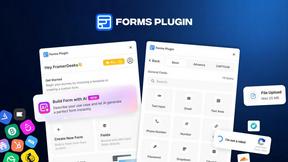
Forms Plugin
The #1 Native Form Builder Plugin for Framer - No Code, No Embeds, No External Platforms.

Video2URL
Turn videos, images, and files into secure direct links for sharing, embedding, and automated workflows.

AppGrowthKit
The Growth Toolkit for App Store & Google Play. Create the store assets that make your app feel ready to ship.

Firma.dev
Pay-as-you-go e-signature API and no-code sending. €0.049 per envelope, no monthly minimums, legally valid in 55+ countries.

Ornold
Ornold MCP lets AI agents control Chromium and antidetect browsers: click, type, read screens, record workflows, replay profiles without scripts.
Cachely
Managed remote build cache for Nx, Lerna, Turbo, Gradle, and Bazel. Reuse artifacts across CI and developer machines.
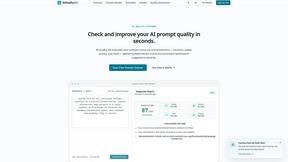
AIQualityHQ
AIQualityHQ is a free browser-based tool that instantly evaluates your AI prompts for structure, safety, privacy, and accuracy.
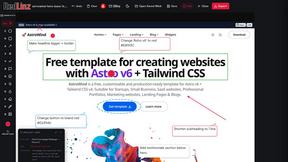
RedLinz
RedLinz turns screenshots into AI prompts by letting you circle and annotate exactly what you want an LLM to change.
About act101 Alternatives
act101 is a specialized developer tool that belongs to the category of AI-powered code transformation utilities. It focuses on enabling coding agents to refactor and port source code across an extensive range of 163 programming languages. The tool achieves this by leveraging a deep understanding of language grammars, offering 183 refactoring operations, 30 codebase analyzers, and 8 porting operations, all accessible through a built-in Model Context Protocol (MCP) server for integration with popular agent platforms like Claude Code, Cursor, Codex, and OpenCode. Users commonly seek alternatives to act101 for several foundational reasons. Pricing models can be a primary factor, as while act101 is free for personal use, teams or enterprises may require different licensing structures or budget constraints. Feature gaps or platform compatibility issues also drive the search, as some users may need specific refactoring operations not covered by the 183 available, or they may work with languages outside the 163 supported grammars. Additionally, users might look for alternatives that offer a different user interface, tighter integration with their existing workflow, or a more straightforward, less resource-intensive approach to code transformation. When evaluating alternatives, you should focus on the breadth of language support, the depth of available refactoring and porting operations, the ease of integration with your chosen AI coding agent, and the clarity of the pricing model for your specific use case.
FAQs about act101 Alternatives
What is act101?
act101 is a developer tool designed for AI coding agents that enables automated code refactoring and porting across 163 programming languages. It provides a suite of 183 abstract syntax tree (AST) refactor operations, 30 codebase analyzers, and 8 porting operations, all accessible through a built-in Model Context Protocol (MCP) server. This allows agents like Claude Code, Cursor, Codex, and OpenCode to perform complex code transformations that go beyond simple text-based find-and-replace.
Who is act101 for?
act101 is built for software developers and engineers who use AI-powered coding agents to accelerate their workflow. It is particularly useful for those working on large codebases that require systematic refactoring, such as renaming variables across hundreds of files, restructuring code patterns, or migrating projects from one programming language to another. The tool is designed for professionals who need a reliable, grammar-aware approach to code transformation, rather than relying on manual edits or less accurate text-based tools.
Is act101 free?
Yes, act101 is free for personal use. This makes it accessible for individual developers, hobbyists, and students who want to experiment with AI-driven code refactoring and porting. While the provided information does not specify pricing for commercial or team use, the free personal tier allows you to explore its full range of features, including all 163 grammars, 183 refactor operations, and 8 porting operations, without any upfront cost.
What are the main features of act101?
The main features of act101 include support for 163 programming language grammars, 183 AST-based refactor operations, 30 codebase analyzers, and 8 porting operations. These capabilities are exposed to AI agents through a built-in MCP server, enabling seamless integration with tools like Claude Code, Cursor, Codex, and OpenCode. Examples of its functionality include refactoring Python code, porting C code to Rust, and porting Ruby code to Elixir, all performed by the AI agent with a deep understanding of each language's syntax and structure.