Nani vs Patrivox
Side-by-side comparison to help you choose the right product.

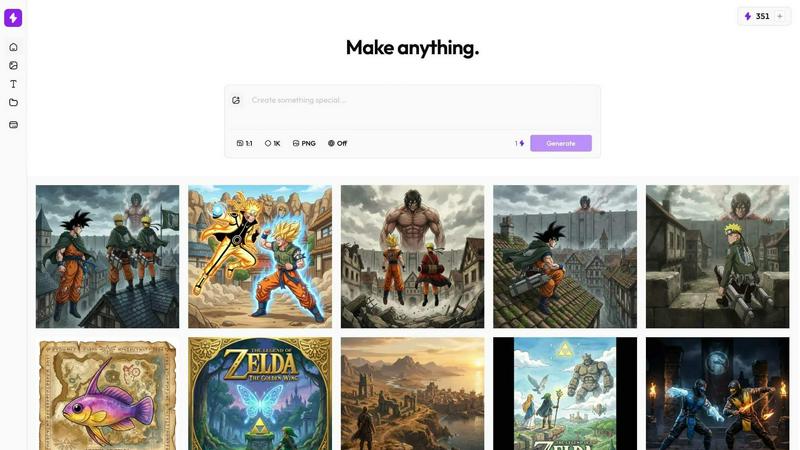
Nani streamlines AI image generation by organizing prompts and images into reusable sets for effortless creativity.
Last updated: February 26, 2026

Patrivox
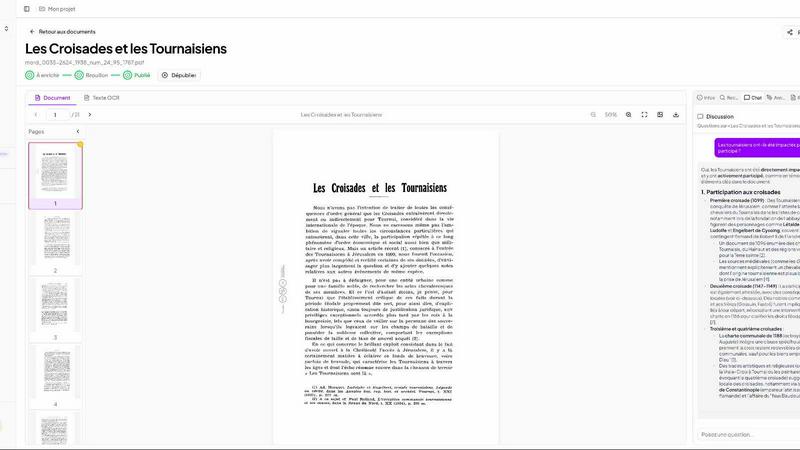
Patrivox uses AI to digitize and make your entire document archive searchable in minutes.
Last updated: March 4, 2026
Visual Comparison
Nani
Patrivox
Feature Comparison
Nani
Easy Image Generation
Nani simplifies the image creation process by allowing users to type a prompt and hit generate. This straightforward approach enables users to create stunning images in seconds, with customizable aspect ratios and resolutions. The absence of a visible watermark ensures that the generated images maintain a professional quality.
Reusable Prompt Sets
One of Nani's standout features is the ability to group images and save prompts as reusable sets. This functionality helps users maintain consistent characters, styles, and workflows across all their generations. By organizing prompts in this manner, Nani reduces redundancy and enhances creative output.
Efficient Organization Tools
Nani offers robust organization features, allowing users to create folders, filter by favorites, and bulk-select images. This helps keep the user's library tidy and manageable, accommodating workflows that may scale over time. With these tools, users can maintain an orderly workspace, facilitating easier access to their creative assets.
Seamless Sharing and Collaboration
Nani supports a seamless workflow by allowing users to drag and drop images as references. Users can share their creations through public links, enabling others to recreate their work in their own accounts. This collaborative feature fosters creativity and helps users engage with peers in the creative community.
Patrivox
Next-Generation AI Processing
Patrivox begins with powerful, automated processing. Users can drag and drop hundreds of PDF files at once. The platform then uses Mistral AI's advanced OCR technology to accurately extract text from every page. Beyond simple text reading, it automatically performs Named Entity Recognition (NER), identifying and tagging key information such as people, locations, organizations, and dates. This foundational step enriches document metadata and prepares the entire collection for intelligent exploration without any manual data entry.
Intelligent Search and AI Chat
Once processed, finding information becomes straightforward. The platform offers a full-text search across the entire document collection that understands and tolerates typing mistakes. For more complex inquiries, users can ask questions using natural language in an AI chat interface. The AI analyzes the documents and provides precise answers, always citing the source pages it used. This feature transforms the archive from a pile of documents into a conversational knowledge partner that delivers specific results in seconds.
Interactive Knowledge Graph
This feature visually reveals the hidden connections within your archives. Every person, place, and organization identified by the AI is plotted as a node in an interactive graph. Users can navigate from one entity to another, seeing which documents mention them and how different entities are linked together. This "Constellation" view allows for the discovery of relationships and patterns that would be nearly impossible to find through manual reading, offering a new perspective on historical and archival data.
Sovereign European Hosting
Security and data sovereignty are built into Patrivox's foundation. The service is hosted exclusively on servers within the European Union. It is designed to be fully compliant with the General Data Protection Regulation (GDPR) by default. This ensures that sensitive archival documents and the data extracted from them remain under strict European data protection laws, providing crucial peace of mind for public institutions and organizations handling historical or personal information.
Use Cases
Nani
Graphic Design Projects
Graphic designers can leverage Nani to generate multiple variations of design concepts quickly. By utilizing reusable prompt sets, they can maintain brand consistency while expediting the creative process, allowing for more time spent on refining designs.
Content Creation for Social Media
Content creators looking to produce eye-catching visuals for social media can benefit from Nani's rapid image generation. With the ability to customize aspect ratios and resolutions, creators can easily tailor images for different platforms, ensuring optimal presentation.
Artistic Exploration
Artists can use Nani as a tool for exploration and experimentation. By generating images based on diverse prompts, they can discover new styles and concepts that inspire their artwork, all while enjoying an organized library of their creations.
Educational Resources
Educators and trainers can utilize Nani to create engaging visuals for instructional materials. By quickly generating relevant images, they can enhance lesson plans, presentations, and online courses, making learning more interactive and visually appealing.
Patrivox
Municipal and City Archives
City archives can use Patrivox to digitize and organize historical records such as council deliberations, civil registers, property records, and official correspondence. The platform makes these documents instantly searchable for city employees, historians, and citizens. This improves administrative efficiency and fulfills mandates for public transparency by making civic heritage accessible online without compromising document security or data sovereignty.
Historical Societies and Associations
Historical societies often manage collections of bulletins, newsletters, photographs, and research papers. Patrivox allows them to upload these materials in bulk and create a searchable portal for their members and the public. Volunteers are freed from the burden of manual indexing, and the AI-powered knowledge graph can help researchers uncover new historical narratives and connections within the society's own collections.
Heritage Libraries and Special Collections
Libraries with special collections, rare books, or local history archives can use Patrivox to open these resources to a wider audience. Instead of fragile documents being handled physically, patrons can search the full text and ask questions of the AI. This protects the original materials while vastly improving discoverability, supporting academic research and fostering greater public engagement with cultural heritage.
Religious and Parish Archives
Dioceses, parishes, and other religious institutions hold valuable historical documents like parish registers, baptismal records, and ecclesiastical correspondence. Patrivox provides a secure way to preserve and index these often delicate documents. It enables genealogists and historians to search for names, dates, and locations efficiently, while the institution maintains full control over access and data management within a European legal framework.
Overview
About Nani
Nani is an innovative workflow tool specifically designed to enhance the experience of AI image generation. It is particularly valuable for artists, designers, and content creators who engage in regular and repetitive work. Unlike many existing AI image tools that cater to one-off creations, Nani streamlines the entire image generation process. Users can avoid the hassle of rewriting prompts and sifting through endless image feeds, which can often be time-consuming and inefficient. Built on Google's cutting-edge Nano Banana Pro (Gemini), Nani offers a comprehensive solution that supercharges creative workflows. With its user-friendly interface, users can quickly generate stunning images while utilizing unique features like reusable prompt sets and organized folders to maintain consistency and efficiency. By reducing administrative burdens, Nani allows users to focus more on their creativity and less on the logistics of image generation.
About Patrivox
Patrivox is a foundational software platform designed to solve a basic but critical problem: making large collections of scanned documents useful. Many organizations, such as municipal archives, historical societies, and heritage libraries, possess vast archives of PDFs that are effectively locked away. These documents are difficult to search through, requiring hours of manual effort to find specific information. Patrivox addresses this by applying modern artificial intelligence to transform these static files into a dynamic, searchable knowledge base. At its core, the platform uses advanced Optical Character Recognition (OCR) powered by Mistral AI to read every word in your documents. It then goes further by automatically identifying and linking key entities like people, places, organizations, and dates. This process creates a connected web of information, or a knowledge graph, from your archives. The main value proposition is simple: it turns inaccessible data into easily searchable knowledge. Users can find information in seconds using a typo-tolerant search or by asking questions in plain language, with the AI providing answers directly sourced from the documents. Built and hosted entirely in Europe, Patrivox is a sovereign solution focused on empowering organizations to preserve and open their heritage to researchers, teams, and the public.
Frequently Asked Questions
Nani FAQ
What is Nani?
Nani is a workflow tool designed for AI image generation, focusing on enhancing the experience for those involved in regular and repetitive creative work. It streamlines the process, allowing users to generate images quickly and efficiently.
How does Nani enhance productivity?
Nani enhances productivity by offering features like reusable prompt sets and efficient organization tools. Users can save time by avoiding the need to rewrite prompts and can easily manage their image library, allowing for a more focused creative process.
Is there a cost to use Nani?
Nani operates on a credit-based billing system, where users pay only for what they generate. There are no subscriptions or commitments, making it a flexible option for those who want to control their spending on image generation.
Can I collaborate with others using Nani?
Yes, Nani facilitates collaboration by allowing users to share their creations through public links. Others can then recreate these images in their own accounts, promoting creativity and collaboration within the user community.
Patrivox FAQ
How does Patrivox handle different languages in documents?
Patrivox utilizes Mistral AI, which is proficient in multiple European languages. The Optical Character Recognition (OCR) and entity recognition features are designed to work effectively with documents in languages such as French, Dutch, German, English, and others commonly found in European archives. This multilingual capability ensures accurate text extraction and analysis for a diverse range of historical and administrative collections.
What is the "AI query" limit in the pricing plans?
An AI query is counted each time you use the natural language chat feature to ask a question about your documents. For example, asking "When was the town hall built?" or "List all documents mentioning the mayor" would each consume one query. The standard full-text search, browsing the knowledge graph, and filtering documents do not count as AI queries. Plans include a monthly allowance of these queries.
Is my data safe and private with Patrivox?
Yes. Data security and privacy are central to Patrivox. All document processing and storage occur on servers located within the European Union. The platform is built to be GDPR-native, meaning it adheres to Europe's strict data protection regulations by design. You retain full ownership of your documents and the data extracted from them, and access is controlled through secure administrator and reader accounts.
Can I collaborate with others on a Patrivox archive?
Absolutely. Patrivox includes shared access features. You can designate multiple administrators to help manage the archive. Furthermore, you can grant "reader" access to an unlimited number of users, such as researchers, team members, or the public. This allows for controlled collaboration and makes it easy to share your newly searchable knowledge base with exactly the audience you choose.
Alternatives
Nani Alternatives
Nani is an innovative workflow tool that focuses on simplifying the AI image generation process, particularly for users who engage in repetitive creative work. It falls under the category of AI assistants, providing a robust platform for artists, designers, and content creators. Users often seek alternatives to Nani for a variety of reasons, including pricing structures, specific feature sets, or compatibility with their preferred platforms. When considering alternatives, it is essential to evaluate factors such as usability, the range of features offered, and how well the tool integrates into your existing workflow. Look for options that provide efficient prompt management, image organization, and user-friendly interfaces, as these can significantly enhance your creative process.
Patrivox Alternatives
Patrivox is a specialized SaaS platform in the content creation and automation category. It uses artificial intelligence to convert scanned documents and PDFs into a searchable digital archive. This process unlocks information trapped in paper records or image files, making it instantly accessible. Users may explore alternatives for several practical reasons. These can include budget constraints, the need for different feature sets like specific integrations, or platform requirements such as self-hosted solutions. The scale of a project or particular compliance needs can also lead organizations to evaluate other options. When considering other tools, focus on core capabilities. Essential factors include the accuracy of text recognition (OCR), the depth of search functionality, and how the system organizes extracted data. Security standards and the overall ease of use for your team are also fundamental criteria to assess.