3DAIStudio vs Patrivox
Side-by-side comparison to help you choose the right product.

3DAIStudio
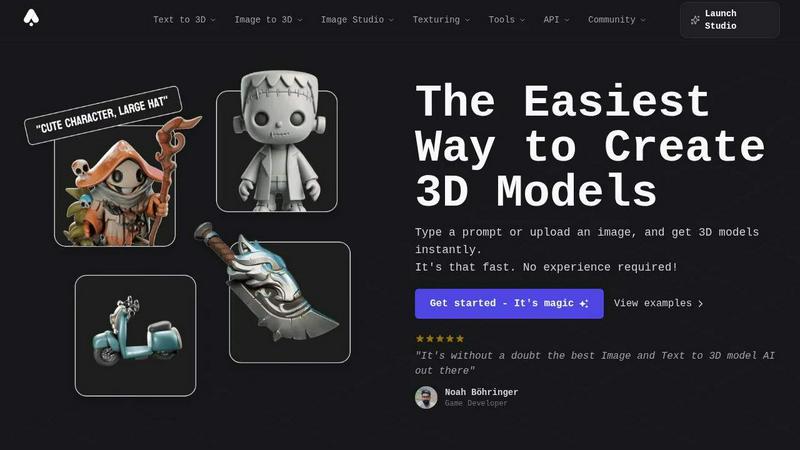
3DAIStudio instantly creates professional 3D models from your text or images, making 3D creation accessible to everyone.
Last updated: April 4, 2026

Patrivox
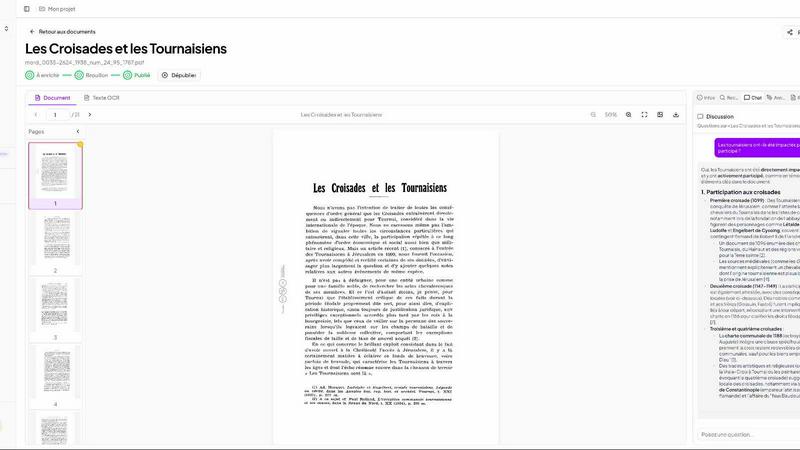
Patrivox uses AI to digitize and make your entire document archive searchable in minutes.
Last updated: March 4, 2026
Visual Comparison
3DAIStudio
Patrivox
Feature Comparison
3DAIStudio
Text to 3D
This feature allows you to create a complete 3D model by simply typing a descriptive text prompt. You describe the object, character, or scene you envision in plain language, and the AI interprets your words to generate a textured 3D asset. For example, typing "a realistic fantasy orc warrior, muscular, wearing rugged armor and wielding a curved sword" will produce a corresponding 3D model ready for use. This removes the barrier of needing technical modeling skills and allows for rapid prototyping and idea exploration directly from your imagination.
Image to 3D
With this tool, you can upload any 2D image, sketch, or illustration and transform it into a three-dimensional model. The AI analyzes the shapes, perspectives, and details within your uploaded image to construct a 3D representation. This is particularly useful for converting concept art, product photos, or hand-drawn sketches into workable 3D assets instantly, bridging the gap between 2D design and 3D implementation without manual modeling.
AI Texturing
After a model is generated, the AI Texturing feature applies realistic, high-quality textures and materials to its surface. You can guide this process with text prompts to describe the desired material, such as "rusty metal" or "glossy plastic," or paint details directly onto the model. It generates PBR (Physically Based Rendering) materials, which are the standard for achieving realistic lighting and surfaces in modern game engines and rendering software.
Quad-Remesh
This is a vital optimization tool that automatically improves the topology, or mesh structure, of your generated 3D model. It creates a clean, quad-based mesh (made of four-sided polygons) which is essential for professional animation, deformation, and efficient rendering. The tool can also reduce polygon count and generate Levels of Detail (LODs), preparing your asset for production use in engines like Unity and Unreal without requiring manual, time-consuming retopology work.
Patrivox
Next-Generation AI Processing
Patrivox begins with powerful, automated processing. Users can drag and drop hundreds of PDF files at once. The platform then uses Mistral AI's advanced OCR technology to accurately extract text from every page. Beyond simple text reading, it automatically performs Named Entity Recognition (NER), identifying and tagging key information such as people, locations, organizations, and dates. This foundational step enriches document metadata and prepares the entire collection for intelligent exploration without any manual data entry.
Intelligent Search and AI Chat
Once processed, finding information becomes straightforward. The platform offers a full-text search across the entire document collection that understands and tolerates typing mistakes. For more complex inquiries, users can ask questions using natural language in an AI chat interface. The AI analyzes the documents and provides precise answers, always citing the source pages it used. This feature transforms the archive from a pile of documents into a conversational knowledge partner that delivers specific results in seconds.
Interactive Knowledge Graph
This feature visually reveals the hidden connections within your archives. Every person, place, and organization identified by the AI is plotted as a node in an interactive graph. Users can navigate from one entity to another, seeing which documents mention them and how different entities are linked together. This "Constellation" view allows for the discovery of relationships and patterns that would be nearly impossible to find through manual reading, offering a new perspective on historical and archival data.
Sovereign European Hosting
Security and data sovereignty are built into Patrivox's foundation. The service is hosted exclusively on servers within the European Union. It is designed to be fully compliant with the General Data Protection Regulation (GDPR) by default. This ensures that sensitive archival documents and the data extracted from them remain under strict European data protection laws, providing crucial peace of mind for public institutions and organizations handling historical or personal information.
Use Cases
3DAIStudio
Game Development
Game developers and studios can use 3DAIStudio to rapidly prototype characters, props, weapons, and environmental assets. By generating models from text concepts or concept art images, teams can accelerate pre-production, populate game worlds quickly, and iterate on designs faster, significantly reducing the time from idea to in-game asset and helping to meet tight development deadlines.
Film and Animation Production
In pre-visualization (previs) and animation, artists can quickly generate 3D stand-ins, background assets, and detailed props from storyboard sketches or descriptive briefs. This allows for faster scene blocking, concept validation, and asset creation for both major studios and independent filmmakers, streamlining the early stages of production.
Product Design and Prototyping
Designers can upload sketches or photos of a product idea and instantly generate a 3D model for visualization, presentation, or 3D printing. This enables rapid iteration on physical product designs, creation of marketing materials, and functional prototypes without needing advanced CAD software skills, making the design process more accessible and agile.
Education and Learning
Educators and students in fields like design, architecture, and digital arts can use the platform as a practical learning tool. It allows users to understand 3D spatial concepts by seeing their 2D drawings or descriptions come to life in three dimensions, providing a hands-on, low-barrier entry point into the world of 3D modeling and computer graphics.
Patrivox
Municipal and City Archives
City archives can use Patrivox to digitize and organize historical records such as council deliberations, civil registers, property records, and official correspondence. The platform makes these documents instantly searchable for city employees, historians, and citizens. This improves administrative efficiency and fulfills mandates for public transparency by making civic heritage accessible online without compromising document security or data sovereignty.
Historical Societies and Associations
Historical societies often manage collections of bulletins, newsletters, photographs, and research papers. Patrivox allows them to upload these materials in bulk and create a searchable portal for their members and the public. Volunteers are freed from the burden of manual indexing, and the AI-powered knowledge graph can help researchers uncover new historical narratives and connections within the society's own collections.
Heritage Libraries and Special Collections
Libraries with special collections, rare books, or local history archives can use Patrivox to open these resources to a wider audience. Instead of fragile documents being handled physically, patrons can search the full text and ask questions of the AI. This protects the original materials while vastly improving discoverability, supporting academic research and fostering greater public engagement with cultural heritage.
Religious and Parish Archives
Dioceses, parishes, and other religious institutions hold valuable historical documents like parish registers, baptismal records, and ecclesiastical correspondence. Patrivox provides a secure way to preserve and index these often delicate documents. It enables genealogists and historians to search for names, dates, and locations efficiently, while the institution maintains full control over access and data management within a European legal framework.
Overview
About 3DAIStudio
3DAIStudio is an AI-powered toolkit designed to democratize and accelerate the creation of three-dimensional (3D) assets. At its core, it solves a fundamental challenge in digital content creation: the significant time, cost, and specialized skill required to build 3D models from scratch. This platform enables users to generate custom, high-quality 3D models in seconds, using either a simple text description or a two-dimensional image as the starting point. The process is built to be intuitive, requiring no prior 3D modeling experience, which opens the door for a wide range of users. It is ideally suited for designers, game developers, filmmakers, product designers, educators, and creatives across various industries who need production-ready 3D assets. The main value proposition of 3DAIStudio lies in its ability to transform a concept into an export-ready 3D model in minutes rather than days. It provides a suite of integrated tools that handle not just model generation, but also critical post-processing steps like texturing and mesh optimization. This makes it a comprehensive solution for turning ideas into functional assets for game engines, animation software, virtual reality, 3D printing, and more, fundamentally changing the workflow for 3D content creation.
About Patrivox
Patrivox is a foundational software platform designed to solve a basic but critical problem: making large collections of scanned documents useful. Many organizations, such as municipal archives, historical societies, and heritage libraries, possess vast archives of PDFs that are effectively locked away. These documents are difficult to search through, requiring hours of manual effort to find specific information. Patrivox addresses this by applying modern artificial intelligence to transform these static files into a dynamic, searchable knowledge base. At its core, the platform uses advanced Optical Character Recognition (OCR) powered by Mistral AI to read every word in your documents. It then goes further by automatically identifying and linking key entities like people, places, organizations, and dates. This process creates a connected web of information, or a knowledge graph, from your archives. The main value proposition is simple: it turns inaccessible data into easily searchable knowledge. Users can find information in seconds using a typo-tolerant search or by asking questions in plain language, with the AI providing answers directly sourced from the documents. Built and hosted entirely in Europe, Patrivox is a sovereign solution focused on empowering organizations to preserve and open their heritage to researchers, teams, and the public.
Frequently Asked Questions
3DAIStudio FAQ
What file formats can I export my 3D models in?
3DAIStudio is designed for production-ready output, allowing you to export your generated and optimized 3D models in standard industry formats. These typically include formats like OBJ, FBX, and GLTF/GLB, which are universally compatible with major 3D software, game engines (Unity, Unreal Engine), and web frameworks like Three.js, ensuring seamless integration into your existing workflow.
Do I need any prior 3D modeling experience to use 3DAIStudio?
No, you do not need any prior 3D modeling experience. The platform is built specifically to be accessible to beginners. The core process involves typing a text prompt or uploading an image, with the AI handling the complex tasks of geometry creation, texturing, and mesh optimization. This makes it an ideal tool for anyone looking to create 3D content without learning traditional, complex modeling software.
How does the AI Texturing feature work?
The AI Texturing feature uses artificial intelligence to apply realistic materials to your 3D model's surface. You can provide a text description of the material you want (e.g., "wooden," "metallic," "fabric"), and the AI will generate a corresponding texture map. Alternatively, you may have tools to paint or select areas on the model to apply different materials, giving you control over the final look while leveraging AI for speed and quality.
Is 3DAIStudio suitable for creating commercial assets?
Yes, models created with 3DAIStudio are intended for commercial use. The platform is trusted by professionals across industries like game development, film, and product design to create assets for commercial projects. It is always recommended to review the specific Terms of Service for the latest information on licensing, usage rights, and any limitations related to the commercial use of AI-generated content.
Patrivox FAQ
How does Patrivox handle different languages in documents?
Patrivox utilizes Mistral AI, which is proficient in multiple European languages. The Optical Character Recognition (OCR) and entity recognition features are designed to work effectively with documents in languages such as French, Dutch, German, English, and others commonly found in European archives. This multilingual capability ensures accurate text extraction and analysis for a diverse range of historical and administrative collections.
What is the "AI query" limit in the pricing plans?
An AI query is counted each time you use the natural language chat feature to ask a question about your documents. For example, asking "When was the town hall built?" or "List all documents mentioning the mayor" would each consume one query. The standard full-text search, browsing the knowledge graph, and filtering documents do not count as AI queries. Plans include a monthly allowance of these queries.
Is my data safe and private with Patrivox?
Yes. Data security and privacy are central to Patrivox. All document processing and storage occur on servers located within the European Union. The platform is built to be GDPR-native, meaning it adheres to Europe's strict data protection regulations by design. You retain full ownership of your documents and the data extracted from them, and access is controlled through secure administrator and reader accounts.
Can I collaborate with others on a Patrivox archive?
Absolutely. Patrivox includes shared access features. You can designate multiple administrators to help manage the archive. Furthermore, you can grant "reader" access to an unlimited number of users, such as researchers, team members, or the public. This allows for controlled collaboration and makes it easy to share your newly searchable knowledge base with exactly the audience you choose.
Alternatives
3DAIStudio Alternatives
3DAIStudio is a tool in the content creation category that uses artificial intelligence to quickly generate three-dimensional models. Users simply provide an image or text description, and the AI produces a quality 3D asset. This technology is designed to speed up workflows for projects requiring custom 3D objects. People often explore other options for several practical reasons. Cost is a primary factor, as budgets and subscription models vary widely. Some users may need specific technical features, different export formats, or tools that integrate with their existing software platform. The search for an alternative is usually about finding the best fit for a particular project's requirements and constraints. When evaluating different services, consider the core output. Look at the quality and style of the 3D models generated, the speed of processing, and the learning curve involved. Also, assess the practical details like pricing transparency, licensing terms for the assets you create, and the reliability of the platform's performance. These foundational elements will guide you to the right tool.
Patrivox Alternatives
Patrivox is a specialized SaaS platform in the content creation and automation category. It uses artificial intelligence to convert scanned documents and PDFs into a searchable digital archive. This process unlocks information trapped in paper records or image files, making it instantly accessible. Users may explore alternatives for several practical reasons. These can include budget constraints, the need for different feature sets like specific integrations, or platform requirements such as self-hosted solutions. The scale of a project or particular compliance needs can also lead organizations to evaluate other options. When considering other tools, focus on core capabilities. Essential factors include the accuracy of text recognition (OCR), the depth of search functionality, and how the system organizes extracted data. Security standards and the overall ease of use for your team are also fundamental criteria to assess.