TrafficClaw vs Vidgo API
Side-by-side comparison to help you choose the right product.

TrafficClaw
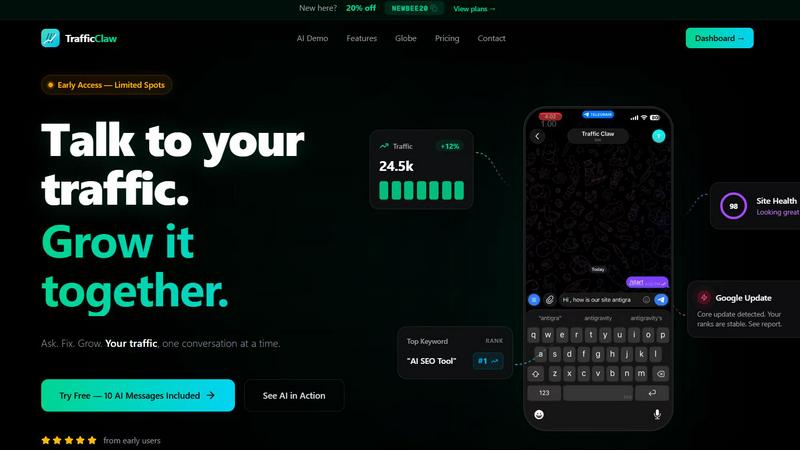
TrafficClaw transforms your SEO data into actionable insights, enabling you to ask questions and drive traffic growth effortlessly.
Last updated: April 13, 2026

Vidgo API
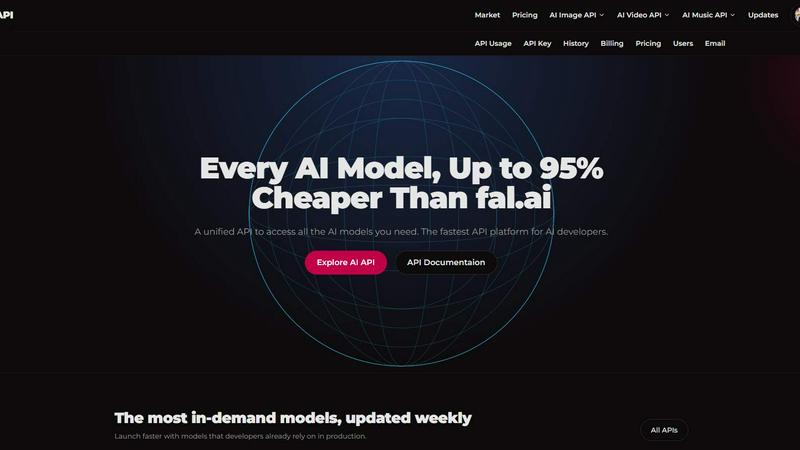
Vidgo API provides affordable access to all major AI models for developers to build faster.
Last updated: February 28, 2026
Visual Comparison
TrafficClaw
Vidgo API
Feature Comparison
TrafficClaw
AI Chat
TrafficClaw's AI chat feature allows users to interact with their analytics data in natural language. This means you can simply ask questions like "Why did my traffic drop?" and receive instant, actionable insights. The AI chat interface provides a seamless experience, delivering not just answers but also visual representations and charts that enhance understanding.
SEO Intelligence
The SEO Intelligence feature offers comprehensive analysis of keyword gaps, content decay alerts, and cannibalization detection. It also includes an AEO (Answer Engine Optimization) tool that helps optimize content for AI-driven search results. This feature enables users to fine-tune their SEO strategies based on data-driven insights rather than conjecture.
Analytics Dashboard
TrafficClaw provides a robust analytics dashboard that consolidates all essential metrics in one place. Users can easily monitor real-time visitor counts, traffic trends, bounce rates, and conversion funnels. This feature ensures that you have a holistic view of your website’s performance without the need to switch between multiple platforms.
Site Audit
The Site Audit function offers in-depth page-level assessments, including performance scores based on Core Web Vitals. This feature identifies potential issues affecting site performance and provides auto-fix suggestions, streamlining the process of optimizing your website for better user experience and SEO ranking.
Vidgo API
Unified AI Model Marketplace
Vidgo API consolidates access to numerous top-tier AI models for image, video, and music generation into one dashboard. Instead of sourcing and integrating each model from separate providers, developers can browse and select from a curated marketplace featuring models like Sora 2 for video, Seedream 4.5 for images, and Suno v5 for music. This feature provides a central hub for discovery, comparison, and management of all AI media tools needed for a project, significantly reducing initial setup time and ongoing operational complexity.
Single, Consistent API Endpoint
The platform provides one standardized REST API for all its supported AI models. This means developers use the same authentication method, similar request structures, and uniform response formats regardless of whether they are generating a video, an image, or a music track. This consistency simplifies the codebase, makes it easier for teams to onboard new developers, and reduces the learning curve associated with switching between different AI technologies and their unique technical requirements.
Production-Grade Reliability and Performance
Built for real-world application deployment, Vidgo API emphasizes operational stability. It offers high system uptime, averaging 99.9%, and maintains low average response times to ensure applications remain responsive. The platform manages the underlying infrastructure, model updates, and scalability concerns, allowing development teams to rely on a stable throughput for their user-facing features without worrying about backend AI service degradation or unexpected downtime.
Transparent and Cost-Effective Pricing
A key differentiator for Vidgo API is its clear, per-request pricing model that is structured to be highly competitive. The platform highlights direct cost savings compared to other services, often showcasing discounts on popular models. This transparent approach allows developers and businesses to accurately forecast expenses based on their API usage, avoiding complex subscription tiers or hidden fees, and enabling more predictable budgeting for AI-powered features within their applications.
Use Cases
TrafficClaw
Identifying Traffic Drops
When website traffic experiences sudden declines, TrafficClaw can quickly diagnose the underlying issues. By analyzing historical data and providing insights on factors like content cannibalization or keyword ranking shifts, users can take immediate corrective actions.
Optimizing SEO Strategy
TrafficClaw enhances SEO strategies by identifying keyword opportunities and gaps in content. Users can leverage the platform to find high-potential keywords and optimize existing content, ensuring their website remains competitive in search rankings.
Improving User Engagement
With real-time analytics and insights on visitor behavior, TrafficClaw allows users to make informed decisions about content and design changes. By understanding what keeps visitors engaged or causes them to leave, users can enhance their websites for better retention rates.
Streamlining Content Creation
The content generation tools within TrafficClaw help users create optimized blog posts and web pages effortlessly. By utilizing AI to generate schema markup and suggest internal linking strategies, users can focus on producing high-quality content that resonates with their audience.
Vidgo API
Enhancing Content Creation Platforms
Blogging platforms, social media schedulers, and marketing tool suites can integrate Vidgo API to offer users automated media generation. For instance, a user writing a blog post could generate a custom header image directly within the platform, or a social media manager could create short promotional videos from text prompts. This adds significant value by turning text-based content into engaging multimedia without requiring users to have design or video editing skills.
Powering Creative Features in Apps
Mobile and web applications focused on creativity, storytelling, or education can embed AI media generation as a core feature. An app could allow users to create soundtracks for their personal videos, generate character images for interactive stories, or produce visual aids for presentations. Vidgo API provides the backend engine for these features, enabling app developers to focus on user experience rather than the intricacies of AI model deployment.
Streamlining Prototyping and Design
Product teams, advertising agencies, and film studios can use the API for rapid prototyping and concept visualization. Instead of waiting for lengthy manual asset creation, teams can quickly generate mood boards, storyboard sequences, or sample audio tracks to validate creative directions. This accelerates the iterative design process, allows for more concepts to be explored cost-effectively, and facilitates clearer communication of ideas before committing to final production.
Automating Marketing and Advertising Material
Businesses can leverage the API to automate the production of tailored marketing assets. This includes generating multiple versions of product images for A/B testing, creating personalized video ads for different customer segments, or producing background music for promotional content. Automation at this scale allows marketing teams to produce more dynamic, relevant, and timely content while optimizing production time and resource allocation.
Overview
About TrafficClaw
TrafficClaw is an innovative AI-driven tool designed to enhance website traffic analysis and SEO performance. It simplifies the complex world of data interpretation by allowing users to ask straightforward questions about their website's analytics, thus providing actionable insights based on real-time data from Google Analytics 4 (GA4) and Search Console. Tailored for website owners, digital marketers, and SEO professionals, TrafficClaw eliminates the guesswork associated with traffic fluctuations by delivering precise answers. Instead of relying on generic advice, users can obtain tailored recommendations that address their specific challenges. The platform not only helps identify issues contributing to traffic drops but also suggests effective strategies for improvement. With its user-friendly interface and natural language processing capabilities, TrafficClaw transforms data analysis into a conversation, enabling users to engage more effectively with their website’s performance metrics.
About Vidgo API
Vidgo API is a unified platform that provides developers and businesses with streamlined access to a wide array of world-class artificial intelligence models for generating media. At its core, it simplifies a complex technological landscape by offering a single, consistent REST API endpoint for creating videos, images, and music. This approach is designed for software developers, engineering teams, startups, and established organizations that want to integrate advanced AI media generation into their applications without managing multiple vendor relationships or complex infrastructure.
The primary value of Vidgo API is built on three foundational pillars: simplicity, cost-effectiveness, and reliability. It eliminates the lengthy approval processes and fragmented integrations common with individual AI model providers, allowing teams to start building in minutes. Financially, it offers significant savings, with costs reported to be 15-95% lower than some competing platforms. For production environments, it delivers the necessary stability with high uptime, consistent performance metrics, and comprehensive documentation. Essentially, Vidgo API acts as a centralized gateway, giving developers the tools to add sophisticated creative AI capabilities to their projects efficiently and predictably.
Frequently Asked Questions
TrafficClaw FAQ
How does TrafficClaw analyze my data?
TrafficClaw connects to your Google Analytics 4 and Search Console accounts, allowing the AI to analyze your live data. It provides insights based on real-time metrics and historical trends, ensuring tailored recommendations.
Is my data secure with TrafficClaw?
Yes, TrafficClaw prioritizes user data privacy. The platform uses read-only access via Google OAuth, ensuring that your data remains secure and only accessible to you.
How quickly can I set up TrafficClaw?
Setting up TrafficClaw is quick and easy, taking approximately 30 seconds. Simply sign in with your Google account, and the platform will automatically detect your GA4 properties and Search Console sites.
Can I use TrafficClaw for multiple websites?
Yes, TrafficClaw supports multiple websites. Users can connect various Google Analytics and Search Console accounts, enabling comprehensive analysis and insights across all their online properties.
Vidgo API FAQ
How do I get started with the Vidgo API?
Getting started is a straightforward three-step process. First, you sign up for an account on the Vidgo API platform and instantly generate your unique API key; there is no waitlist or approval delay. Next, you browse the API marketplace to select the AI model that best fits your project needs, such as a video or image generation model. Finally, you integrate the API into your application using the comprehensive documentation provided, which includes code samples and guides for production-ready workflows.
What kind of AI models are available on Vidgo API?
Vidgo API provides access to a diverse and regularly updated selection of state-of-the-art AI models. This includes leading video generation models like OpenAI's Sora 2, Kling 2.6 for motion control, and Hailuo 02. For images, models like Google's Nano Banana Pro and ByteDance's Seedream 4.5 are available. It also offers advanced music generation through models like Suno v5. The marketplace is curated to include the most in-demand models that developers are already using in production environments.
How does the pricing compare to using AI models directly?
Vidgo API is structured to offer significant cost savings, often between 15% to 95% cheaper than using some alternative unified API platforms or sourcing models individually. The pricing is transparent and on a per-request basis for each model, which is detailed on the platform. This model can be more economical than managing separate billing accounts, infrastructure costs, and integration overhead for multiple standalone AI services from different providers.
Is the Vidgo API suitable for high-traffic, production applications?
Yes, Vidgo API is engineered specifically for production use. It boasts a 99.9% uptime service level agreement, low average response times, and stable throughput to handle high volumes of requests. The unified API structure ensures consistent performance, and the platform handles all backend scalability and model updates. This allows development teams to deploy AI features confidently to their end-users, knowing the underlying service is reliable and performant.
Alternatives
TrafficClaw Alternatives
TrafficClaw is an innovative tool designed to enhance SEO and analytics by allowing users to interact with their data conversationally. It belongs to the categories of AI Assistants, Analytics & Data, and SEO, leveraging advanced technology to provide actionable insights. Users often seek alternatives to TrafficClaw for various reasons, including pricing differences, feature sets that better match their specific needs, or compatibility with different platforms. When selecting an alternative, it's essential to consider factors such as user-friendliness, the comprehensiveness of analytics provided, integration capabilities with existing data sources, and the support offered for troubleshooting and guidance. A solution that aligns with your goals and delivers clear, actionable insights will ultimately help you make informed decisions about your website's performance.
Vidgo API Alternatives
Vidgo API is a unified AI media generation platform that falls into the development tools category. It provides developers with a single REST API to access a diverse range of AI models for creating video, image, and music content, aiming to simplify and accelerate multimedia project development. Users often explore alternatives for several practical reasons. These can include budget constraints, as pricing structures vary widely, or specific feature needs that a different platform might address more directly. Some may require a different model selection, specialized support for a particular use case, or simply prefer a different user interface and integration workflow. When evaluating other options, it's wise to consider core factors. Key areas to compare include the total cost of access, the specific AI models and capabilities offered, the ease of API integration and quality of documentation, and the reliability and performance metrics of the service. Focusing on these foundational elements helps in making an informed decision that aligns with your project's technical and business requirements.