MindMap AI vs Speechable
Side-by-side comparison to help you choose the right product.

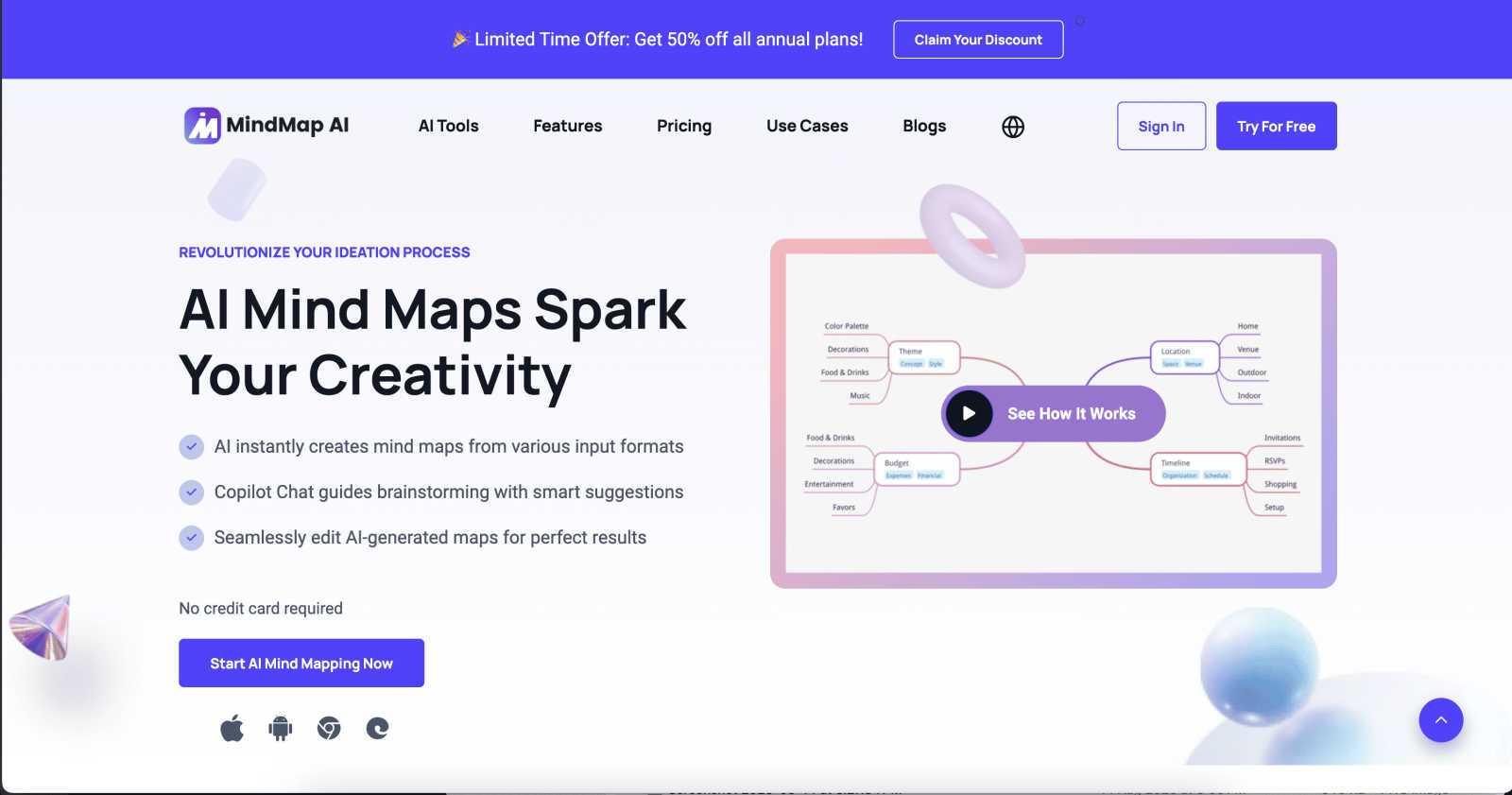
MindMap AI transforms your ideas and documents into structured, editable mind maps for clear thinking.
Last updated: March 1, 2026

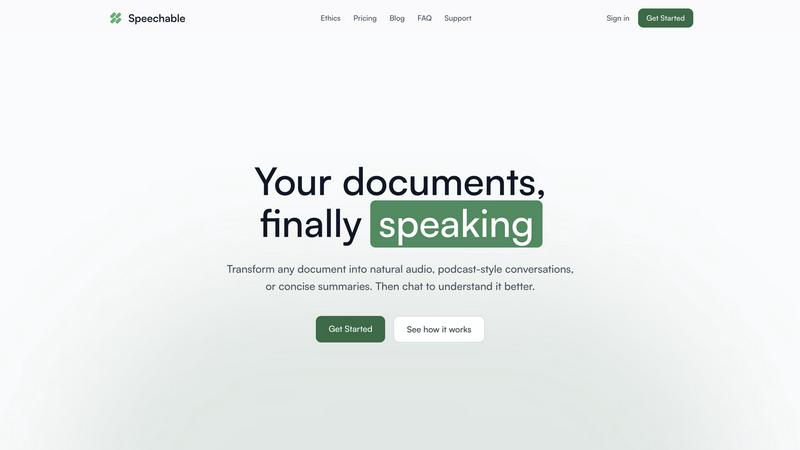
Transform documents into engaging audio, podcasts, or lectures for active learning and deeper understanding on the go.
Last updated: February 28, 2026
Visual Comparison
MindMap AI
Speechable
Feature Comparison
MindMap AI
AI Thinking Mode for Accuracy
MindMap AI uses a step-by-step reasoning engine that understands context, hierarchy, and relationships before generating your mind map. This foundational approach ensures every mindmap is structured, meaningful, and accurate on the first try, not just random branches thrown together. It respects your intent, providing a reliable starting point for your thinking.
File-to-Map Conversion
Transform any content into a clean, beautiful mind map instantly. The tool can process text, PDFs, images, audio, video, Markdown, CSV, and more. Instead of manually formatting a mind map from scratch, you can dive straight into thinking, planning, and creating, saving you significant time and effort in the initial organization phase.
MindMark Stability
This feature ensures your manual edits, custom layouts, and personal structure remain untouched. The AI co-creates alongside you without overwriting your work. You maintain full manual control, allowing you to expand, summarize, add arrows, and reorganize with confidence that your foundational design is preserved.
Flexible Layouts and Customization
Switch effortlessly between Mind Map, Org Chart, and Logic Chart views while keeping your structure perfectly aligned. Furthermore, you have total control over the look and feel with custom colors, fonts, shapes, and widgets like Priority Flags. Start with a curated theme for instant aesthetics or build your own from the ground up.
Speechable
Podcast Mode
Podcast mode transforms your document into a dynamic two-voice conversation, allowing you to choose the duration of playback—5, 10, or 15 minutes—and select your preferred language. This feature makes learning feel more like a dialogue rather than a monologue, enhancing understanding and retention.
Lecture Mode
Lecture mode presents complex ideas in a clear and straightforward manner, mimicking the style of TED talks. This feature is particularly useful for users who seek to grasp intricate subjects quickly and effectively, making it easier to absorb important information.
Eco Mode
Eco mode operates locally within your browser, which means it does not rely on cloud services. This results in up to 20 times less energy consumption compared to traditional cloud-based text-to-speech solutions. Additionally, it offers unlimited playback without any credits required, making it a sustainable choice for users.
Interactive Chat
The interactive chat feature allows users to engage with their documents by asking questions, either by typing or speaking. This functionality facilitates active learning, enabling users to clarify doubts or explore specific topics in depth, transforming passive listening into an engaging dialogue.
Use Cases
MindMap AI
Project Planning and Strategy Alignment
Teams can convert project briefs, meeting notes, and strategy documents into a central, visual map. This creates a single source of truth that clarifies objectives, tasks, and relationships. It enables collaborative refinement and ensures everyone is aligned on the foundational plan, making complex projects more manageable.
Academic Research and Study
Students and researchers can upload textbooks, research papers, or lecture notes to generate structured mind maps. This foundational technique helps in breaking down complex subjects, identifying key themes and connections, and organizing knowledge for deeper understanding, efficient study, and paper outlining.
Brainstorming and Idea Development
Individuals and groups can start with a raw text dump or audio recording of a brainstorming session. MindMap AI structures these chaotic ideas into a coherent visual framework. This allows users to see connections, build upon concepts, and refine creative or business ideas from a messy beginning to a clear, actionable plan.
Content Synthesis from Multiple Sources
Professionals can feed the tool various materials like interview transcripts, competitor analysis spreadsheets, and market reports. The AI synthesizes this disparate information into a unified mind map, revealing overarching insights and patterns that would be difficult to spot by reviewing each document in isolation.
Speechable
On-the-Go Learning
Speechable is perfect for busy individuals who want to maximize productivity during commutes, workouts, or walks. By converting documents into audio formats, users can listen to essential content anytime and anywhere, making the most of their time.
Enhanced Study Sessions
Students can leverage Speechable to convert textbooks and lecture notes into audio summaries. This auditory approach can significantly aid comprehension and retention, especially for those who struggle with traditional reading methods.
Accessibility for Diverse Learners
Speechable is designed with accessibility in mind. Students with ADHD or dyslexia can benefit from its features, allowing them to interact with text in a more manageable and engaging manner, thus promoting equal learning opportunities.
Content Creation and Research
Researchers and content creators can use Speechable to turn lengthy articles or reports into concise audio formats. This not only saves time but also allows for easier dissemination of information, making it a valuable tool for professionals in various fields.
Overview
About MindMap AI
MindMap AI is a foundational software tool designed to transform how individuals and teams organize information and think through complex problems. At its core, it is an AI-powered mind mapping application that automates the conversion of unstructured ideas and various file formats into clear, structured visual diagrams. It serves a wide audience, including business leaders, project managers, educators, students, and consultants, who need to move from chaotic information to actionable clarity. The primary value proposition of MindMap AI is its ability to save significant time and mental effort. Instead of manually building a mind map from a blank page, users can input raw materials—such as text notes, PDF documents, meeting recordings, images, or spreadsheets—and have the AI intelligently generate a coherent, editable map. This process respects the user's intent through step-by-step reasoning, ensuring the output is meaningful and accurate. The resulting map becomes a dynamic workspace where users can interact with their ideas through chat, ask questions to uncover insights, and refine strategies collaboratively. By bridging the gap between raw data and structured thought, MindMap AI provides a fundamental solution for brainstorming, knowledge organization, project planning, and strategic alignment, helping individuals and organizations work smarter and faster.
About Speechable
Speechable is an innovative tool designed to transform text-based documents into engaging audio experiences. Whether you're dealing with PDFs, web articles, ebooks, or even photos of handwritten notes, Speechable cleanly extracts the main content while eliminating distractions like footnotes, citations, and ads. This makes your documents not only accessible but also enjoyable to listen to. The primary value proposition of Speechable lies in its ability to provide users with a more immersive and interactive learning experience. By utilizing natural-sounding AI voices, users can choose from various playback modes, including podcast-style conversations and TED-style lectures. Designed for everyone—from students to educators, and individuals with learning differences—Speechable aims to make learning accessible, engaging, and efficient. This tool supports users in enhancing their comprehension while maximizing productivity, making it an essential resource for anyone who consumes large amounts of written content.
Frequently Asked Questions
MindMap AI FAQ
What is MindMap AI and how does it work?
MindMap AI is an AI-powered application that automatically converts unstructured information—like text, documents, audio, and images—into structured, editable mind maps. You provide the raw content, and its reasoning engine analyzes the context and relationships to generate a coherent visual diagram, which you can then refine and interact with.
Does the AI overwrite my manual edits?
No. A core feature called MindMark Stability ensures the AI respects your work. When you manually edit a node, change a layout, or apply custom styling, the AI will not overwrite those changes. It expands and suggests additions around your existing structure, acting as a reliable co-editor.
What file types can I convert into a mind map?
MindMap AI supports a wide range of inputs for conversion. This includes text notes, PDF documents, images, audio files, videos, Markdown files, CSV spreadsheets, JSON, XML, and HTML. This versatility allows you to start your mind map from almost any digital content you already have.
Is there a free plan available?
Yes. MindMap AI offers a free plan that includes 50 credits monthly with no credit card required. This allows you to test the core conversion and editing features to see how the tool can fit into your workflow for organizing information and thinking through problems.
Speechable FAQ
What file formats does Speechable support?
Speechable supports a variety of file formats, including PDFs, Word documents (.docx), ePubs, and web URLs, as well as photos of text. Users can easily drop their files or paste links, and Speechable will handle the conversion seamlessly.
How many voices are available?
Speechable boasts a selection of 52 natural-sounding AI voices across eight different languages. Users have the option to preview each voice and adjust playback speeds to suit their listening preferences, ensuring a personalized experience.
What is Eco mode?
Eco mode is a unique feature that allows Speechable to run text-to-speech processing locally on your device rather than in the cloud. This significantly reduces energy usage—up to 20 times less than traditional options—and provides unlimited playback without requiring credits.
Can I chat with my documents?
Yes, Speechable includes a chat feature that enables users to ask questions or request clarifications about their documents. This interaction mimics a conversation with the content, allowing for deeper understanding and exploration of the material.
Alternatives
MindMap AI Alternatives
MindMap AI is a foundational productivity tool in the category of AI-powered mind mapping software. It serves as a thinking partner, designed to transform unstructured ideas and various document formats into structured, editable visual diagrams. This process helps professionals and teams organize information, clarify complex problems, and move from raw data to actionable insight. Users may explore alternatives for several fundamental reasons. These include budget considerations, the need for specific platform compatibility, or a desire for different feature sets that align with particular workflows. Some may seek simpler tools, while others might require more advanced integrations or collaborative functions not present in their current solution. When evaluating any alternative, focus on the core principles of your work. Consider the primary problem you need to solve: is it brainstorming, project planning, or knowledge synthesis? Assess how a tool handles your typical inputs, the clarity of its output, and whether it genuinely reduces manual effort. The goal is to find a foundational solution that provides a reliable structure for your thinking process.
Speechable Alternatives
Speechable is an innovative tool that transforms any document into audio formats such as podcasts and TED-style lectures. It falls within the Education & Learning and Speech & Voice categories, catering to users seeking to better absorb and understand written content through auditory means. Many users search for alternatives to Speechable due to varying needs, such as pricing concerns, specific feature requirements, or compatibility with different platforms. When selecting an alternative, it is crucial to consider factors like the range of features offered, ease of use, accessibility options, and whether the solution aligns with your learning preferences. Additionally, evaluating pricing structure and sustainability can help ensure that the chosen tool meets both your budget and environmental considerations.