
CloneUI vs Proofapp
Side-by-side comparison to help you choose the right product.

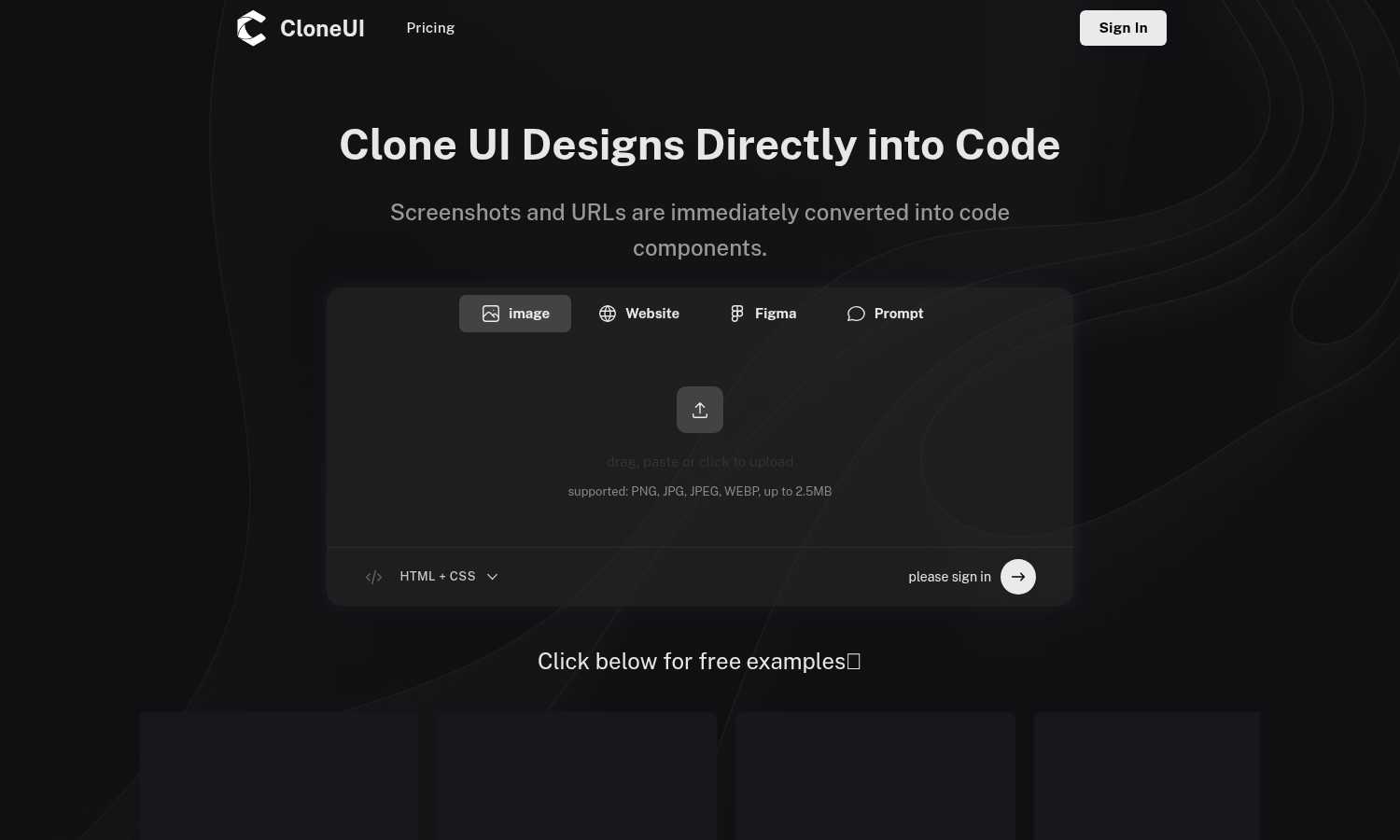
CloneUI instantly converts website screenshots and URLs into clean, production-ready HTML, CSS, and React code.
Last updated: March 1, 2026

Proofapp
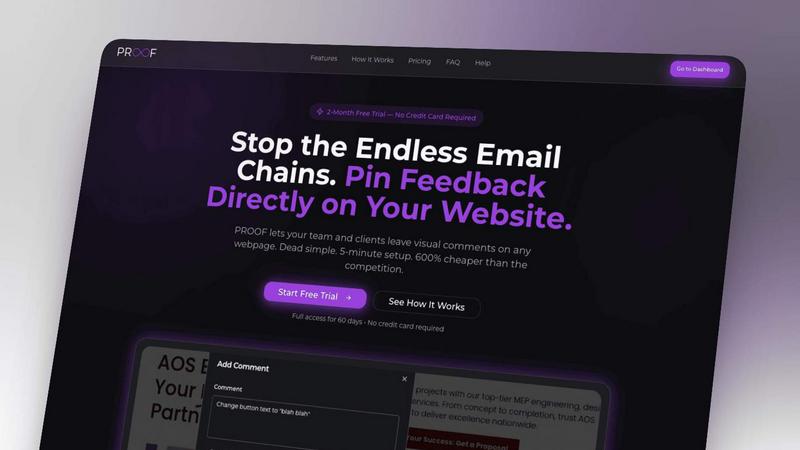
Proofapp lets you leave visual comments directly on websites to replace endless email feedback.
Last updated: March 4, 2026
Visual Comparison
CloneUI
Proofapp
Feature Comparison
CloneUI
Screenshot to Code Conversion
This feature allows you to transform a static image of any website or design mockup into functional code. Simply upload a screenshot in formats like PNG or JPG, and CloneUI's AI will analyze the visual elements, recognizing components and their spatial relationships. It then generates clean, well-structured HTML and CSS that replicates the design. This is ideal for when you have a visual reference but no direct access to the website's source code or a design file, providing a quick starting point for development.
URL to Code Cloning
With this capability, you can generate code by simply pasting the URL of any live website. CloneUI will fetch the page, analyze its rendered structure, and produce a code clone. This is incredibly useful for understanding how a particular site is built, creating a legal starting template for a new project inspired by an existing design, or rapidly prototyping based on a live reference. It streamlines the process of deconstructing and learning from existing web implementations.
Framework-Specific Export
CloneUI provides flexibility by allowing you to export the generated code into your preferred development framework. You are not locked into one output format. With one click, you can choose to receive your code as standard HTML and CSS, or as component-based code for modern JavaScript frameworks like React or Vue.js. This ensures the generated code can be directly integrated into your existing project's architecture without significant refactoring.
Intelligent Component Recognition
The AI at the heart of CloneUI does more than just copy pixels; it intelligently maps visual elements to their corresponding code components. It identifies common UI patterns such as navigation bars, hero sections, cards, buttons, and forms. This recognition allows the tool to generate semantic and logical code structure, making the output more maintainable and easier for developers to understand and extend compared to a simple, non-semantic HTML dump.
Proofapp
Visual Commenting
This is the foundational feature of Proofapp. Instead of describing issues with words, reviewers can click directly on any part of the captured website screenshot to leave a comment. This action pins the feedback visually to the exact pixel location, eliminating all ambiguity. Team members can then reply within threaded conversations directly on that pin, attach supporting files, and mark comments as resolved once the feedback has been addressed. This creates a clear, actionable, and organized record of all project feedback in one central location.
Multi-Breakpoint Testing
Proofapp understands that modern websites must work across multiple devices. When you provide a URL, the platform automatically captures screenshots at both standard desktop and mobile screen sizes. This allows designers, developers, and clients to review and provide feedback on how the site appears and functions on different screen breakpoints simultaneously. This feature ensures that responsive design issues are caught and communicated visually early in the review process, preventing problems from being discovered only after launch.
Secure Share Links & Guest Access
Collaboration is made effortless with Proofapp's sharing system. Project owners can generate a secure, shareable link to send to clients or external stakeholders. Crucially, reviewers do not need to create a Proofapp account to view the project and leave comments, which drastically reduces friction for client feedback. These links can also be set to expire after a certain period, and the platform offers role-based permissions for enterprise users, providing control over who can view or comment on sensitive projects.
Real-time Collaboration & Notifications
Proofapp turns static feedback into a dynamic conversation. When a team member or client leaves a new comment or replies to an existing thread, all other participants with access to the project are notified in real-time. This live-updating dashboard ensures everyone is on the same page, can respond quickly, and see the progress of feedback resolution as it happens. This feature integrates with tools like Slack to push notifications, keeping the team connected and moving forward without constant manual checking.
Use Cases
CloneUI
Rapid Prototyping for Developers
Developers can use CloneUI to quickly build functional prototypes from design inspiration or client mockups. Instead of spending hours coding a layout from scratch, they can input a screenshot or URL and receive a working code base in seconds. This prototype can then be immediately tested, iterated upon, and connected to backend services, dramatically accelerating the initial phases of the development cycle and allowing for faster client feedback.
Learning and Educational Tool
For students and new developers, CloneUI serves as an excellent educational resource. By inputting the URL of a well-designed website, a learner can instantly see the code that constructs it. This reverse-engineering process helps demystify how visual designs translate into HTML structures and CSS rules, providing practical, real-world examples to study and learn from, which is a foundational step in mastering web development.
Design to Development Handoff
Designers and developers often face friction during the handoff process. CloneUI streamlines this by allowing designers to provide a screenshot of their Figma, Adobe XD, or Sketch design. The developer can then feed this image into CloneUI to generate a foundational code structure. This creates a more accurate and efficient starting point than manual interpretation, reducing misunderstandings and ensuring the final product aligns closely with the original design vision.
Competitive Analysis and Inspiration
When you find a website with an appealing feature or layout, CloneUI helps you understand its construction for competitive analysis or personal inspiration. By cloning the URL, you can examine the code behind specific interactions or responsive behaviors. This allows developers and agencies to ethically deconstruct and learn from industry best practices, informing their own design and development decisions without starting from a blank slate.
Proofapp
Freelancer Client Approvals
Freelancers, such as web designers or developers, can use Proofapp to collect clear, organized feedback from their clients. By sharing a simple link, clients can point directly to what they want changed on the design mockup or live site. This professional approach saves hours typically spent deciphering email descriptions, reduces revision rounds, and helps freelancers deliver exactly what the client envisions, leading to higher satisfaction and faster project completion.
In-house Design & Development Team Workflow
Internal teams can streamline their handoff and review processes. A designer can upload a prototype, and developers can pin technical questions or visual bugs directly onto the design. Project managers can track progress as comments are resolved. This centralized, visual system replaces disjointed communication across chat apps, email, and project management tools, creating a single source of truth for the project's feedback and required changes.
Marketing Campaign & Landing Page Reviews
Marketing teams often need to gather input from multiple stakeholders on campaign assets or new landing pages. Proofapp allows the entire team-sales, content, and leadership-to review the live page visually. Comments about copy, imagery, or call-to-action placement are pinned in context, ensuring feedback is specific and actionable. This collaborative review prevents last-minute changes and miscommunication before a high-stakes campaign goes live.
Agency Managing Multiple Client Projects
Digital agencies managing several client projects simultaneously need organized systems. Proofapp allows them to create separate projects for each client. They can then use secure share links to gather feedback, keeping all client communication visually organized within its dedicated project space. This prevents feedback from different clients from getting mixed up, improves accountability, and presents a professional, modern image to their clients.
Overview
About CloneUI
CloneUI is a foundational tool designed to bridge the gap between visual design and functional code. At its core, it is an AI-powered web application that converts visual inputs into clean, production-ready code. This process addresses a fundamental and often time-consuming step in web development: translating a design concept into a working prototype. The tool operates by accepting two primary inputs: a screenshot image of a website or design, or a direct URL to an existing webpage. Its sophisticated AI then analyzes the visual structure, identifies components like buttons, headers, and layouts, and generates the corresponding HTML, CSS, and JavaScript code. This output is not just a static copy; it is responsive, semantic, and structured for real-world use.
CloneUI is built for a wide audience, from beginners learning web development to experienced developers and designers seeking efficiency. Its main value proposition is profound simplicity and speed. It eliminates the tedious manual work of inspecting elements and writing boilerplate code from scratch, allowing users to focus on higher-level tasks like customization, functionality, and creativity. By supporting popular frameworks like React and Vue, alongside standard HTML/CSS, it integrates seamlessly into modern development workflows. Ultimately, CloneUI empowers users to bring digital ideas to life faster, making the foundational step of creating code from a design effortless and accessible to all.
About Proofapp
Proofapp is a visual feedback and website review platform designed to fundamentally improve how teams collaborate on digital projects. At its core, Proofapp addresses the chronic inefficiencies of traditional feedback methods, such as long email chains, vague text descriptions, and misplaced screenshot attachments. The platform works by allowing users to simply input any website URL. It then automatically generates screenshots of the site at both desktop and mobile breakpoints, creating a visual canvas for precise feedback. Reviewers, including clients and team members, can click directly on any element of these screenshots to pin comments, creating unambiguous, context-rich feedback without the need for complex explanations. This process centralizes all communication, tracks resolution status, and significantly accelerates the review cycle. Proofapp is built for a wide range of users, from freelancers and small design studios to in-house marketing and development teams, who all share the common goal of shipping better work faster by eliminating communication friction and misalignment.
Frequently Asked Questions
CloneUI FAQ
Which input formats are compatible with CloneUI?
CloneUI accepts visual inputs in two primary ways. You can upload screenshot image files in common formats including PNG, JPG, JPEG, and WEBP. Alternatively, you can directly input the URL of any publicly accessible website. The tool analyzes these inputs to generate the corresponding code, making it versatile for both static mockups and live web pages.
How is the code generated?
The code is generated using sophisticated artificial intelligence. When you provide an image or URL, CloneUI's AI engine analyzes the visual composition, identifying UI components, layouts, colors, and typography. It then maps these visual elements to their appropriate HTML tags and CSS styling rules, constructing a clean, semantic, and responsive code structure that mirrors the original design as closely as possible.
What frameworks does CloneUI support?
CloneUI provides export options for several popular web development frameworks to suit different project needs. You can choose to export the generated code as standard, plain HTML and CSS. For more advanced, component-based projects, it also supports exporting to React and Vue.js, allowing you to seamlessly integrate the cloned UI into your existing modern development stack.
Is the generated code suitable for production use?
The code generated by CloneUI is clean, responsive, and production-ready in terms of its structure and styling. It provides an excellent, pixel-perfect foundation. However, like any generated code, it is intended as a starting point. Developers should review, customize, and integrate it with their application's logic, state management, accessibility features, and performance optimizations to meet specific production standards and requirements.
Proofapp FAQ
How do reviewers leave feedback without an account?
Reviewers do not need to sign up for a Proofapp account to participate. The project owner simply generates a secure, shareable link from within their Proofapp dashboard and sends it to the client or stakeholder. When the recipient opens the link, they will see the captured website screenshots and can immediately click anywhere to leave a comment, attach files, and join discussion threads, all as a guest user.
What website technologies does Proofapp support?
Proofapp works by capturing a live screenshot of any publicly accessible website URL you provide. It functions like a browser taking a picture of the page. Therefore, it supports any website technology that renders in a standard web browser, including static HTML sites, dynamic sites built with JavaScript frameworks like React or Vue, and content managed by platforms like WordPress or Webflow.
Can I give different access levels to different reviewers?
Yes, Proofapp offers role-based permissions, especially relevant for team and enterprise use. Project owners can control access by assigning roles such as "Admin," "Commenter," or "Viewer." This ensures that sensitive projects remain secure, and you can control who is allowed to edit project settings, leave comments, or only view the feedback.
How does the free trial work?
Proofapp offers a full-featured free trial that lasts for two months. During this trial period, you have complete access to the platform's features to test it with your real projects and team. No credit card is required to start the trial, allowing you to evaluate the tool's fit for your workflow without any financial commitment or risk.
Alternatives
CloneUI Alternatives
CloneUI is a tool in the design-to-code and low-code development category. It uses AI to convert website screenshots, URLs, or Figma designs into production-ready code for frameworks like React and Vue. This process helps developers and designers save significant time on manual coding tasks. Users often explore alternatives for various practical reasons. These can include budget constraints, as pricing models differ. Others may need specific features not offered, like support for a different design tool or code framework. Platform compatibility, such as a desktop application versus a web service, can also be a deciding factor. When evaluating other options, consider your primary workflow. Identify if you need integration with your existing design software or a particular code output. Assess the accuracy and cleanliness of the generated code, as this impacts future development. Finally, compare the overall value against the cost to find the best fit for your projects.
Proofapp Alternatives
Proofapp is a visual feedback and website review platform, falling into the category of design collaboration tools. It allows teams to capture screenshots of websites and pin comments directly on the design, streamlining the process of collecting and managing feedback from clients and colleagues. Users often explore alternatives for various reasons. A tool's pricing structure may not align with a team's budget as it grows, or it might lack a specific integration with other software in their workflow. Some teams may require more advanced features like version history or user testing, while others might need a platform that supports different types of digital assets beyond websites. When evaluating an alternative, consider your core needs. Focus on how the tool handles feedback collection and organization, its ease of use for both your team and external clients, and its cost relative to the value provided. The goal is to find a solution that centralizes communication, reduces revision cycles, and keeps projects moving forward efficiently.