
About Phishly
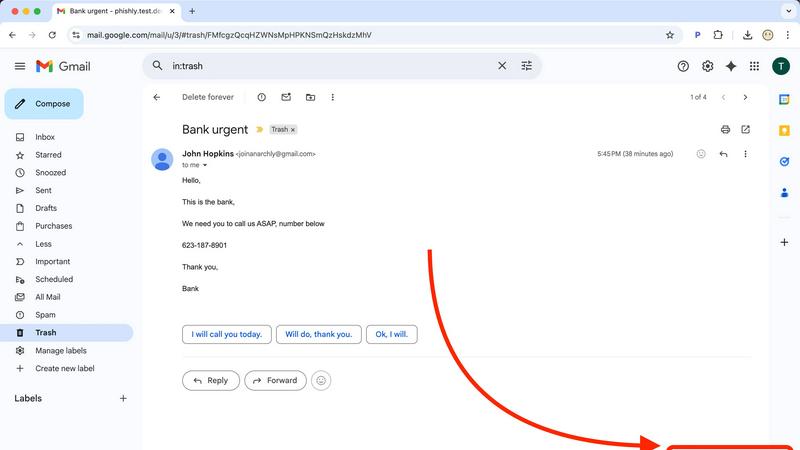
Phishly is a straightforward, AI-powered tool designed to help you identify phishing emails. At its core, phishing is a type of online scam where criminals try to trick you into revealing sensitive information, like passwords or credit card numbers, by pretending to be a trustworthy source. Phishly cuts through this deception. It operates as a simple Chrome extension for your Gmail and as a web tool, putting powerful detection right where you need it. When you receive an email that seems suspicious, you can open it in Gmail and click "Scan with Phishly." Alternatively, you can copy and paste the email's content directly onto the Phishly website. The tool then instantly analyzes the text, looking for common warning signs of a phishing attempt. It provides a clear, easy-to-understand risk assessment—categorizing the email as Safe, Medium Risk, or High Risk—along with a detailed explanation of what triggered the alert. This tool is perfect for individuals, families, and small businesses who want effective protection against these common threats without the complexity and cost of large enterprise security software. Phishly respects your privacy by only scanning emails you explicitly choose to analyze. It requires no technical knowledge, is free to use, and delivers immediate answers, acting as a reliable second opinion whenever you question an email's legitimacy.
Features of Phishly
One-Click Gmail Integration
Phishly integrates directly into your Gmail workflow through a simple Chrome extension. There is no complicated setup or configuration. Once installed, a "Scan with Phishly" button appears in your Gmail interface. When you open any email that raises doubts, a single click initiates the analysis. This seamless integration means you don't have to leave your inbox or copy information to another platform, making the security check a quick and natural part of your email review process.
AI-Powered Phishing Detection
The platform uses advanced artificial intelligence to examine the content and structure of an email. It is trained to recognize a wide array of phishing indicators. This includes detecting suspicious domain names that mimic legitimate ones, identifying urgent or threatening language designed to provoke a hasty response, uncovering attempts to spoof or impersonate a known sender, and spotting social engineering tactics that manipulate emotions. The AI does the heavy lifting of pattern recognition that can be difficult for the human eye to catch consistently.
Clear Risk Assessment & Explanation
After analysis, Phishly does not just give a vague warning. It provides a straightforward, three-tier risk rating: Safe, Medium Risk, or High Risk. More importantly, it accompanies this rating with a detailed, plain-language explanation. It will point out the specific elements that caused concern, such as "The sender's domain is misspelled" or "This email uses urgent language demanding immediate action." This educational component helps you understand why an email is suspicious, improving your own ability to spot similar scams in the future.
Privacy-Focused Web Tool
For emails received outside of Gmail or for users who prefer not to use an extension, Phishly offers a web-based tool. You can copy the text and headers of any suspicious email and paste them into the tool on the Phishly website for instant analysis. Crucially, both the extension and the web tool operate on a fundamental principle of user consent and privacy. Phishly only analyzes emails that you explicitly and manually choose to scan. It does not automatically read, access, or store your emails without your direct action.
Use Cases of Phishly
Verifying Urgent Account Alerts
You receive an email that appears to be from your bank, a payment service, or a popular website like Netflix, claiming your account is compromised and urging you to click a link to verify your identity. Instead of panicking and clicking, you use Phishly to scan the email. The tool can detect if the links lead to a fake domain or if the language uses excessive urgency, helping you determine if it's a legitimate alert or a phishing attempt designed to steal your login credentials.
Screening Email Invoices and Payment Requests
Small business owners and freelancers often receive invoices and payment requests via email. A scammer may send a fake invoice pretending to be a regular vendor or client. By scanning such emails with Phishly, you can check for signs of sender spoofing or suspicious attachment files. This simple step can prevent costly business email compromise (BEC) scams and ensure you only send payments to legitimate recipients.
Educating Family Members on Email Safety
Phishing scams target everyone, including those less familiar with technology. You can use Phishly as an educational tool for family members, such as parents or children. When they receive a questionable email, you can show them how to use the tool to scan it. The clear "Safe/Medium/High Risk" result and the accompanying explanation provide a concrete, non-technical lesson on what makes an email dangerous, building their confidence and digital literacy.
Analyzing Suspicious Job Offers or Communications
Unexpected job offers, prize notifications, or messages from unknown contacts can be phishing lures. These often promise high rewards for little effort to entice you into providing personal information. Pasting the content of such communications into the Phishly web tool allows for a quick reality check. The AI can identify hallmarks of these "too good to be true" scams, such as poor grammar, generic greetings, and requests for personal details upfront, protecting you from identity theft or fraud.
Frequently Asked Questions
How does Phishly protect my privacy?
Phishly is built with a fundamental commitment to user privacy. The tool only analyzes emails that you explicitly choose to scan. When you click the "Scan with Phishly" button in Gmail or paste text into the web tool, only that specific email content is sent for analysis. Phishly does not continuously monitor, read, or store your emails. You remain in complete control of what is checked, ensuring your private correspondence stays private.
Is technical knowledge required to use Phishly?
No, absolutely no technical knowledge is required. Phishly is designed for everyday users. The installation of the Chrome extension is a standard process, and from there, security checks are performed with a single click. The results are presented in simple, clear language with a straightforward risk rating (Safe, Medium, High). The goal is to make powerful phishing detection accessible to anyone, regardless of their technical background.
What does Phishly look for in an email?
Phishly's AI is trained to identify multiple common red flags associated with phishing emails. This includes analyzing the sender's email address for subtle misspellings or suspicious domains, examining links to see if they lead to fraudulent websites, detecting the use of urgent or threatening language designed to cause panic, and identifying attempts to impersonate trusted organizations or individuals. It combines these signals to provide a comprehensive risk assessment.
Is Phishly really free to use?
Yes, Phishly is currently free to use. The core service of scanning individual emails for phishing indicators through both the Chrome extension and the web tool is available at no cost. This makes it an accessible security resource for individuals, families, and small businesses looking for effective protection without a financial investment or subscription commitment.
Explore more in this category:
Similar to Phishly

Practical, independent guides to home repairs, maintenance, costs, troubleshooting, and everyday fixes.

Highlight faster. Study in flow with custom shortcuts and a workflow built around you. Print smarter, or turn any page into a tiled poster.

Turn videos, images, and files into secure direct links for sharing, embedding, and automated workflows.

Build Mode is a Mac app that turns focused sessions into visible progress, so you can see the work adding up before the results arrive.

Free, open-source scheduler. Web/mobile/API. Fees.


Capture any workflow in your browser and export a branded, step-by-step SOP with screenshots. €5 per document, no subscription.