rfpaihub vs securememo.app
Side-by-side comparison to help you choose the right product.

rfpaihub
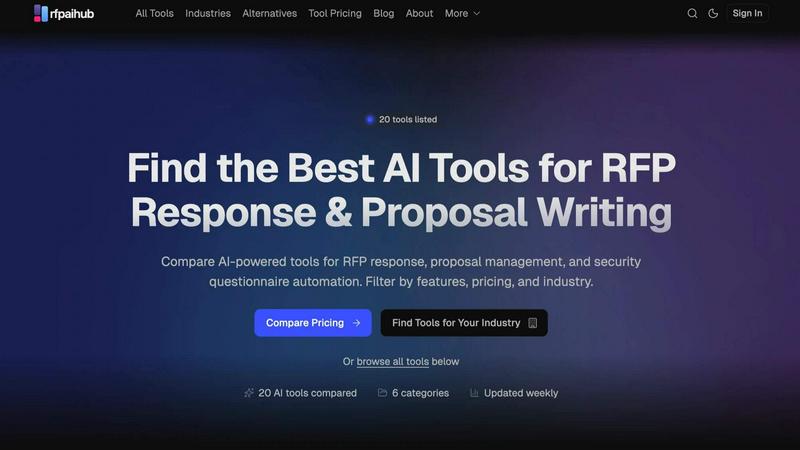
rfpaihub simplifies RFP and proposal writing by comparing AI tools to enhance efficiency and accuracy in response management.
Last updated: April 13, 2026
securememo.app
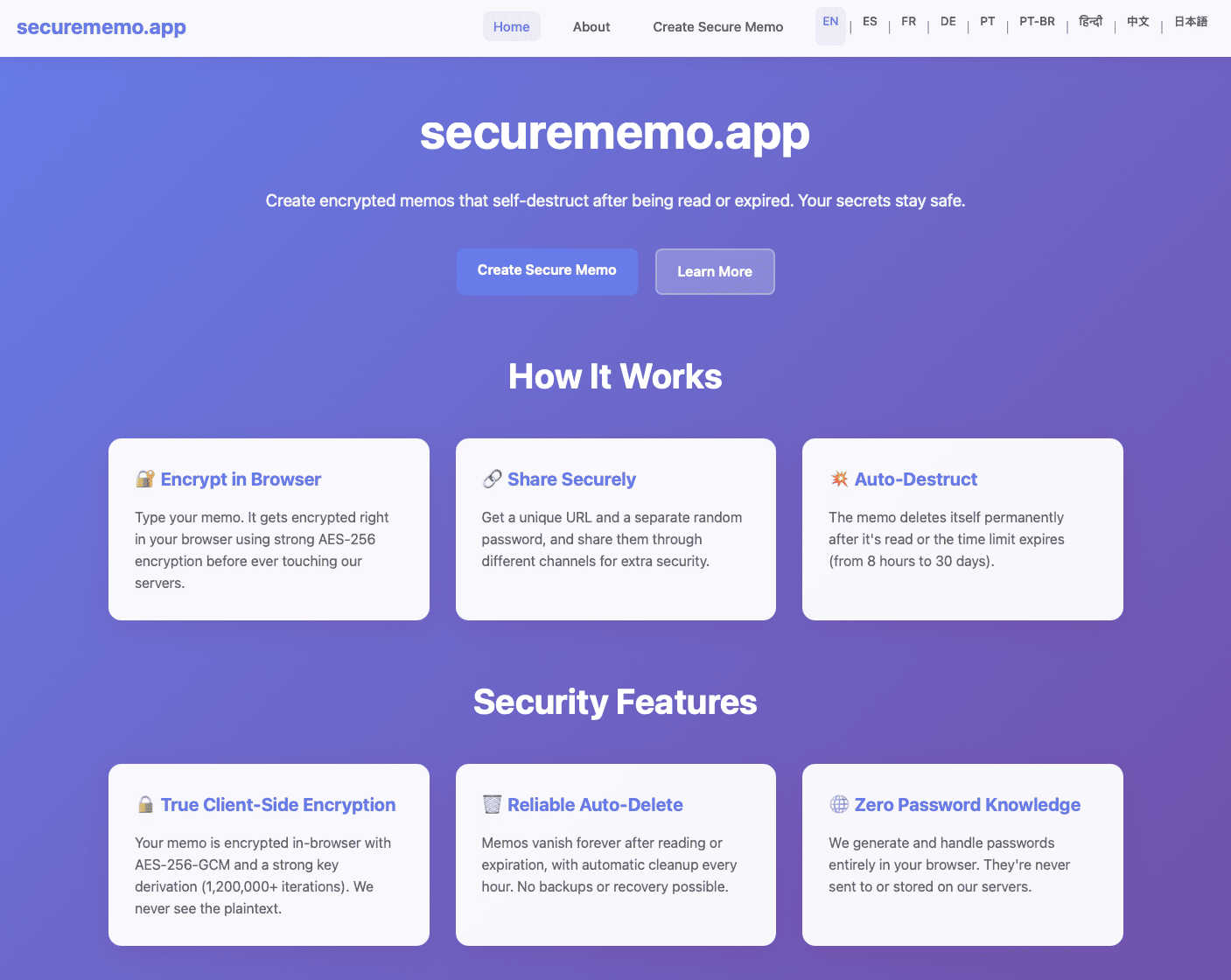
Securememo.app is a private, open source note service that encrypts your text before it leaves your device.
Visual Comparison
rfpaihub
securememo.app
Feature Comparison
rfpaihub
AI-Powered Content Matching
RFP AI Hub features advanced AI algorithms that automatically match incoming questions to a vast database of previously approved responses. This ensures that users can quickly find relevant information without sifting through documents, saving valuable time and effort.
Knowledge Base Integration
The platform maintains a searchable knowledge base that compiles answers to frequently asked questions and past proposals. This feature allows teams to leverage historical data effectively, enhancing consistency and reliability across different RFP submissions.
Draft Generation
With RFP AI Hub, users can benefit from automated draft generation capabilities. The tool creates first drafts of responses based on existing content, allowing subject matter experts (SMEs) to refine and finalize the submissions rather than starting from scratch.
Industry-Specific Filters
RFP AI Hub provides filters that allow users to search and compare tools based on specific industries, features, and pricing. This tailored approach helps organizations find the right solution that meets their unique requirements and budget constraints.
securememo.app
Client-Side Encryption
This is the foundational security feature of securememo.app. All sensitive data is encrypted directly within your web browser before it is ever transmitted to the service's servers. This process uses strong cryptographic algorithms to scramble your note's content. Because encryption and decryption keys are never sent to or stored by securememo.app, the company has no technical ability to read your data. This "zero-knowledge" model ensures that your notes are completely inaccessible to anyone but you and the person with the correct password, providing a fundamental layer of privacy.
Self-Destructing Notes
Every memo created on securememo.app is designed to be ephemeral. Once a note is created and a unique link is generated, it is programmed to automatically delete itself after being read by the recipient. This feature ensures that sensitive information does not linger on servers indefinitely, drastically reducing the risk of exposure from data breaches or unauthorized access at a later date. It enforces the principle of data minimization, where information is only retained for as long as absolutely necessary.
Password-Protected Sharing
To share a memo, you generate two crucial elements: a unique link and a strong, random password. The password is created entirely on your device and must be communicated to the recipient through a separate, secure channel (like a phone call or a different messaging app). This two-factor access method means that even if the link were somehow intercepted, the content remains protected by the separate password. We never see or handle this password, cementing our zero-knowledge promise.
No-Account Anonymity
securememo.app requires no user registration, sign-up, or login. You can use the service completely anonymously. This design prioritizes user privacy by eliminating the collection of personal data like email addresses, usernames, or usage history. It also makes the service incredibly easy and fast to use; you can create and share a secure note within seconds without any commitment, lowering the barrier to adopting secure communication practices.
Use Cases
rfpaihub
Streamlining RFP Responses
Organizations can utilize RFP AI Hub to significantly reduce the time spent on responding to RFPs. By using AI-powered tools, teams can quickly access relevant answers and generate drafts, leading to faster and more efficient response processes.
Enhancing Proposal Management
Proposal teams benefit from RFP AI Hub by selecting tools that facilitate the creation and management of proposals. This enhances collaboration and ensures that all team members have access to the necessary resources and information.
Automating Security Questionnaires
Companies handling vendor assessments and compliance can leverage RFP AI Hub to find automation tools that simplify the process of responding to security questionnaires. This reduces manual labor and minimizes the risk of errors in sensitive submissions.
Improving Consistency in Responses
By utilizing the knowledge base and AI matching features, organizations can ensure that all their responses maintain a high level of consistency. This is particularly important for companies that regularly submit proposals to the same clients or similar industries.
securememo.app
Sharing Login Credentials
Instead of sending a password over email or an unsecured chat, you can use securememo.app. Place the username and password in an encrypted note, share the link, and tell the recipient the password via phone or Signal. Once they read it, the note self-destructs, leaving no trace of your credentials on any server. This is a foundational best practice for IT administrators, team managers, or anyone needing to grant temporary access.
Sending Confidential Documents or Text
Professionals such as lawyers, journalists, or healthcare workers can share sensitive drafts, contracts, or personal information securely. By pasting the text or instructions into a secure memo, they ensure that only the intended recipient can view the content and that it is not stored permanently, complying with basic principles of client confidentiality and data protection.
One-Time Private Communication
For situations requiring a discreet conversation that shouldn't be stored in regular chat histories, securememo.app is ideal. This could be for sharing a Wi-Fi password with a guest, sending a private note to a family member, or providing feedback that is meant to be read once and forgotten. It serves as a digital equivalent of a whispered conversation or a note passed and then shredded.
Secure Data Backup for Personal Use
You can create an encrypted note containing critical information like recovery codes, safe combination numbers, or important account details. You can then save the link and password in separate, secure locations (like a password manager and a physical safe). This creates a secure, off-site backup that is inaccessible to anyone without both components, adding a layer of resilience to your personal data management.
Overview
About rfpaihub
RFP AI Hub is a comprehensive directory dedicated to AI-powered tools designed specifically for streamlining the RFP (Request for Proposal) response process, proposal management, and automation of security questionnaires. It serves as a bridge for businesses and organizations that seek to enhance their proposal efficiency while reducing the time and effort required to produce high-quality responses. By leveraging advanced AI technologies, RFP AI Hub enables sales and proposal teams to find the right tools tailored to their specific needs. Its main value proposition lies in its ability to centralize knowledge, automate repetitive tasks, and improve collaboration among team members, ultimately leading to faster turnaround times and higher-quality submissions. Whether you are a small business or a large enterprise, RFP AI Hub provides a curated selection of tools that cater to various industries and user roles, making it an essential resource for anyone involved in proposal writing and management.
About securememo.app
In an era where digital privacy is often compromised, securememo.app provides a fundamental solution for secure communication. It is a privacy-focused web service designed for creating and sharing encrypted, self-destructing notes directly from your browser. The core principle is simple yet powerful: to give individuals complete control over their sensitive information. This tool is built for anyone who needs to share confidential data—such as passwords, financial details, personal messages, or private documents—without leaving a permanent, vulnerable record online. Its main value proposition lies in its commitment to a "zero-knowledge" architecture. This means all encryption and decryption happen locally on your device. The service itself cannot access the content of your notes, your passwords, or any personal identifying information, as no user accounts are required. By prioritizing client-side encryption and ephemeral notes, securememo.app returns to the basics of private communication: only the intended sender and recipient should be able to read a message, and it should not persist beyond its useful life. Available in over 20 languages, it lowers the barrier to secure sharing for a global audience, making robust privacy accessible and straightforward for everyone, from tech novices to security-conscious professionals.
Frequently Asked Questions
rfpaihub FAQ
What is RFP response software?
RFP response software is designed to help teams answer Requests for Proposals more efficiently. It centralizes past answers, automates content reuse, and employs AI to draft and match responses, ultimately reducing manual workload and enhancing consistency.
How does AI improve the RFP process?
AI improves the RFP process by automating the matching of incoming questions to an existing content library, generating first-draft answers, and offering suggestions for improvements. This automation can reduce response times by 40 to 60 percent.
What types of tools does RFP AI Hub compare?
RFP AI Hub compares a variety of AI-powered tools across multiple categories, including RFP Response, Proposal Writing, Security Questionnaire Automation, Knowledge Base & Answer Library, Document Generation, and Contract & Bid Management.
Is RFP AI Hub free to use?
Yes, RFP AI Hub is a free directory. Users can browse, compare, and filter tools without needing to create an account. Tool vendors can also submit their products for review at no cost, ensuring a wide range of options for users.
securememo.app FAQ
How does client-side encryption work?
Client-side encryption means the encryption process happens on your device (in your web browser) before any data is sent to our servers. When you type a note, your browser uses a strong encryption key (derived from the password you or the system generate) to scramble the text. Only this encrypted, unreadable data is transmitted and stored. We never receive the original plain text or the encryption key, so we have no ability to decrypt or read your information. Decryption happens only in the recipient's browser when they enter the correct password.
What happens to a note after it self-destructs?
When a note is set to self-destruct, it is permanently and irrevocably deleted from our servers after it is read by the recipient. Our system is designed to immediately purge all data associated with that unique link. Once this process is complete, the link becomes invalid, and the encrypted content is gone forever. We do not keep backups of destroyed notes, ensuring the ephemeral nature of the service is maintained as a core privacy feature.
Is it really secure if I share the password separately?
Yes, this is a fundamental security practice known as "out-of-band" secret sharing. The security of your note relies on two factors: possession of the unique link and knowledge of the password. By sharing the password through a different communication channel (e.g., phone, encrypted messaging app), you ensure that an attacker who might intercept the link alone cannot access the content. This two-piece verification is a simple yet highly effective method for securing digital communication.
Do you store any of my personal data?
We store minimal, non-personal operational data. Specifically, we only store the encrypted text of your note and its configuration (like the self-destruct setting) for its limited lifetime. We do not require or store email addresses, names, IP addresses (beyond basic server logs for security, which are quickly anonymized), or any account information. The random password is never sent to our servers. Our no-account model is intentionally designed to collect as little data as possible.