Dubvid vs PoYo API
Side-by-side comparison to help you choose the right product.

Dubvid
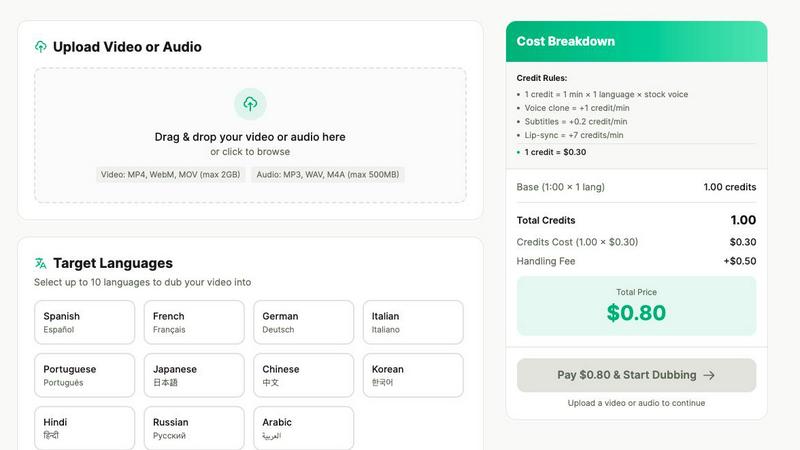
Dubvid dubs your audio and video into multiple languages with natural voices and optional lip-sync.
Last updated: February 27, 2026

PoYo API
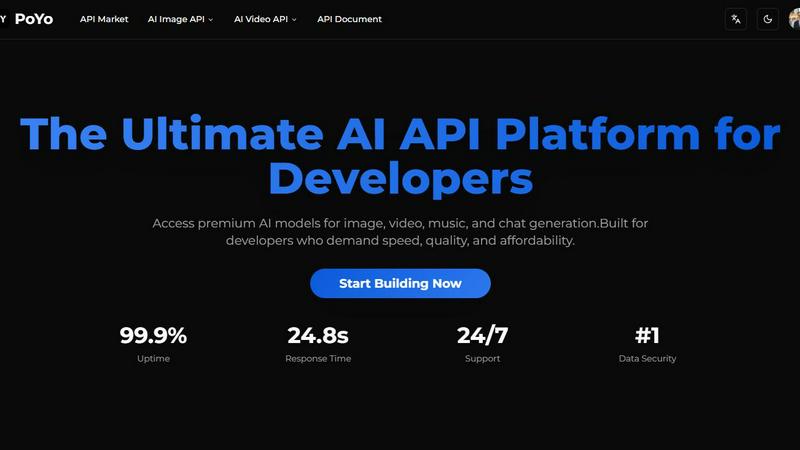
PoYo API gives developers one simple platform to access premium AI models for image, video, music, and chat.
Last updated: February 28, 2026
Visual Comparison
Dubvid
PoYo API
Feature Comparison
Dubvid
Multi-Language Dubbing
Dubvid allows you to translate and dub your video or audio content into over ten different languages from a single upload. You simply select your desired target languages from a list, and the platform's AI handles the translation and voice generation automatically. This feature is designed to maximize your potential audience reach by making your content accessible to viewers worldwide without creating separate videos for each language group.
Natural AI Voice Selection
The platform uses advanced text-to-speech technology to generate the dubbed audio. You can choose from a library of stock AI voices that are designed to sound natural, with appropriate tone, pacing, and emotional inflection. This ensures the translated dialogue does not sound robotic or disconnected, maintaining engagement and clarity for the viewer in the new language.
Optional Lip-Sync Technology
For videos where the speaker is visible, such as tutorials or talking-head presentations, Dubvid offers an optional premium lip-sync feature. This technology adjusts the timing and movement of the dubbed audio to better match the speaker's mouth movements on screen. This adds a significant layer of realism to the dubbed content, making it more professional and immersive for the audience.
Simple Credit-Based System
Dubvid operates on a transparent, pay-as-you-go pricing model using credits. One credit covers dubbing one minute of content into one language using a standard stock voice. Additional features like voice cloning, subtitles, and lip-sync cost extra credits per minute. This system is foundational because it allows users to pay only for what they use, with no subscriptions or long-term commitments, making professional dubbing financially accessible.
PoYo API
Unified API Key and Integration
The platform eliminates the administrative burden of managing separate credentials for different AI services. Developers receive one master API key that grants access to the entire library of over 500 models across image, video, music, and chat domains. This unified approach drastically simplifies the initial integration process and ongoing key management, allowing teams to add or switch between AI capabilities within their application without reconfiguring authentication for each new model.
Credit-Based, Pay-As-You-Go Pricing
PoYo API operates on a flexible credit system, moving away from rigid monthly subscriptions. Users purchase credits upfront, which are then consumed based on their actual usage of different AI models, with each model having a clear per-task cost. This model provides significant financial clarity and control, as credits never expire and there are no recurring fees. It is ideal for projects with variable workloads, enabling seamless scaling up or down based on demand without contractual lock-in.
Comprehensive Model Library
The platform provides centralized access to a constantly updated catalog of leading AI models. This includes cutting-edge image generators like Nano Banana and Seedream 4, advanced video models such as Sora-2 and Veo3.1, complete music generation suites like Suno v4 and v5, and top-tier chat models including Claude Sonnet 4.5 and GPT-5. This diversity ensures developers can select the most suitable, state-of-the-art tool for any specific creative or analytical task within their application.
Developer-Centric Infrastructure and Support
PoYo API is engineered with practical development needs in mind. It features a simple two-endpoint async API for task submission and result querying, supports webhooks for real-time callbacks, and maintains low latency even under high concurrency. The platform is backed by robust monitoring for 99.9% uptime and offers 24/7 technical support from human experts. Additionally, a free playground allows for thorough testing and parameter tuning of all models without spending credits.
Use Cases
Dubvid
Content Creator Expansion
Individual creators on platforms like YouTube, Instagram, and TikTok can use Dubvid to dub their short-form videos, Reels, or Shorts into multiple languages. This directly multiplies their potential viewership and subscriber base by making content consumable for non-native speakers, leading to greater channel growth and audience engagement without recreating content from scratch.
Educational Course Localization
Educators and course creators can rapidly translate their lesson videos, tutorials, and webinars for students across the globe. By dubbing instructional content, they break down language barriers in learning, allowing them to sell courses to an international market and provide equal learning opportunities to a diverse, worldwide student body.
Business Support & Onboarding
Companies can localize their help center videos, product demos, and employee onboarding materials for different regional offices and customer bases. Providing support content in a user's native language reduces confusion, decreases support ticket volume, and improves the overall customer and employee experience, fostering better understanding and efficiency.
Podcast & Interview Accessibility
Podcasters and interviewers can repurpose their audio or video podcast episodes for new audiences by dubbing them into other languages. This allows them to expand their show's reach, attract international sponsors, and share conversations and ideas across cultural lines without the cost and effort of re-recording with multilingual hosts.
PoYo API
Content Creation and Marketing Automation
Businesses and marketing teams can integrate PoYo API to automate the generation of visual and audio content. Applications can dynamically create unique product images, promotional video clips, background music for videos, and marketing copy based on campaign themes or user data. This use case enables the production of high-volume, personalized content at scale, reducing reliance on manual design and production resources.
Building Next-Generation AI Applications
Developers and startups can use PoYo API as the core AI engine for their own software products. This could include building an advanced graphic design tool with AI image generation, a social media app that creates short videos from text prompts, an interactive storytelling platform with AI-composed music, or a customer service chatbot powered by the latest conversational models. The API provides the necessary building blocks without the need for in-house AI model training.
Prototyping and Research Development
Researchers, students, and product teams can leverage the platform for rapid prototyping and experimentation. The free playground and pay-per-use credit model allow for affordable testing of different AI models and techniques. Teams can quickly validate concepts, compare outputs from various models like Sora-2 versus Veo3.1 for video, or explore the capabilities of new music generation APIs without significant upfront investment.
Enhancing Existing Software with AI Features
Existing software applications, such as project management tools, educational platforms, or content management systems (CMS), can be enhanced with AI functionalities. Developers can integrate features like automatic thumbnail generation for uploaded articles, AI-powered video summaries for e-learning modules, or an in-app music composer for podcasters. PoYo API allows for adding these sophisticated features through straightforward API calls, modernizing an application's capabilities.
Overview
About Dubvid
Dubvid is a fundamental tool for making video and audio content understandable to people who speak different languages. At its core, it is an AI-powered platform that takes your original video or audio file and translates the speech into a new language using a synthetic voice. This process is called dubbing. The primary goal of Dubvid is to remove the traditional, complex barriers of dubbing, which typically require hiring voice actors, booking studio time, and managing lengthy editing projects. Instead, Dubvid provides a straightforward, web-based solution where creators, educators, and businesses can upload their media, select a target language, and receive a dubbed version in minutes. Its main value proposition is accessibility and speed, enabling anyone to scale their message internationally without specialized skills or a large budget. By focusing on a simple, credit-based pricing model and offering features like optional lip-synchronization, Dubvid serves as a foundational bridge over language barriers for a global digital audience.
About PoYo API
PoYo API is a foundational platform designed to provide developers with streamlined access to a vast and diverse collection of premium artificial intelligence models. At its core, it functions as a centralized gateway, aggregating over 500 specialized AI models into a single, unified interface. This service is built specifically for developers, engineers, and businesses who need to integrate advanced AI capabilities—such as generating images, creating videos, composing music, or powering conversational chat—directly into their own applications, websites, or services. The primary value proposition of PoYo API lies in its simplification of a complex landscape. Instead of managing multiple API keys, navigating different pricing structures, and integrating with numerous individual AI providers, developers can connect to one platform. PoYo API handles the complexity behind the scenes, offering a consistent integration experience, a single API key for all models, and a unified credit-based billing system. This approach allows developers to focus on building their core product logic and user experience, rather than the intricacies of AI infrastructure. The platform emphasizes essential principles of reliability, with enterprise-grade security and high uptime, and affordability, ensuring users only pay for the computational resources they actually consume.
Frequently Asked Questions
Dubvid FAQ
How does the free trial work?
The free trial offers 2 credits with no credit card required. This allows you to dub up to 60 seconds of your content (e.g., 1 minute into 1 language, or 30 seconds into 2 languages) to test the quality of the translation, voice output, and overall platform workflow before committing any funds.
What file formats and sizes does Dubvid support?
Dubvid supports common video and audio formats for upload, including MP4, MOV, WebM for video, and MP3 and WAV for audio. The maximum file size for upload is 500 megabytes, which accommodates a significant amount of high-quality content for processing.
What is the difference between stock voice and voice clone?
A stock voice is a pre-made, high-quality AI voice provided by Dubvid's system that you can select for your dubbing. Voice clone is a premium feature where you can create a synthetic replica of your own or a specific person's voice, which is then used for the dubbing to maintain brand consistency or personal connection.
How is the final cost for a project calculated?
The cost is calculated based on the total credits used. You start with a base of 1 credit per minute of audio dubbed per language. You then add credits for any premium features: +1 credit/min for voice clone, +0.2 credits/min for subtitles, and +7 credits/min for lip-sync. The total credits are multiplied by $0.30 per credit, and a fixed $0.50 handling fee is added per job.
PoYo API FAQ
What is the difference between PoYo API and using AI models directly from their original providers?
PoYo API acts as an aggregator and unified layer. Instead of integrating with dozens of individual providers—each with its own API documentation, authentication method, pricing plan, and rate limits—you integrate once with PoYo. We provide a single point of access, a consistent API structure, and consolidated billing. This saves significant development time, reduces complexity, and often provides cost transparency and stability not available when dealing with multiple providers directly.
How does the credit system work and do credits expire?
You purchase credits upfront through your PoYo account dashboard. Each AI model has a specific cost per task, measured in credits. When you make an API call to generate an image, video, etc., the corresponding number of credits is deducted from your balance. A key benefit is that these purchased credits do not have an expiration date. You can use them at your own pace, making it a truly flexible pay-as-you-go system without the pressure of monthly subscription cycles or use-it-or-lose-it policies.
Is there a way to test the API before committing funds?
Yes, PoYo API offers a free playground accessible directly on the model pages of the website. This interactive environment allows you to test every available AI model, adjust generation parameters (like image dimensions or style prompts), and see the outputs in real-time. This testing requires no API key and no credit card, enabling you to thoroughly evaluate model quality, speed, and suitability for your project before writing any integration code or purchasing credits.
What happens if an AI generation task fails?
PoYo API is designed with developer reliability in mind. If a task fails due to a platform or model error (not due to an invalid user request), you are not charged for that task. The credits are not deducted for failed generations. Furthermore, the dashboard provides tools for manual retry of failed tasks, giving you full control over the workflow. This policy ensures you only pay for successful, usable outputs, which is crucial for maintaining predictable costs in production applications.
Alternatives
Dubvid Alternatives
Dubvid is an AI-powered tool in the content creation category, specifically designed for video and audio dubbing. It translates and recreates voices in multiple languages, aiming to simplify the process of making content globally accessible without traditional studio resources. Users often explore alternatives for various practical reasons. These can include budget constraints, as pricing models differ, or a need for specific features like support for more languages or different audio editing tools. Others might seek software that integrates better with their existing workflow or platforms they use. When evaluating different dubbing solutions, consider a few core aspects. Look at the quality and naturalness of the AI voices, the range of languages offered, and the overall ease of use. Also, assess the cost relative to your project volume and check for important capabilities like lip-sync adjustment or data security practices.
PoYo API Alternatives
PoYo API is a service that provides access to a wide range of premium AI models for generating images, videos, music, and chat responses. It falls into the category of AI assistant and content generation tools, designed to help developers integrate advanced AI capabilities into their applications through a single, simplified interface. Developers often explore alternatives to services like PoYo API for several practical reasons. These can include budget constraints, as pricing models and credit costs vary significantly between providers. Others may seek different feature sets, specific model availability, or platforms that better align with their existing technical infrastructure or particular project requirements. When evaluating different options, it's important to consider several core factors. Key considerations typically include the total cost of use, the reliability and speed of the API, the breadth and quality of the AI models offered, and the strength of developer support. Security standards and the ease of integration are also fundamental aspects that can impact the long-term success of an AI implementation.