Mod vs OGimagen
Side-by-side comparison to help you choose the right product.
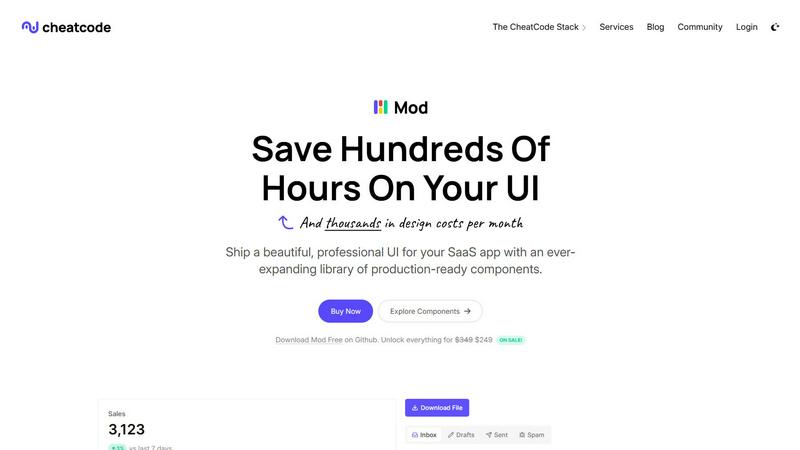
Mod is a CSS framework with ready-made components to build SaaS interfaces quickly and correctly.

OGImagen is an AI tool that instantly creates and delivers optimized Open Graph images and meta tags for all major social platforms.
Last updated: March 11, 2026
Visual Comparison
Mod
OGimagen
Feature Comparison
Mod
Extensive Component Library
Mod provides over 88 ready-to-use UI components that cover the essential building blocks of any SaaS application. This includes everything from basic form inputs, buttons, and alerts to complex data tables, dashboards, and navigation systems. Each component is crafted with functionality and aesthetics in mind, following modern design principles. This library allows developers to assemble interfaces rapidly by simply copying and pasting code, rather than building and styling each element from scratch, which ensures consistency and saves countless hours of development time.
Framework-Agnostic Design
A key strength of Mod is its complete independence from any specific JavaScript framework or backend technology. The components are built with standard, semantic HTML and are styled with pure CSS. This means they integrate seamlessly with popular front-end frameworks like Next.js, Nuxt, Vite, and Svelte, as well as backend-driven views in Rails or Django. This flexibility ensures that developers are not locked into a particular tech stack and can adopt Mod into their existing projects without friction or major rewrites.
Complete Design System with Themes
Beyond individual components, Mod offers a full design system with 168 distinct style utilities, two comprehensive themes (light and dark), and support for over 1,500 icons. This system provides a cohesive visual language for spacing, color, typography, and more. The built-in dark mode support is effortless to implement, enhancing user experience. Having this level of design consistency pre-defined ensures that every part of your application looks professionally coordinated, eliminating the guesswork from styling decisions.
Responsive & Mobile-First Architecture
Every component and style in Mod is built with a mobile-first approach. This foundational principle means the default styles are designed for small screens, with scaling adjustments (using CSS media queries) for tablets and desktops. This guarantees that the SaaS applications you build are inherently responsive and provide an optimal user experience across all device sizes. Developers do not need to write complex, custom CSS for responsiveness, as it is baked directly into the framework's core.
OGimagen
AI-Powered Image Generation
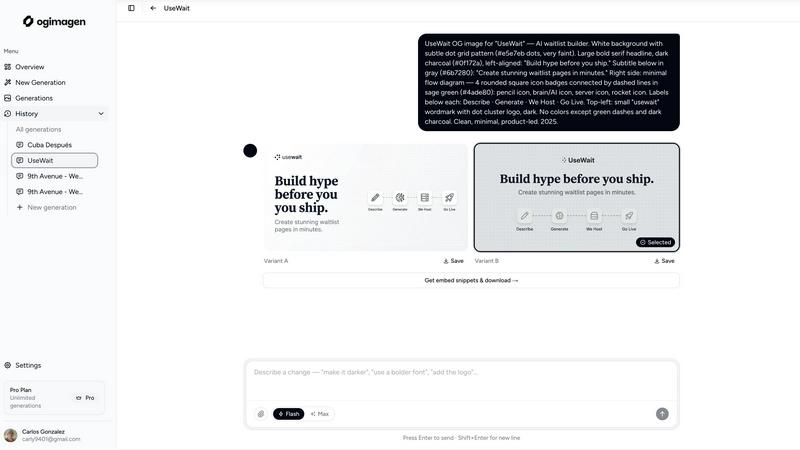
At its core, OGimagen uses artificial intelligence to transform your text content into visually appealing social card images. You simply enter your desired title and description, and the AI generates two unique design variants. This process eliminates the need for graphic design expertise or manual template editing, providing professional results based on fundamental design principles. The AI ensures each image is balanced, readable, and aesthetically suitable for public sharing.
Multi-Platform Format Optimization
OGimagen understands that each social platform has slightly different technical requirements for optimal image display. Instead of creating one image and hoping it works everywhere, the tool automatically generates and exports three perfectly optimized versions from a single generation: one for OG/General use (1200x630px), one for Twitter Cards (1200x600px), and one for LinkedIn (1200x627px). This foundational feature guarantees your previews will look pixel-perfect whether shared on Facebook, X, Slack, Discord, WhatsApp, or LinkedIn.
Framework-Specific Meta Tag Snippets
Creating the image is only half the battle; you must also correctly embed the code on your website. OGimagen provides ready-to-paste meta tag snippets tailored for your specific web framework. Free users receive standard HTML. Pro users unlock snippets for modern frameworks like Next.js (App and Pages Router), Astro, SvelteKit, and Remix. This feature educates users on proper implementation and ensures technical correctness, saving time and preventing common embedding errors.
MCP (Model Context Protocol) Integration
For developers seeking ultimate workflow efficiency, OGimagen Pro offers integration with the Model Context Protocol. This allows you to generate images, list previous generations, and copy embed snippets directly from within your code editor or AI coding assistant like Claude Code, Cursor, or Windsurf. It brings the foundational task of OG image creation into the development environment, removing the need to switch contexts to a web browser and streamlining the entire shipping process.
Use Cases
Mod
Rapid Prototyping and MVP Development
For entrepreneurs and solo developers validating a business idea, speed is critical. Mod is perfectly suited for building a Minimum Viable Product (MVP) quickly. By leveraging the pre-designed components and layouts, a developer can construct a fully functional, credible-looking prototype in days instead of weeks. This allows for faster user testing, feedback collection, and iteration without significant upfront investment in custom UI/UX design.
Standardizing UI Across Development Teams
In growing teams, maintaining a consistent look and feel across different features and modules can be challenging. Mod acts as a single source of truth for the UI. By adopting Mod as the base design system, teams ensure that all developers are using the same components, spacing, and colors. This standardization reduces design debt, streamlines code reviews, and makes onboarding new developers easier, as they can immediately work with a familiar, documented set of UI elements.
Enhancing Legacy Applications
Modernizing the user interface of an older, functional application can be a daunting task. Mod provides a straightforward path to a UI refresh without a complete front-end rewrite. Because it is framework-agnostic, developers can incrementally replace outdated components and styles with Mod's modern equivalents. This allows for a gradual, low-risk improvement of the application's aesthetics and usability, bringing it up to current standards without disrupting core functionality.
Building Internal Tools and Admin Panels
Internal dashboards, admin panels, and operational tools often do not justify a large design budget but still require clarity, functionality, and a professional appearance. Mod is an ideal solution for these projects. Its comprehensive component set includes many data-display elements like charts, tables, and stats cards that are essential for admin interfaces. Teams can build powerful, intuitive internal tools rapidly, ensuring efficiency for their operators without the overhead of a custom design process.
OGimagen
Blog and Content Marketing
Every time a new blog post is published, it needs a compelling social preview image to attract readers when shared. OGimagen allows content marketers and bloggers to quickly generate a unique, on-brand image for each article. By consistently using professional OG images, they can significantly increase the click-through rate from social media feeds to their website, which is a basic goal of any content strategy.
SaaS Product Launches and Updates
When a software company announces a new feature or product launch, sharing links on social media and community platforms is crucial. A generic or missing preview image looks unprofessional. Using OGimagen, the team can instantly create a polished social card that highlights the launch name and key benefit, ensuring the shared link conveys credibility and excitement, which are fundamental for driving interest and sign-ups.
Developer Workflow Integration
Developers building websites or applications need to implement OG images as a standard part of their process. With OGimagen's MCP integration, a developer can stay in their editor, generate an image via a command, and immediately insert the correct framework-specific meta tags into their codebase. This use case turns a disruptive, manual task into a fast, integrated step within the foundational development workflow.
E-commerce and Product Sharing
Online stores often share links to specific product pages on social platforms. A preview image showing the product name, a short description, and a brand color is far more effective than a blank square. Store owners can use OGimagen to create attractive cards for featured products or sales events, making shared links visually appealing and more likely to be clicked by potential customers browsing their feeds.
Pricing Comparison
Mod
The provided context states that CheatCode (Mod's provider) offers "simple pricing," but no specific plan details, tiers, or costs are included in the given information. Therefore, for accurate and current pricing, please visit the official CheatCode website.
OGimagen
OGimagen offers straightforward pricing to match different usage needs. You can start for free with no signup required. For ongoing projects, there are two one-time purchase packs and a monthly subscription plan. The Starter pack is $5 for 10 generations, including both AI variants, all framework snippets, and 45 days of CDN hosting. The Growth pack is $15 for 25 generations, extending hosting to 90 days and adding priority queue access. For continuous use and advanced features, the Pro plan is $29 per month, providing 50 generations monthly, permanent CDN hosting, and the essential MCP integration for developer tools. All payments are securely processed by Stripe. Use code OG26 at checkout for a 20% discount on the Pro plan.
Overview
About Mod
Mod is a comprehensive CSS framework and component library designed specifically for building modern, polished Software-as-a-Service (SaaS) user interfaces. At its core, Mod provides a foundational design system that allows developers to move quickly from concept to a fully functional, professional-looking application without the need for extensive custom design work. It is built with a mobile-first, responsive philosophy, ensuring that applications look and function perfectly on any device, from smartphones to desktops. The library includes a vast collection of pre-built, accessible components like buttons, forms, modals, and navigation bars, all styled cohesively. This eliminates the common bottleneck of UI design and front-end styling, enabling solo developers and teams to focus their energy on application logic and unique features. By offering a consistent, high-quality visual foundation, Mod dramatically reduces development time and design costs, making it an essential tool for anyone aiming to ship robust SaaS products efficiently.
About OGimagen
OGimagen is a foundational tool designed to solve a specific, essential problem for anyone who publishes content on the web: creating professional Open Graph images. These are the preview images that appear when a link is shared on social platforms like Facebook, LinkedIn, and X (Twitter). Without a proper OG image, a shared link looks plain, unprofessional, and often fails to attract clicks. OGimagen simplifies this critical task by using artificial intelligence to generate beautiful, production-ready social card images in seconds. It is built for developers, content creators, marketers, and business owners who need to ensure their shared links look polished and engaging without requiring design skills or complex software. The core value proposition is straightforward: you provide a title, description, and basic branding preferences, and OGimagen's AI handles the design, delivering perfectly formatted images for every major platform along with the correct meta tag code to embed on your site. This back-to-basics approach removes friction from a mandatory web development task, directly helping to improve click-through rates and brand presentation with minimal effort.
Frequently Asked Questions
Mod FAQ
What does "framework-agnostic" mean?
Framework-agnostic means that Mod is not built for or dependent on a single JavaScript framework like React or Vue. Instead, its components are delivered as plain HTML and CSS code snippets. You can paste this HTML structure into your project's template files—whether they are JSX for React, .vue files for Vue, ERB templates for Rails, or plain HTML—and then link to Mod's CSS file. The styles will apply correctly, making it compatible with virtually any web technology stack.
How does Mod handle customization and branding?
Mod is designed to be a solid foundation that you can customize to match your brand identity. The framework uses CSS custom properties (variables) for core design tokens like colors, fonts, and spacing. By overriding these variables in your own stylesheet, you can globally change the primary color, font family, or border radius across all components. For more specific changes, you can add your own utility classes or CSS rules to modify any component's appearance without breaking the core functionality.
Is Mod suitable for large-scale, enterprise applications?
Yes, Mod is built to scale. The component library covers a wide range of UI needs found in complex enterprise SaaS products. Its use of semantic HTML and focus on accessibility provides a strong, maintainable foundation. The organized design system and consistent coding patterns make it easier for large teams to collaborate and for the codebase to remain manageable as the application grows. It reduces the CSS bloat and inconsistency that often plagues large projects.
What is included in the "yearly updates" mentioned?
The yearly updates refer to ongoing maintenance and improvement of the Mod library. This typically includes adding new components, enhancing existing ones with new variants or features, updating the design system to follow modern trends, ensuring compatibility with new browser versions, and patching any bugs. This commitment to updates ensures that projects built with Mod have a long shelf life and can continue to leverage a modern, supported toolkit without the need for constant manual upgrades.
OGimagen FAQ
What exactly is an OG image?
An OG image, or Open Graph image, is the preview picture that automatically appears when you paste a website link into social media platforms, messaging apps, or other supported services. It is defined by specific meta tags in the webpage's HTML code. This image is fundamental because it provides a visual context for the link, greatly influencing whether someone decides to click on it. A good OG image acts as a miniature billboard for your content.
What's the difference between Starter, Growth, and Pro plans?
The plans are structured to serve different foundational needs. The Starter and Growth plans are one-time purchases for a set number of generations, ideal for projects with a finite need. The Pro plan is a monthly subscription for ongoing use, offering more generations per month and key workflow features. The primary functional difference is that Pro includes permanent CDN hosting for your images and MCP integration for developer workflows, while the one-time plans include hosting for a limited period (45 or 90 days).
What happens when CDN hosting expires on a one-time plan?
When the CDN (Content Delivery Network) hosting period expires on a Starter (45-day) or Growth (90-day) plan, the generated images will no longer be served from the OGimagen CDN. This means the image URLs in your meta tags will return an error, and your social previews will break. To maintain your links, you must download the image files before hosting expires and re-upload them to your own permanent web server or storage, updating the image URLs in your meta tags accordingly.
Which frameworks are supported for meta tag snippets?
OGimagen provides code snippets for the most common web frameworks to ensure correct implementation. All users get a plain HTML snippet, which is the fundamental building block. Pro users unlock framework-specific snippets for Next.js (using both the App Router and Pages Router syntax), Astro, SvelteKit, and Remix. These snippets show you the exact code structure and placement required for each framework, serving as an educational guide for proper setup.