
Mod
Mod is a CSS framework with ready-made components to build SaaS interfaces quickly and correctly.
Visit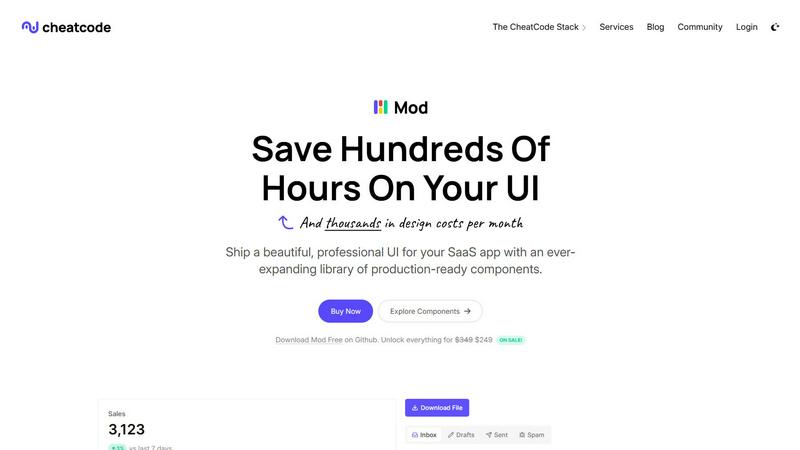
About Mod
Mod is a comprehensive CSS framework and component library designed specifically for building modern, polished Software-as-a-Service (SaaS) user interfaces. At its core, Mod provides a foundational design system that allows developers to move quickly from concept to a fully functional, professional-looking application without the need for extensive custom design work. It is built with a mobile-first, responsive philosophy, ensuring that applications look and function perfectly on any device, from smartphones to desktops. The library includes a vast collection of pre-built, accessible components like buttons, forms, modals, and navigation bars, all styled cohesively. This eliminates the common bottleneck of UI design and front-end styling, enabling solo developers and teams to focus their energy on application logic and unique features. By offering a consistent, high-quality visual foundation, Mod dramatically reduces development time and design costs, making it an essential tool for anyone aiming to ship robust SaaS products efficiently.
Features of Mod
Extensive Component Library
Mod provides over 88 ready-to-use UI components that cover the essential building blocks of any SaaS application. This includes everything from basic form inputs, buttons, and alerts to complex data tables, dashboards, and navigation systems. Each component is crafted with functionality and aesthetics in mind, following modern design principles. This library allows developers to assemble interfaces rapidly by simply copying and pasting code, rather than building and styling each element from scratch, which ensures consistency and saves countless hours of development time.
Framework-Agnostic Design
A key strength of Mod is its complete independence from any specific JavaScript framework or backend technology. The components are built with standard, semantic HTML and are styled with pure CSS. This means they integrate seamlessly with popular front-end frameworks like Next.js, Nuxt, Vite, and Svelte, as well as backend-driven views in Rails or Django. This flexibility ensures that developers are not locked into a particular tech stack and can adopt Mod into their existing projects without friction or major rewrites.
Complete Design System with Themes
Beyond individual components, Mod offers a full design system with 168 distinct style utilities, two comprehensive themes (light and dark), and support for over 1,500 icons. This system provides a cohesive visual language for spacing, color, typography, and more. The built-in dark mode support is effortless to implement, enhancing user experience. Having this level of design consistency pre-defined ensures that every part of your application looks professionally coordinated, eliminating the guesswork from styling decisions.
Responsive & Mobile-First Architecture
Every component and style in Mod is built with a mobile-first approach. This foundational principle means the default styles are designed for small screens, with scaling adjustments (using CSS media queries) for tablets and desktops. This guarantees that the SaaS applications you build are inherently responsive and provide an optimal user experience across all device sizes. Developers do not need to write complex, custom CSS for responsiveness, as it is baked directly into the framework's core.
Use Cases of Mod
Rapid Prototyping and MVP Development
For entrepreneurs and solo developers validating a business idea, speed is critical. Mod is perfectly suited for building a Minimum Viable Product (MVP) quickly. By leveraging the pre-designed components and layouts, a developer can construct a fully functional, credible-looking prototype in days instead of weeks. This allows for faster user testing, feedback collection, and iteration without significant upfront investment in custom UI/UX design.
Standardizing UI Across Development Teams
In growing teams, maintaining a consistent look and feel across different features and modules can be challenging. Mod acts as a single source of truth for the UI. By adopting Mod as the base design system, teams ensure that all developers are using the same components, spacing, and colors. This standardization reduces design debt, streamlines code reviews, and makes onboarding new developers easier, as they can immediately work with a familiar, documented set of UI elements.
Enhancing Legacy Applications
Modernizing the user interface of an older, functional application can be a daunting task. Mod provides a straightforward path to a UI refresh without a complete front-end rewrite. Because it is framework-agnostic, developers can incrementally replace outdated components and styles with Mod's modern equivalents. This allows for a gradual, low-risk improvement of the application's aesthetics and usability, bringing it up to current standards without disrupting core functionality.
Building Internal Tools and Admin Panels
Internal dashboards, admin panels, and operational tools often do not justify a large design budget but still require clarity, functionality, and a professional appearance. Mod is an ideal solution for these projects. Its comprehensive component set includes many data-display elements like charts, tables, and stats cards that are essential for admin interfaces. Teams can build powerful, intuitive internal tools rapidly, ensuring efficiency for their operators without the overhead of a custom design process.
Frequently Asked Questions
What does "framework-agnostic" mean?
Framework-agnostic means that Mod is not built for or dependent on a single JavaScript framework like React or Vue. Instead, its components are delivered as plain HTML and CSS code snippets. You can paste this HTML structure into your project's template files—whether they are JSX for React, .vue files for Vue, ERB templates for Rails, or plain HTML—and then link to Mod's CSS file. The styles will apply correctly, making it compatible with virtually any web technology stack.
How does Mod handle customization and branding?
Mod is designed to be a solid foundation that you can customize to match your brand identity. The framework uses CSS custom properties (variables) for core design tokens like colors, fonts, and spacing. By overriding these variables in your own stylesheet, you can globally change the primary color, font family, or border radius across all components. For more specific changes, you can add your own utility classes or CSS rules to modify any component's appearance without breaking the core functionality.
Is Mod suitable for large-scale, enterprise applications?
Yes, Mod is built to scale. The component library covers a wide range of UI needs found in complex enterprise SaaS products. Its use of semantic HTML and focus on accessibility provides a strong, maintainable foundation. The organized design system and consistent coding patterns make it easier for large teams to collaborate and for the codebase to remain manageable as the application grows. It reduces the CSS bloat and inconsistency that often plagues large projects.
What is included in the "yearly updates" mentioned?
The yearly updates refer to ongoing maintenance and improvement of the Mod library. This typically includes adding new components, enhancing existing ones with new variants or features, updating the design system to follow modern trends, ensuring compatibility with new browser versions, and patching any bugs. This commitment to updates ensures that projects built with Mod have a long shelf life and can continue to leverage a modern, supported toolkit without the need for constant manual upgrades.
Pricing of Mod
The provided context states that CheatCode (Mod's provider) offers "simple pricing," but no specific plan details, tiers, or costs are included in the given information. Therefore, for accurate and current pricing, please visit the official CheatCode website.
Similar to Mod

Turn videos, images, and files into secure direct links for sharing, embedding, and automated workflows.


The Growth Toolkit for App Store & Google Play. Create the store assets that make your app feel ready to ship.


Pay-as-you-go e-signature API and no-code sending. €0.049 per envelope, no monthly minimums, legally valid in 55+ countries.

Ornold MCP lets AI agents control Chromium and antidetect browsers: click, type, read screens, record workflows, replay profiles without scripts.


Managed remote build cache for Nx, Lerna, Turbo, Gradle, and Bazel. Reuse artifacts across CI and developer machines.