Image to 3D AI vs Quitlo
Side-by-side comparison to help you choose the right product.

Image to 3D AI
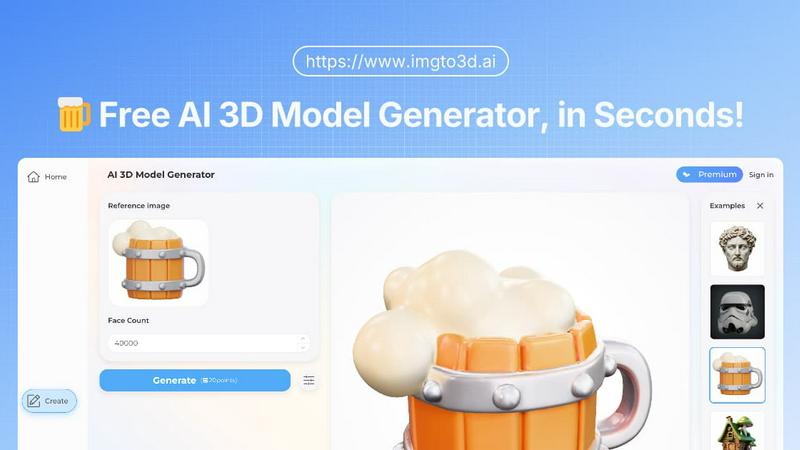
Instantly convert any 2D photo into a detailed 3D model for free using AI.
Last updated: March 1, 2026

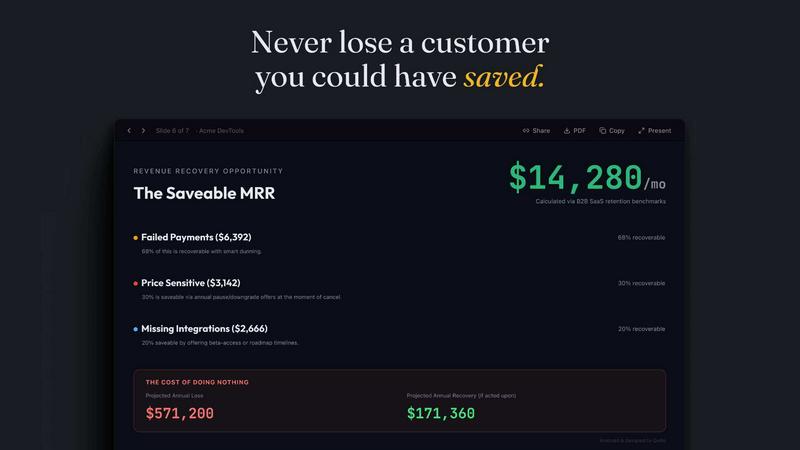
Quitlo uses AI voice calls to understand why customers leave, then sends the full story to your team.
Last updated: March 4, 2026
Visual Comparison
Image to 3D AI
Quitlo
Feature Comparison
Image to 3D AI
AI-Powered Textured Conversion
This feature uses cutting-edge artificial intelligence to analyze a 2D image and instantly construct a detailed 3D model complete with textures. The AI interprets depth, shape, and surface details from the photograph or sketch, building a three-dimensional representation that goes beyond simple geometry to include realistic surface qualities, all without manual intervention.
Polygon Density Control
Users have direct control over the complexity of the generated 3D model by adjusting the face count, from 5K up to 40K polygons. This allows for creating optimized models suitable for different applications, such as low-poly assets for fast-rendering games or high-detail models for close-up visualization and 3D printing, ensuring an optimal balance between quality and performance.
Multi-Format Export (Pro)
For professional workflows, the Pro version enables the download of generated 3D models in multiple standard formats, including OBJ, GLB, and STL. This versatility ensures compatibility with most 3D software, game engines, augmented reality platforms, and 3D printing slicers, making the asset immediately usable in a production pipeline.
Completely Free Tier with Browser-Based Access
The platform offers a permanently free tier that requires no sign-up, credit card, or software installation. Users can upload an image and generate a 3D model directly in their web browser, providing a zero-cost, zero-commitment way to experiment with and understand the basics of AI-powered 3D model generation.
Quitlo
Adaptive AI Conversations
Quitlo's core feature is its AI-driven dialogue, which replaces static forms. When a churn signal is detected, the AI initiates a natural, two-minute conversation via voice or text. It listens to the customer's initial response and asks intelligent, empathetic follow-up questions to dig deeper. This adaptive approach moves beyond simple dropdown selections to capture nuanced feedback, competitor context, and specific save opportunities that traditional methods miss entirely.
Automated Signal Detection
The platform continuously monitors your customer data to automatically identify key moments of risk or feedback. It detects events like a subscription cancellation, a low satisfaction score (NPS/CSAT/CES), a failed payment, post-onboarding silence, or a win-back opportunity. This automation ensures no critical signal is missed and that the right conversation is triggered at the precisely right moment, without requiring manual intervention from your team.
Structured Intelligence Delivery
Every AI conversation is instantly analyzed and synthesized into a clear, actionable summary. This summary is delivered directly to collaboration hubs like Slack or project tools like Jira. It breaks down the feedback into structured categories: the root-cause churn reason, customer sentiment, any competitor mentions, a quantified save opportunity (High/Medium/Low), and a suggested next step for the team to act upon immediately.
Five Integrated Entry Points
Quitlo operates through five dedicated modules that cover every critical moment in the customer journey: Cancel Flows, Surveys, Payment Recovery, Check-Ins, and Win-Back campaigns. Each module uses the same powerful AI conversation engine, ensuring consistency in intelligence gathering. This means whether a customer is canceling or simply gave a low score, you get the same depth of insight, tailored to the context of the trigger.
Use Cases
Image to 3D AI
Game Development
Game developers and indie studios can use the tool to rapidly prototype and create assets like characters, props, and environmental objects. Converting concept art or reference images into 3D models in minutes instead of days accelerates production cycles and allows for faster iteration during the game design process.
3D Printing
Hobbyists and professionals can transform photos of objects, sketches of designs, or digital artwork into printable 3D models. The ability to export in the STL format, which is standard for 3D printing, makes it straightforward to take a digital idea and prepare it for physical creation on a 3D printer.
XR/VR and AR Content Creation
Creators building virtual reality, augmented reality, or other extended reality experiences need a constant stream of 3D assets. This tool allows for the quick generation of optimized models that perform well in resource-constrained real-time environments, helping to populate digital worlds efficiently.
Creative Prototyping and Portfolios
Artists, designers, and students can quickly bring their 2D concepts into the 3D space to evaluate forms, present ideas, and build impressive portfolios. It enables visual exploration and iteration without the need to first master complex 3D modeling software, lowering the barrier to entry for creative expression.
Quitlo
Replacing Traditional Exit Surveys
B2B SaaS companies using tools like Delighted, Retently, or Survicate for exit surveys often get minimal, unactionable feedback. Quitlo replaces these by triggering an AI conversation immediately after a cancellation is detected. Instead of a one-word answer from a form, you receive a full transcript and summary explaining the "why" behind the "what," turning a notification of loss into a clear retention playbook.
Recovering Failed Payments
When a customer's credit card payment fails, automated dunning emails often fail to recover the relationship. Quitlo's Payment Recovery module initiates a compassionate AI conversation to understand if the failure is due to a budget issue, a platform switch, or a simple oversight. This direct engagement can recover revenue and provide insight into financial friction points within your user base.
Understanding Low Satisfaction Scores
A low NPS or CSAT score is a signal, not an insight. Quitlo acts on this signal by automatically engaging the detractor in a dialogue. The AI asks why they scored low and probes for specific features, support interactions, or expectations that were not met. This transforms a negative score into a direct line of communication for improvement and potential account recovery.
Conducting Post-Churn Win-Back Campaigns
For customers who have already left, Quitlo's Win-Back module can re-engage them after a set period (e.g., 90 days). The AI initiates a check-in conversation to understand if their situation has changed, if they're unhappy with their new solution, or if new features might bring them back. This provides a systematic, intelligent approach to reclaiming lost revenue.
Overview
About Image to 3D AI
Image to 3D AI, provided by ImgTo3D.ai, is a foundational tool that simplifies the complex process of creating three-dimensional models. At its core, it is a web-based artificial intelligence platform designed to convert a standard two-dimensional image into a fully realized 3D model. This task, which traditionally demands extensive skill and hours of work in specialized software, is automated and completed in seconds. The platform is built for a wide audience, including game developers, 3D printing enthusiasts, e-commerce store owners, and digital artists. Its primary value is in making 3D creation accessible and fast. By removing the steep technical barrier of traditional 3D sculpting, it allows anyone with an idea and an image to generate usable 3D geometry. This democratizes asset creation, enabling rapid prototyping, accelerating project timelines, and allowing for the exploration of 3D design without a significant learning investment. The service operates directly in a web browser with no software to install and offers a robust free tier to begin, establishing it as an essential entry point for modern digital content creation.
About Quitlo
Quitlo is the first Churn Intelligence Platform built specifically for B2B SaaS companies. It addresses a fundamental problem: traditional methods for understanding customer departure are broken. Static surveys and cancel forms yield abysmal response rates and one-word answers like "pricing," leaving teams to guess the real reasons behind churn. Quitlo replaces these ineffective tools with adaptive, empathetic AI conversations, delivered via both voice and text. The platform automatically detects critical signals across the customer lifecycle—such as a cancellation request, a low NPS score, or a failed payment—and initiates a genuine, two-minute dialogue. Its AI engages customers with intelligent, contextual follow-up questions to uncover the complete story. Within minutes, Quitlo transforms this conversation into a structured, actionable summary delivered directly to tools like Slack or Jira. This summary highlights the precise churn reason, customer sentiment, competitor mentions, and clear save opportunities. For product, customer success, and growth teams tired of losing customers they don't understand, Quitlo turns a single, vague data point into a concrete retention strategy, helping to save revenue and learn what truly drives customer decisions.
Frequently Asked Questions
Image to 3D AI FAQ
What is Image to 3D AI?
Image to 3D AI is a web-based artificial intelligence tool that automatically converts a two-dimensional image, such as a photograph or sketch, into a three-dimensional model. It simplifies a traditionally complex technical process into a fast, accessible task that can be done directly in your internet browser.
Is there really a free version?
Yes, there is a completely free tier that does not require you to sign up for an account or provide a credit card. You can upload an image and generate a 3D model at no cost. Free users should note that during periods of high demand, they may experience processing queues.
What kind of images work best?
For the best results, you should use clear, well-lit images that focus on a single object. The AI algorithm can interpret depth and form more accurately from photos with good contrast and minimal background clutter, leading to a higher quality 3D model.
What can I do with the generated 3D models?
The generated models have wide applications. You can use them in game development, 3D printing projects, virtual and augmented reality experiences, animation, architectural visualization, and for building creative portfolios. The free tier provides models in a compatible format for use in various 3D software.
Quitlo FAQ
How is Quitlo different from a survey tool like Delighted?
Quitlo is fundamentally different. While survey tools like Delighted collect static scores and form responses, Quitlo initiates dynamic, two-way AI conversations. It doesn't just ask "why?"; it listens to the answer and asks intelligent follow-ups to uncover the full story. Quitlo replaces everything Delighted does for feedback collection and adds the critical layer of AI voice and text dialogue to get actionable intelligence, not just data points.
What kind of integrations does Quitlo support?
Quitlo is built to fit directly into your team's workflow. It integrates with essential tools like Slack for instant alerting and Jira for one-click ticket creation from conversation summaries. The platform also connects with your payment/billing system to detect failed payments and with your CRM or customer success platform to trigger conversations based on scores or lifecycle stages, ensuring a seamless operational fit.
Is the AI conversation truly a live voice call?
Yes. Quitlo offers a live AI voice agent that can conduct real-time, natural-sounding conversations. Customers can speak their feedback, and the AI will respond and ask follow-up questions just like a human interviewer would. This voice option, alongside text-based chat, significantly increases engagement and the richness of feedback compared to typing into a form.
What if a customer doesn't want to talk to an AI?
The customer is always in control. The AI conversation is presented as an optional choice. For example, in a cancel flow, a customer can choose a quick dropdown reason to cancel immediately or opt into the short conversation to provide more feedback. This respectful approach maintains a positive experience while maximizing the chance to gather invaluable insights from willing participants.
Alternatives
Image to 3D AI Alternatives
Image to 3D AI is a web-based tool in the AI Assistants category. It uses artificial intelligence to automatically convert a standard two-dimensional photograph into a three-dimensional model. This process happens in seconds, making 3D creation accessible without requiring traditional modeling skills or software. Users often explore alternatives for several practical reasons. Needs can vary based on budget, with some seeking different pricing models or free tiers. Others may require specific features, different export formats, or integration with other platforms in their workflow. The choice often depends on the specific project requirements. When evaluating an alternative, consider the core technology and output quality. Look at the control you have over the final model, such as adjusting detail levels. Also, assess the platform's ease of use, compatibility with your intended use case, and the overall value it provides for your specific creation goals.
Quitlo Alternatives
Quitlo is a specialized Churn Intelligence Platform for B2B SaaS companies. It uses AI-driven voice and text conversations to replace ineffective surveys, uncovering the real reasons customers cancel or disengage. This places it within the categories of AI Assistants and Customer Support tools focused on retention. Users may explore alternatives for several practical reasons. These can include budget constraints, a need for different integration capabilities, or a preference for a platform with a broader or narrower set of features. Some teams might also seek solutions that align more closely with their existing customer feedback workflows. When evaluating any alternative, focus on core needs. Key considerations are the tool's ability to generate genuine, actionable insights from departing customers, its automation and triggering capabilities, and how seamlessly it delivers those insights to your team. The goal is to move beyond simple data points to a clear understanding that drives retention strategy.