SaaS Roots logo

Fusedash vs qtrl.ai

Side-by-side comparison to help you choose the right product.

Fusedash transforms raw data into intuitive dashboards and charts, enabling your team to act on insights swiftly.

Last updated: March 4, 2026

qtrl.ai helps QA teams scale testing with AI agents while maintaining full control and governance.

Last updated: March 4, 2026

Visual Comparison

Fusedash

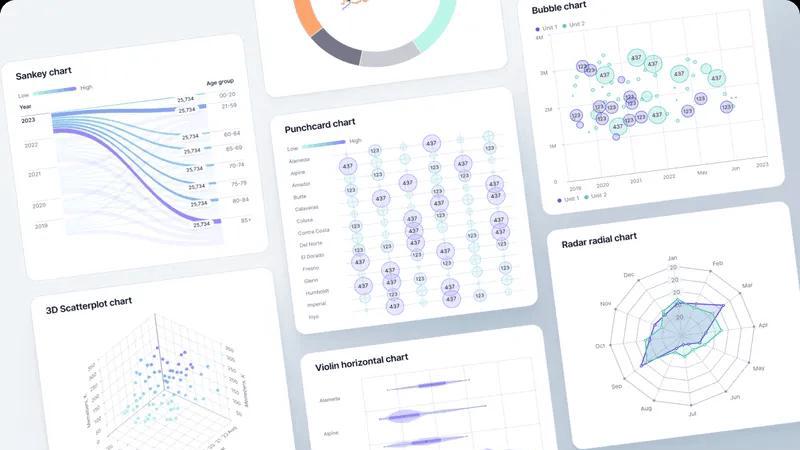
Fusedash screenshot

qtrl.ai

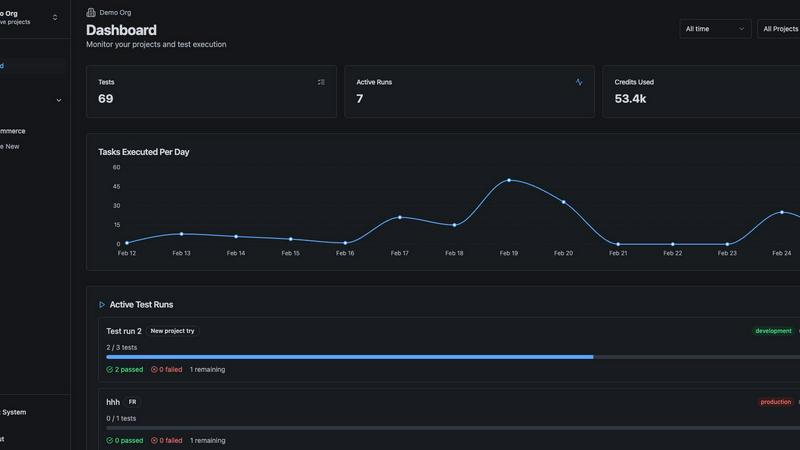
qtrl.ai screenshot

Feature Comparison

Fusedash

Flexible Views

Fusedash provides a versatile platform where users can create tailored dashboard views for different audiences. This feature enables stakeholders to visualize the data in formats that are most relevant to them—whether through dashboards, charts, maps, or narrative reports. By allowing teams to customize layouts, filters, and time ranges, Fusedash ensures that everyone sees the information that matters most without unnecessary back and forth.

AI Chart Generator

The AI Chart Generator feature allows users to quickly create clear and engaging visuals from their datasets, whether sourced from CSV files or APIs. In mere minutes, users can select the appropriate chart type, apply comparisons, and refine labels, ensuring that each chart effectively communicates the intended story. This tool not only accelerates visual creation but also facilitates the reuse of charts across different dashboards and reports.

Dashboard Software

Fusedash offers a comprehensive workspace for both dashboards and reports, integrating performance views with contextual storytelling. This feature ensures that users can monitor key performance indicators while also understanding the narratives behind the data. By providing a seamless blend of visuals and insights, teams can maintain alignment and reduce discrepancies in reporting.

AI Chat

The AI Chat functionality enables users to interact with their data in a conversational manner. By asking questions in plain language, users can swiftly explore breakdowns and receive intelligent suggestions for the best metrics and visualizations. This interactive feature not only makes data exploration more intuitive but also allows users to transform insights into shareable dashboard views quickly.

qtrl.ai

Enterprise-Grade Test Management

This feature provides a structured foundation for all quality activities. It offers a centralized repository for test cases, plans, and runs, ensuring everything is organized and accessible. Full traceability links tests back to requirements, and detailed audit trails are maintained for compliance. It supports both manual and automated workflows, giving teams the flexibility to manage quality in a way that fits their current process while preparing for more advanced automation.

Progressive AI Automation

Instead of a sudden, all-or-nothing approach, qtrl.ai introduces automation progressively. Teams begin by writing high-level test instructions in plain English. When ready, they can leverage AI to generate detailed test scripts from those instructions. The AI also suggests new tests based on coverage gaps. Crucially, every AI-generated step is fully reviewable and approvable by a human, maintaining oversight and ensuring tests align with team expectations before execution.

Autonomous QA Agents

These are intelligent executors that operate within defined rules. They can run tests on demand or continuously across multiple real browsers and environments, such as development, staging, and production. The agents execute instructions precisely, providing real browser interaction rather than simulations. They operate with permissioned autonomy levels, meaning their actions are transparent and controllable, never making unpredictable "black-box" decisions.

Adaptive Memory & Multi-Environment Execution

The platform builds a living knowledge base of your application by learning from exploration, test execution, and discovered issues. This context makes test generation smarter over time. Coupled with robust multi-environment execution, teams can run tests across any stage of the development lifecycle. The system securely manages per-environment variables and encrypted secrets, which are never exposed to the AI agent, ensuring security and consistency.

Use Cases

Fusedash

Marketing Performance Monitoring

Marketing teams can leverage Fusedash to create dashboards that track campaign performance across multiple channels. By visualizing engagement metrics and conversion rates in real-time, teams can make informed decisions about where to allocate resources and which strategies to optimize.

Financial Reporting

Finance departments can utilize Fusedash to compile comprehensive financial reports that integrate data from various sources. With the ability to create interactive charts and narrative insights, stakeholders can easily grasp the financial health of the organization and identify areas for improvement.

Sales Pipeline Management

Sales teams can benefit from Fusedash by utilizing its visualization capabilities to monitor sales pipelines. By visualizing key metrics such as lead conversion rates and sales forecasts, teams can identify trends and adjust their strategies to maximize revenue.

Operations Performance Analysis

Operations teams can use Fusedash to analyze performance metrics across different departments. By creating dashboards that visualize operational efficiency and productivity, teams can pinpoint areas for enhancement and align their efforts towards achieving organizational goals.

qtrl.ai

Scaling Beyond Manual Testing

For QA teams overwhelmed by repetitive manual test cycles, qtrl.ai provides a clear path forward. Teams can start by structuring their existing manual tests in the platform. Then, they can progressively automate the most tedious and high-value test cases using AI-generated scripts, freeing up human testers for more complex exploratory work and significantly increasing test coverage and execution speed.

Modernizing Legacy QA Workflows

Companies relying on outdated, siloed, or spreadsheet-based test management systems can consolidate their entire QA process into qtrl.ai. The platform brings test management, automation, and execution into a single, governed system. This modernization provides immediate benefits like real-time dashboards, audit trails, and traceability, while setting the stage for intelligent automation without a disruptive overhaul.

Governing Enterprise AI Testing

Enterprises with strict compliance, security, and governance requirements can safely adopt AI for testing with qtrl.ai. The platform's design ensures full visibility into all AI agent activities, maintains detailed audit trails, and keeps human oversight at the center. Teams can grant autonomy gradually, ensuring the AI operates within strict guardrails and corporate policies, making it a trustworthy solution for regulated industries.

Enhancing Product-Led Engineering

Product-led engineering teams that need to move fast without breaking things can integrate qtrl.ai into their CI/CD pipelines. The platform supports continuous quality feedback loops, allowing teams to run automated test suites against every build. AI agents can be tasked with verifying new features or conducting regression tests, providing rapid feedback and ensuring quality keeps pace with development velocity.

Overview

About Fusedash

Fusedash is an innovative AI-powered data visualization platform designed to streamline how teams analyze and present their data. By transforming connected data into insightful visual representations, Fusedash enables organizations to create decision-ready dashboards, interactive charts, detailed maps, and comprehensive narrative reports all within a single workspace. This unified approach eliminates the need to duplicate logic across various disconnected tools, driving consistency and efficiency. The core value proposition of Fusedash lies in its ability to allow users to define key metrics and KPIs just once, ensuring that everyone across the organization—from leadership to marketing to operations—accesses the same trusted data. This consistency helps teams move beyond tedious manual reporting cycles and conflicting narratives, empowering them to monitor real-time information while gaining insights into the reasons behind the data. With integrated AI features like natural language data chat and smart visualization assistance, Fusedash simplifies data exploration and reporting, turning raw data into a shared source of truth that fosters alignment and informed decision-making.

About qtrl.ai

qtrl.ai is a modern QA platform designed to help software development teams scale their quality assurance efforts effectively. At its core, it addresses a fundamental challenge: the trade-off between speed and control. Many teams are caught between slow, unscalable manual testing and complex, brittle traditional automation tools. qtrl.ai provides a structured solution by combining enterprise-grade test management with intelligent, trustworthy AI automation. This creates a centralized hub where teams can organize test cases, plan test runs, trace requirements, and track quality metrics through real-time dashboards. The platform is built for progression, allowing teams to start with simple manual test management and gradually introduce AI-powered automation as they become comfortable. This makes it an ideal fit for product-led engineering teams, QA groups moving beyond manual processes, companies modernizing legacy workflows, and enterprises that require strict compliance and audit trails. Ultimately, qtrl.ai's mission is to bridge the gap, offering a controlled, transparent path to faster and more intelligent quality assurance without the risks associated with unpredictable "black-box" AI solutions.

Frequently Asked Questions

Fusedash FAQ

What types of data can I connect to Fusedash?

Fusedash allows users to connect a variety of data sources, including CSV files, APIs, and public datasets. This flexibility enables users to consolidate their data into a unified platform for comprehensive analysis and reporting.

How does Fusedash ensure data consistency across reports?

Fusedash promotes data consistency by allowing users to define key metrics and KPIs once. These definitions can then be reused across all dashboards, charts, and reports, ensuring that every team in the organization is referencing the same reliable data.

Can I customize the visualizations in Fusedash?

Yes, Fusedash offers extensive customization options for visualizations. Users can adjust layouts, filters, and time ranges to create tailored views that meet the specific needs of different stakeholders.

Is Fusedash suitable for non-technical users?

Absolutely. Fusedash is designed to be user-friendly and accessible, even for those without technical backgrounds. With features like AI Chat and the AI Chart Generator, users can easily explore data and create visualizations without needing advanced technical skills.

qtrl.ai FAQ

How does qtrl.ai's AI differ from other "autonomous" testing tools?

qtrl.ai avoids a risky "black-box" approach. Its AI is designed for transparency and control. It does not make unpredictable decisions. Instead, it generates test steps from human instructions, which must be reviewed and approved before execution. You define the rules and level of autonomy. This progressive, governed model ensures the AI assists your team reliably and builds trust over time.

Can we use qtrl.ai if we are not ready for full AI automation?

Absolutely. qtrl.ai is built for progression. You can start by using it solely as a powerful test management platform to organize manual test cases, plans, and runs. When your team is ready, you can begin experimenting with AI-generated test creation for specific scenarios. The platform adapts to your pace, allowing you to increase automation gradually without any pressure to change your entire workflow overnight.

How does qtrl.ai handle security and sensitive data?

Security is a foundational principle. qtrl.ai offers enterprise-ready security measures. For automation, you can define environment-specific variables and encrypted secrets (like passwords or API keys). These secrets are never exposed to the AI agent during test execution. The platform provides full audit trails and is built to support compliance requirements, giving you control over your data and test assets.

Does qtrl.ai work with our existing development tools?

Yes, qtrl.ai is designed to integrate into real-world workflows. It offers requirements management integration, CI/CD pipeline support, and is built to work alongside your existing toolset. The goal is to enhance your current process, not replace it entirely. This allows teams to incorporate structured test management and intelligent automation without disrupting their established development lifecycle.

Alternatives

Fusedash Alternatives

Fusedash is an AI-powered data visualization platform that falls under the categories of Analytics & Data and Business Intelligence. It enables teams to transform their raw data into clear, actionable insights through decision-ready dashboards, interactive charts, and detailed reports, all within a unified workspace. Users often seek alternatives to Fusedash for various reasons, including pricing concerns, specific feature requirements, or compatibility with existing platforms. When choosing an alternative, it's essential to consider factors such as ease of use, the ability to integrate with other tools, the quality of customer support, and the overall flexibility of the platform to meet your team's unique data needs.

qtrl.ai Alternatives

qtrl.ai is a modern quality assurance platform in the automation and developer tools category. It helps software teams scale their testing efforts by combining structured test management with intelligent AI agents. This approach allows teams to maintain full control and governance while gradually introducing automation. Users often explore alternatives for various reasons. Common considerations include budget constraints, the need for specific features not offered, or a requirement to integrate with a different set of existing development tools. The specific needs of a team's workflow and application stack are also key factors. When evaluating any alternative, it's wise to look at the core capabilities. Consider the balance between manual test organization and automated execution. Assess how the tool handles test maintenance and reporting. Finally, evaluate the level of control and transparency the platform offers, especially when it involves AI-driven features.

Continue exploring