Dubvid vs Speechable
Side-by-side comparison to help you choose the right product.

Dubvid
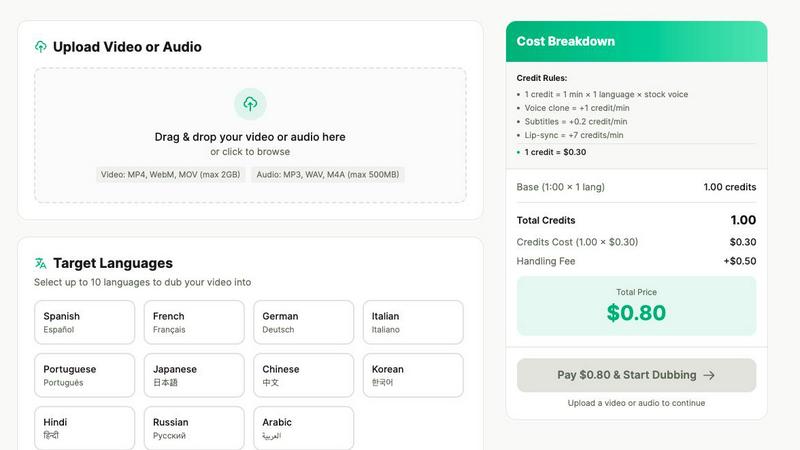
Dubvid dubs your audio and video into multiple languages with natural voices and optional lip-sync.
Last updated: February 27, 2026

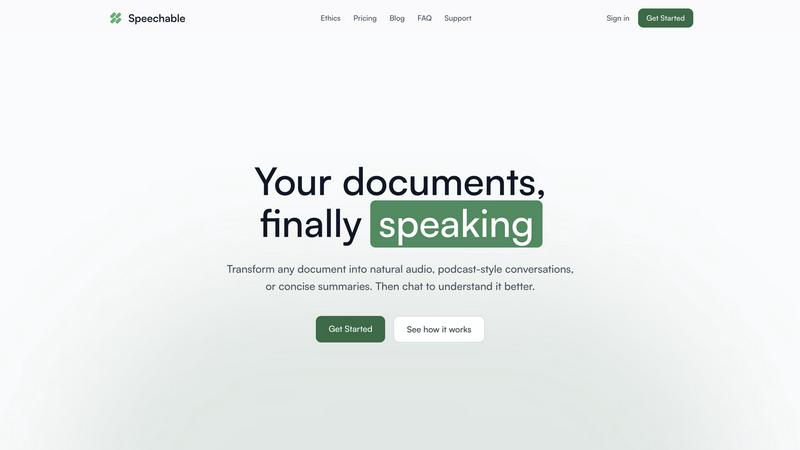
Transform documents into engaging audio, podcasts, or lectures for active learning and deeper understanding on the go.
Last updated: February 28, 2026
Visual Comparison
Dubvid
Speechable
Feature Comparison
Dubvid
Multi-Language Dubbing
Dubvid allows you to translate and dub your video or audio content into over ten different languages from a single upload. You simply select your desired target languages from a list, and the platform's AI handles the translation and voice generation automatically. This feature is designed to maximize your potential audience reach by making your content accessible to viewers worldwide without creating separate videos for each language group.
Natural AI Voice Selection
The platform uses advanced text-to-speech technology to generate the dubbed audio. You can choose from a library of stock AI voices that are designed to sound natural, with appropriate tone, pacing, and emotional inflection. This ensures the translated dialogue does not sound robotic or disconnected, maintaining engagement and clarity for the viewer in the new language.
Optional Lip-Sync Technology
For videos where the speaker is visible, such as tutorials or talking-head presentations, Dubvid offers an optional premium lip-sync feature. This technology adjusts the timing and movement of the dubbed audio to better match the speaker's mouth movements on screen. This adds a significant layer of realism to the dubbed content, making it more professional and immersive for the audience.
Simple Credit-Based System
Dubvid operates on a transparent, pay-as-you-go pricing model using credits. One credit covers dubbing one minute of content into one language using a standard stock voice. Additional features like voice cloning, subtitles, and lip-sync cost extra credits per minute. This system is foundational because it allows users to pay only for what they use, with no subscriptions or long-term commitments, making professional dubbing financially accessible.
Speechable
Podcast Mode
Podcast mode transforms your document into a dynamic two-voice conversation, allowing you to choose the duration of playback—5, 10, or 15 minutes—and select your preferred language. This feature makes learning feel more like a dialogue rather than a monologue, enhancing understanding and retention.
Lecture Mode
Lecture mode presents complex ideas in a clear and straightforward manner, mimicking the style of TED talks. This feature is particularly useful for users who seek to grasp intricate subjects quickly and effectively, making it easier to absorb important information.
Eco Mode
Eco mode operates locally within your browser, which means it does not rely on cloud services. This results in up to 20 times less energy consumption compared to traditional cloud-based text-to-speech solutions. Additionally, it offers unlimited playback without any credits required, making it a sustainable choice for users.
Interactive Chat
The interactive chat feature allows users to engage with their documents by asking questions, either by typing or speaking. This functionality facilitates active learning, enabling users to clarify doubts or explore specific topics in depth, transforming passive listening into an engaging dialogue.
Use Cases
Dubvid
Content Creator Expansion
Individual creators on platforms like YouTube, Instagram, and TikTok can use Dubvid to dub their short-form videos, Reels, or Shorts into multiple languages. This directly multiplies their potential viewership and subscriber base by making content consumable for non-native speakers, leading to greater channel growth and audience engagement without recreating content from scratch.
Educational Course Localization
Educators and course creators can rapidly translate their lesson videos, tutorials, and webinars for students across the globe. By dubbing instructional content, they break down language barriers in learning, allowing them to sell courses to an international market and provide equal learning opportunities to a diverse, worldwide student body.
Business Support & Onboarding
Companies can localize their help center videos, product demos, and employee onboarding materials for different regional offices and customer bases. Providing support content in a user's native language reduces confusion, decreases support ticket volume, and improves the overall customer and employee experience, fostering better understanding and efficiency.
Podcast & Interview Accessibility
Podcasters and interviewers can repurpose their audio or video podcast episodes for new audiences by dubbing them into other languages. This allows them to expand their show's reach, attract international sponsors, and share conversations and ideas across cultural lines without the cost and effort of re-recording with multilingual hosts.
Speechable
On-the-Go Learning
Speechable is perfect for busy individuals who want to maximize productivity during commutes, workouts, or walks. By converting documents into audio formats, users can listen to essential content anytime and anywhere, making the most of their time.
Enhanced Study Sessions
Students can leverage Speechable to convert textbooks and lecture notes into audio summaries. This auditory approach can significantly aid comprehension and retention, especially for those who struggle with traditional reading methods.
Accessibility for Diverse Learners
Speechable is designed with accessibility in mind. Students with ADHD or dyslexia can benefit from its features, allowing them to interact with text in a more manageable and engaging manner, thus promoting equal learning opportunities.
Content Creation and Research
Researchers and content creators can use Speechable to turn lengthy articles or reports into concise audio formats. This not only saves time but also allows for easier dissemination of information, making it a valuable tool for professionals in various fields.
Overview
About Dubvid
Dubvid is a fundamental tool for making video and audio content understandable to people who speak different languages. At its core, it is an AI-powered platform that takes your original video or audio file and translates the speech into a new language using a synthetic voice. This process is called dubbing. The primary goal of Dubvid is to remove the traditional, complex barriers of dubbing, which typically require hiring voice actors, booking studio time, and managing lengthy editing projects. Instead, Dubvid provides a straightforward, web-based solution where creators, educators, and businesses can upload their media, select a target language, and receive a dubbed version in minutes. Its main value proposition is accessibility and speed, enabling anyone to scale their message internationally without specialized skills or a large budget. By focusing on a simple, credit-based pricing model and offering features like optional lip-synchronization, Dubvid serves as a foundational bridge over language barriers for a global digital audience.
About Speechable
Speechable is an innovative tool designed to transform text-based documents into engaging audio experiences. Whether you're dealing with PDFs, web articles, ebooks, or even photos of handwritten notes, Speechable cleanly extracts the main content while eliminating distractions like footnotes, citations, and ads. This makes your documents not only accessible but also enjoyable to listen to. The primary value proposition of Speechable lies in its ability to provide users with a more immersive and interactive learning experience. By utilizing natural-sounding AI voices, users can choose from various playback modes, including podcast-style conversations and TED-style lectures. Designed for everyone—from students to educators, and individuals with learning differences—Speechable aims to make learning accessible, engaging, and efficient. This tool supports users in enhancing their comprehension while maximizing productivity, making it an essential resource for anyone who consumes large amounts of written content.
Frequently Asked Questions
Dubvid FAQ
How does the free trial work?
The free trial offers 2 credits with no credit card required. This allows you to dub up to 60 seconds of your content (e.g., 1 minute into 1 language, or 30 seconds into 2 languages) to test the quality of the translation, voice output, and overall platform workflow before committing any funds.
What file formats and sizes does Dubvid support?
Dubvid supports common video and audio formats for upload, including MP4, MOV, WebM for video, and MP3 and WAV for audio. The maximum file size for upload is 500 megabytes, which accommodates a significant amount of high-quality content for processing.
What is the difference between stock voice and voice clone?
A stock voice is a pre-made, high-quality AI voice provided by Dubvid's system that you can select for your dubbing. Voice clone is a premium feature where you can create a synthetic replica of your own or a specific person's voice, which is then used for the dubbing to maintain brand consistency or personal connection.
How is the final cost for a project calculated?
The cost is calculated based on the total credits used. You start with a base of 1 credit per minute of audio dubbed per language. You then add credits for any premium features: +1 credit/min for voice clone, +0.2 credits/min for subtitles, and +7 credits/min for lip-sync. The total credits are multiplied by $0.30 per credit, and a fixed $0.50 handling fee is added per job.
Speechable FAQ
What file formats does Speechable support?
Speechable supports a variety of file formats, including PDFs, Word documents (.docx), ePubs, and web URLs, as well as photos of text. Users can easily drop their files or paste links, and Speechable will handle the conversion seamlessly.
How many voices are available?
Speechable boasts a selection of 52 natural-sounding AI voices across eight different languages. Users have the option to preview each voice and adjust playback speeds to suit their listening preferences, ensuring a personalized experience.
What is Eco mode?
Eco mode is a unique feature that allows Speechable to run text-to-speech processing locally on your device rather than in the cloud. This significantly reduces energy usage—up to 20 times less than traditional options—and provides unlimited playback without requiring credits.
Can I chat with my documents?
Yes, Speechable includes a chat feature that enables users to ask questions or request clarifications about their documents. This interaction mimics a conversation with the content, allowing for deeper understanding and exploration of the material.
Alternatives
Dubvid Alternatives
Dubvid is an AI-powered tool in the content creation category, specifically designed for video and audio dubbing. It translates and recreates voices in multiple languages, aiming to simplify the process of making content globally accessible without traditional studio resources. Users often explore alternatives for various practical reasons. These can include budget constraints, as pricing models differ, or a need for specific features like support for more languages or different audio editing tools. Others might seek software that integrates better with their existing workflow or platforms they use. When evaluating different dubbing solutions, consider a few core aspects. Look at the quality and naturalness of the AI voices, the range of languages offered, and the overall ease of use. Also, assess the cost relative to your project volume and check for important capabilities like lip-sync adjustment or data security practices.
Speechable Alternatives
Speechable is an innovative tool that transforms any document into audio formats such as podcasts and TED-style lectures. It falls within the Education & Learning and Speech & Voice categories, catering to users seeking to better absorb and understand written content through auditory means. Many users search for alternatives to Speechable due to varying needs, such as pricing concerns, specific feature requirements, or compatibility with different platforms. When selecting an alternative, it is crucial to consider factors like the range of features offered, ease of use, accessibility options, and whether the solution aligns with your learning preferences. Additionally, evaluating pricing structure and sustainability can help ensure that the chosen tool meets both your budget and environmental considerations.