
CloneUI vs Postproxy
Side-by-side comparison to help you choose the right product.

CloneUI
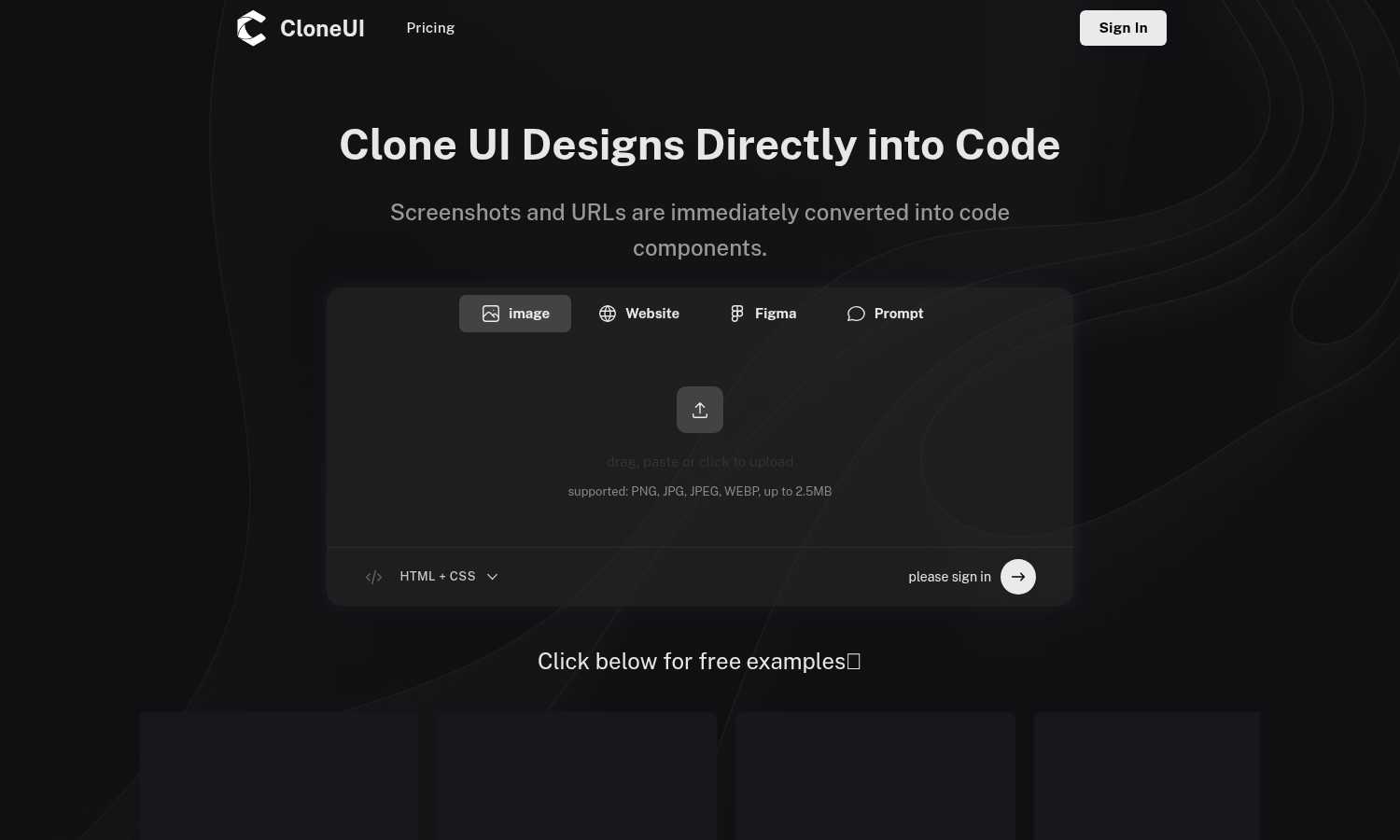
CloneUI instantly converts website screenshots and URLs into clean, production-ready HTML, CSS, and React code.
Last updated: March 1, 2026

Postproxy
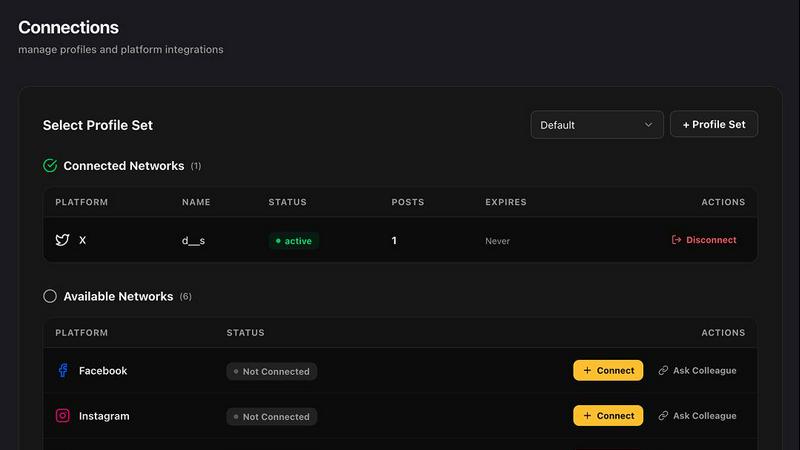
Postproxy simplifies social media publishing by unifying multiple platforms into one reliable API for seamless.
Last updated: February 26, 2026
Visual Comparison
CloneUI
Postproxy
Feature Comparison
CloneUI
Screenshot to Code Conversion
This feature allows you to transform a static image of any website or design mockup into functional code. Simply upload a screenshot in formats like PNG or JPG, and CloneUI's AI will analyze the visual elements, recognizing components and their spatial relationships. It then generates clean, well-structured HTML and CSS that replicates the design. This is ideal for when you have a visual reference but no direct access to the website's source code or a design file, providing a quick starting point for development.
URL to Code Cloning
With this capability, you can generate code by simply pasting the URL of any live website. CloneUI will fetch the page, analyze its rendered structure, and produce a code clone. This is incredibly useful for understanding how a particular site is built, creating a legal starting template for a new project inspired by an existing design, or rapidly prototyping based on a live reference. It streamlines the process of deconstructing and learning from existing web implementations.
Framework-Specific Export
CloneUI provides flexibility by allowing you to export the generated code into your preferred development framework. You are not locked into one output format. With one click, you can choose to receive your code as standard HTML and CSS, or as component-based code for modern JavaScript frameworks like React or Vue.js. This ensures the generated code can be directly integrated into your existing project's architecture without significant refactoring.
Intelligent Component Recognition
The AI at the heart of CloneUI does more than just copy pixels; it intelligently maps visual elements to their corresponding code components. It identifies common UI patterns such as navigation bars, hero sections, cards, buttons, and forms. This recognition allows the tool to generate semantic and logical code structure, making the output more maintainable and easier for developers to understand and extend compared to a simple, non-semantic HTML dump.
Postproxy
Unified API
The unified API provided by Postproxy allows users to publish content across multiple social media platforms with a single request. This eliminates the need to manage separate integrations, simplifying the publishing process and reducing development time.
Automatic Content Adaptation
Postproxy automatically transforms content to meet the specific requirements of each platform, including format conversion and compliance with media limits. This ensures that posts appear correctly regardless of where they are published, saving time and reducing errors.
Enhanced Delivery Guarantees
With built-in delivery guarantees, Postproxy manages retries, rate limits, and quota awareness, ensuring that your content is published reliably. Users receive clear reporting on the state of each publish request, which helps in monitoring performance and addressing any issues.
Simplified Authentication Management
Postproxy streamlines the authentication process by handling OAuth flows, token storage, and automatic refreshes. This means users do not have to worry about manually managing access tokens or dealing with platform-specific authentication hurdles.
Use Cases
CloneUI
Rapid Prototyping for Developers
Developers can use CloneUI to quickly build functional prototypes from design inspiration or client mockups. Instead of spending hours coding a layout from scratch, they can input a screenshot or URL and receive a working code base in seconds. This prototype can then be immediately tested, iterated upon, and connected to backend services, dramatically accelerating the initial phases of the development cycle and allowing for faster client feedback.
Learning and Educational Tool
For students and new developers, CloneUI serves as an excellent educational resource. By inputting the URL of a well-designed website, a learner can instantly see the code that constructs it. This reverse-engineering process helps demystify how visual designs translate into HTML structures and CSS rules, providing practical, real-world examples to study and learn from, which is a foundational step in mastering web development.
Design to Development Handoff
Designers and developers often face friction during the handoff process. CloneUI streamlines this by allowing designers to provide a screenshot of their Figma, Adobe XD, or Sketch design. The developer can then feed this image into CloneUI to generate a foundational code structure. This creates a more accurate and efficient starting point than manual interpretation, reducing misunderstandings and ensuring the final product aligns closely with the original design vision.
Competitive Analysis and Inspiration
When you find a website with an appealing feature or layout, CloneUI helps you understand its construction for competitive analysis or personal inspiration. By cloning the URL, you can examine the code behind specific interactions or responsive behaviors. This allows developers and agencies to ethically deconstruct and learn from industry best practices, informing their own design and development decisions without starting from a blank slate.
Postproxy
Streamlined Content Publishing
Businesses that produce frequent content for multiple social media channels can use Postproxy to automate their publishing workflow. This ensures consistent messaging across platforms while minimizing the risk of errors.
Integrated Marketing Campaigns
Marketing teams can leverage Postproxy to launch integrated campaigns that require simultaneous posting across various social networks. This enables cohesive branding and messaging, driving better engagement and outreach.
Automation with LLMs
Teams utilizing large language models (LLMs) for content generation can integrate Postproxy into their automated workflows. This allows for the seamless publishing of AI-generated content, ensuring it reaches the desired audience without additional manual intervention.
Efficient Social Media Management
Agencies managing multiple clients can benefit from Postproxy by simplifying the management of their clients' social accounts. By centralizing the publishing process, agencies can save time and focus more on strategy and creativity.
Overview
About CloneUI
CloneUI is a foundational tool designed to bridge the gap between visual design and functional code. At its core, it is an AI-powered web application that converts visual inputs into clean, production-ready code. This process addresses a fundamental and often time-consuming step in web development: translating a design concept into a working prototype. The tool operates by accepting two primary inputs: a screenshot image of a website or design, or a direct URL to an existing webpage. Its sophisticated AI then analyzes the visual structure, identifies components like buttons, headers, and layouts, and generates the corresponding HTML, CSS, and JavaScript code. This output is not just a static copy; it is responsive, semantic, and structured for real-world use.
CloneUI is built for a wide audience, from beginners learning web development to experienced developers and designers seeking efficiency. Its main value proposition is profound simplicity and speed. It eliminates the tedious manual work of inspecting elements and writing boilerplate code from scratch, allowing users to focus on higher-level tasks like customization, functionality, and creativity. By supporting popular frameworks like React and Vue, alongside standard HTML/CSS, it integrates seamlessly into modern development workflows. Ultimately, CloneUI empowers users to bring digital ideas to life faster, making the foundational step of creating code from a design effortless and accessible to all.
About Postproxy
Postproxy is a powerful API designed to simplify social media publishing across multiple platforms, including Instagram, Facebook, YouTube, LinkedIn, and X. By offering a unified solution, Postproxy alleviates the challenges associated with managing separate integrations for each social media platform. It automates essential tasks such as OAuth authentication, rate limit handling, content adaptation, and analytics, allowing developers and automation specialists to focus on creating and publishing content without getting bogged down by platform-specific requirements. Ideal for users of automation tools like n8n and Zapier, Postproxy turns social media publishing into a streamlined, predictable infrastructure. With a free plan available, users can scale their operations as needed, making it accessible for both startups and large enterprises. The platform is designed to eliminate the chaos of traditional publishing workflows, offering a reliable endpoint for publishing content at scale.
Frequently Asked Questions
CloneUI FAQ
Which input formats are compatible with CloneUI?
CloneUI accepts visual inputs in two primary ways. You can upload screenshot image files in common formats including PNG, JPG, JPEG, and WEBP. Alternatively, you can directly input the URL of any publicly accessible website. The tool analyzes these inputs to generate the corresponding code, making it versatile for both static mockups and live web pages.
How is the code generated?
The code is generated using sophisticated artificial intelligence. When you provide an image or URL, CloneUI's AI engine analyzes the visual composition, identifying UI components, layouts, colors, and typography. It then maps these visual elements to their appropriate HTML tags and CSS styling rules, constructing a clean, semantic, and responsive code structure that mirrors the original design as closely as possible.
What frameworks does CloneUI support?
CloneUI provides export options for several popular web development frameworks to suit different project needs. You can choose to export the generated code as standard, plain HTML and CSS. For more advanced, component-based projects, it also supports exporting to React and Vue.js, allowing you to seamlessly integrate the cloned UI into your existing modern development stack.
Is the generated code suitable for production use?
The code generated by CloneUI is clean, responsive, and production-ready in terms of its structure and styling. It provides an excellent, pixel-perfect foundation. However, like any generated code, it is intended as a starting point. Developers should review, customize, and integrate it with their application's logic, state management, accessibility features, and performance optimizations to meet specific production standards and requirements.
Postproxy FAQ
What platforms does Postproxy support?
Postproxy currently supports publishing to major social media platforms, including Instagram, Facebook, YouTube, LinkedIn, and X. This wide array of support allows users to manage their social media presence from a single API.
How does Postproxy handle errors during publishing?
Postproxy is designed to manage operational failures by implementing automatic retries and handling rate limits and quotas. Users receive clear reports on publish states, so they know exactly what succeeded or failed without manual checks.
Is there a free plan available for Postproxy?
Yes, Postproxy offers a free plan that allows users to explore the platform's functionalities. As your needs grow, you can scale up to paid plans without the hassle of starting from scratch.
How do I get started with Postproxy?
To get started with Postproxy, create an account on their website and generate an API key. After linking your social media accounts, you can begin publishing content through the unified API, streamlining your social media management.
Alternatives
CloneUI Alternatives
CloneUI is a tool in the design-to-code and low-code development category. It uses AI to convert website screenshots, URLs, or Figma designs into production-ready code for frameworks like React and Vue. This process helps developers and designers save significant time on manual coding tasks. Users often explore alternatives for various practical reasons. These can include budget constraints, as pricing models differ. Others may need specific features not offered, like support for a different design tool or code framework. Platform compatibility, such as a desktop application versus a web service, can also be a deciding factor. When evaluating other options, consider your primary workflow. Identify if you need integration with your existing design software or a particular code output. Assess the accuracy and cleanliness of the generated code, as this impacts future development. Finally, compare the overall value against the cost to find the best fit for your projects.
Postproxy Alternatives
Postproxy is a powerful tool designed to simplify social media publishing by providing a unified API for platforms like Instagram, Facebook, YouTube, LinkedIn, and X. It falls under the category of design tools, specifically tailored for developers and automators who seek to streamline content distribution across multiple social networks. Users often explore alternatives due to various factors such as pricing structures, feature sets, specific platform needs, or the desire for more customizable solutions. When searching for an alternative to Postproxy, it's essential to consider several criteria. Look for options that offer robust API functionality, ease of integration with existing tools, scalability as your needs grow, and a strong support system. Additionally, assessing the pricing models and whether they align with your budget can help in making an informed decision.