OGimagen vs Prefactor
Side-by-side comparison to help you choose the right product.

OGImagen is an AI tool that instantly creates and delivers optimized Open Graph images and meta tags for all major social platforms.
Last updated: March 11, 2026

Prefactor
Prefactor is the essential control plane for governing AI agents in regulated environments.
Last updated: March 1, 2026
Visual Comparison
OGimagen
Prefactor
Feature Comparison
OGimagen
AI-Powered Image Generation
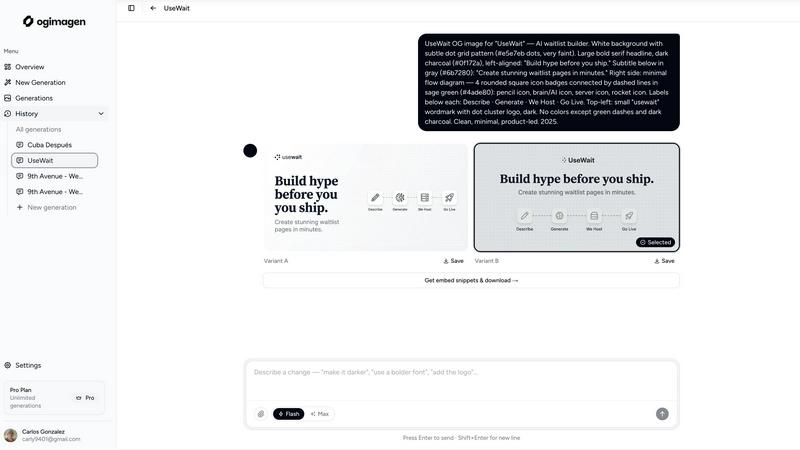
At its core, OGimagen uses artificial intelligence to transform your text content into visually appealing social card images. You simply enter your desired title and description, and the AI generates two unique design variants. This process eliminates the need for graphic design expertise or manual template editing, providing professional results based on fundamental design principles. The AI ensures each image is balanced, readable, and aesthetically suitable for public sharing.
Multi-Platform Format Optimization
OGimagen understands that each social platform has slightly different technical requirements for optimal image display. Instead of creating one image and hoping it works everywhere, the tool automatically generates and exports three perfectly optimized versions from a single generation: one for OG/General use (1200x630px), one for Twitter Cards (1200x600px), and one for LinkedIn (1200x627px). This foundational feature guarantees your previews will look pixel-perfect whether shared on Facebook, X, Slack, Discord, WhatsApp, or LinkedIn.
Framework-Specific Meta Tag Snippets
Creating the image is only half the battle; you must also correctly embed the code on your website. OGimagen provides ready-to-paste meta tag snippets tailored for your specific web framework. Free users receive standard HTML. Pro users unlock snippets for modern frameworks like Next.js (App and Pages Router), Astro, SvelteKit, and Remix. This feature educates users on proper implementation and ensures technical correctness, saving time and preventing common embedding errors.
MCP (Model Context Protocol) Integration
For developers seeking ultimate workflow efficiency, OGimagen Pro offers integration with the Model Context Protocol. This allows you to generate images, list previous generations, and copy embed snippets directly from within your code editor or AI coding assistant like Claude Code, Cursor, or Windsurf. It brings the foundational task of OG image creation into the development environment, removing the need to switch contexts to a web browser and streamlining the entire shipping process.
Prefactor
Real-Time Agent Monitoring
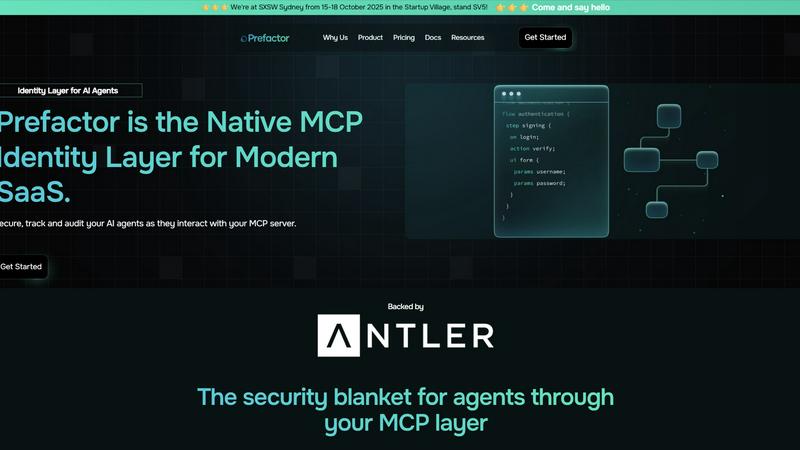
This feature provides a live operational dashboard where you can monitor every AI agent in your fleet. You can see which agents are active, idle, or experiencing issues, what tools and data sources they are currently accessing, and where failures are emerging in real-time. This complete visibility allows teams to identify and address potential incidents before they cascade, turning agent operations from a black box into a transparent, manageable process.
Compliance-Ready Audit Trails
Prefactor transforms raw technical agent actions into clear, business-language audit logs. Instead of teams struggling to decipher cryptic API calls for compliance officers, this feature automatically translates agent activity into understandable reports. It answers the critical question of "what did the agent do and why?" with clarity, enabling the generation of audit-ready reports in minutes instead of weeks and ensuring all actions can withstand regulatory scrutiny.
Identity-First Access Control
This foundational feature applies proven human identity governance principles to AI agents. Every agent is issued a unique identity, and every action it takes is authenticated. Permissions to access specific tools, data, or systems are scoped precisely through policy-as-code. This ensures that agents operate within strict, predefined boundaries, preventing unauthorized access and creating a secure, principle-of-least-privilege environment for autonomous operations.
Emergency Kill Switches
For ultimate operational control, Prefactor includes the ability to immediately halt agent activity across your entire infrastructure. If an agent begins behaving unexpectedly or accessing resources in an unauthorized manner, administrators can trigger a kill switch to stop it instantly. This provides a critical safety mechanism, allowing teams to contain potential issues rapidly and maintain overall system integrity and security.
Use Cases
OGimagen
Blog and Content Marketing
Every time a new blog post is published, it needs a compelling social preview image to attract readers when shared. OGimagen allows content marketers and bloggers to quickly generate a unique, on-brand image for each article. By consistently using professional OG images, they can significantly increase the click-through rate from social media feeds to their website, which is a basic goal of any content strategy.
SaaS Product Launches and Updates
When a software company announces a new feature or product launch, sharing links on social media and community platforms is crucial. A generic or missing preview image looks unprofessional. Using OGimagen, the team can instantly create a polished social card that highlights the launch name and key benefit, ensuring the shared link conveys credibility and excitement, which are fundamental for driving interest and sign-ups.
Developer Workflow Integration
Developers building websites or applications need to implement OG images as a standard part of their process. With OGimagen's MCP integration, a developer can stay in their editor, generate an image via a command, and immediately insert the correct framework-specific meta tags into their codebase. This use case turns a disruptive, manual task into a fast, integrated step within the foundational development workflow.
E-commerce and Product Sharing
Online stores often share links to specific product pages on social platforms. A preview image showing the product name, a short description, and a brand color is far more effective than a blank square. Store owners can use OGimagen to create attractive cards for featured products or sales events, making shared links visually appealing and more likely to be clicked by potential customers browsing their feeds.
Prefactor
Governance for Regulated Financial Services
A bank wants to deploy AI agents to automate customer service inquiries and internal report generation. Prefactor provides the necessary audit trails, identity management, and real-time monitoring to satisfy strict financial regulators. Compliance teams can generate clear reports on every agent interaction, ensuring adherence to policies and providing the transparency needed for approval to move from pilot to full production.
Secure AI Operations in Healthcare
A healthcare technology company is building agents to help process and anonymize patient data for research. Using Prefactor, they can enforce strict access controls, ensuring agents only interact with approved, de-identified datasets. Every access attempt and data processing step is logged in a compliant audit trail, protecting patient privacy and meeting HIPAA and other healthcare regulations.
Managing Autonomous Systems in Mining & Resources
A mining company employs AI agents to monitor equipment sensors and optimize logistics. Prefactor gives their remote operations center a single pane of glass to see what all agents are doing in real-time. They can track agent decisions, ensure they are operating within safety and operational protocols, and instantly deactivate any agent if it suggests an action outside of predefined safe parameters.
Scaling Multi-Agent AI Pilots to Production
An enterprise has multiple teams running independent AI agent pilots using frameworks like LangChain and CrewAI. Prefactor integrates with these frameworks to bring all agents under a unified governance model. This allows leadership to gain consolidated visibility, compare performance and cost, enforce standardized security policies, and systematically promote successful pilots to governed production deployments at scale.
Overview
About OGimagen
OGimagen is a foundational tool designed to solve a specific, essential problem for anyone who publishes content on the web: creating professional Open Graph images. These are the preview images that appear when a link is shared on social platforms like Facebook, LinkedIn, and X (Twitter). Without a proper OG image, a shared link looks plain, unprofessional, and often fails to attract clicks. OGimagen simplifies this critical task by using artificial intelligence to generate beautiful, production-ready social card images in seconds. It is built for developers, content creators, marketers, and business owners who need to ensure their shared links look polished and engaging without requiring design skills or complex software. The core value proposition is straightforward: you provide a title, description, and basic branding preferences, and OGimagen's AI handles the design, delivering perfectly formatted images for every major platform along with the correct meta tag code to embed on your site. This back-to-basics approach removes friction from a mandatory web development task, directly helping to improve click-through rates and brand presentation with minimal effort.
About Prefactor
Prefactor is the foundational control plane for managing AI agents in production environments. In essence, it provides the critical governance layer that is often missing when autonomous AI systems move from proof-of-concept demonstrations to real-world deployment. The core problem it solves is one of visibility and control: while individual AI agents can be built to perform tasks, organizations lack a centralized system to see what these agents are doing, control what they can access, and prove their actions for security and compliance reviews. Prefactor addresses this by equipping every AI agent with a unique, auditable identity and placing a comprehensive management dashboard in the hands of engineering, security, and compliance teams. It is specifically engineered for regulated industries like banking, healthcare, and mining, where "moving fast and breaking things" is not an option and every action must be accountable. By aligning all stakeholders around a single source of truth for agent activity, Prefactor enables businesses to scale their AI agent deployments confidently, minimizing operational and regulatory risk while maximizing the return on their AI investments.
Frequently Asked Questions
OGimagen FAQ
What exactly is an OG image?
An OG image, or Open Graph image, is the preview picture that automatically appears when you paste a website link into social media platforms, messaging apps, or other supported services. It is defined by specific meta tags in the webpage's HTML code. This image is fundamental because it provides a visual context for the link, greatly influencing whether someone decides to click on it. A good OG image acts as a miniature billboard for your content.
What's the difference between Starter, Growth, and Pro plans?
The plans are structured to serve different foundational needs. The Starter and Growth plans are one-time purchases for a set number of generations, ideal for projects with a finite need. The Pro plan is a monthly subscription for ongoing use, offering more generations per month and key workflow features. The primary functional difference is that Pro includes permanent CDN hosting for your images and MCP integration for developer workflows, while the one-time plans include hosting for a limited period (45 or 90 days).
What happens when CDN hosting expires on a one-time plan?
When the CDN (Content Delivery Network) hosting period expires on a Starter (45-day) or Growth (90-day) plan, the generated images will no longer be served from the OGimagen CDN. This means the image URLs in your meta tags will return an error, and your social previews will break. To maintain your links, you must download the image files before hosting expires and re-upload them to your own permanent web server or storage, updating the image URLs in your meta tags accordingly.
Which frameworks are supported for meta tag snippets?
OGimagen provides code snippets for the most common web frameworks to ensure correct implementation. All users get a plain HTML snippet, which is the fundamental building block. Pro users unlock framework-specific snippets for Next.js (using both the App Router and Pages Router syntax), Astro, SvelteKit, and Remix. These snippets show you the exact code structure and placement required for each framework, serving as an educational guide for proper setup.
Prefactor FAQ
What is an AI Agent Control Plane?
An AI Agent Control Plane is a centralized management system for autonomous AI software. Think of it like air traffic control for AI. While individual agents (the "planes") are built to perform tasks, the control plane is what provides visibility into where they all are, manages their permissions and identities, logs their activities, and ensures they operate safely and in compliance with organizational rules without colliding or going off course.
How does Prefactor work with existing AI agent frameworks?
Prefactor is designed to integrate seamlessly with popular agent frameworks such as LangChain, CrewAI, and AutoGen, as well as custom-built agents. It typically connects via SDKs or by interfacing with the Model Context Protocol (MCP), which is becoming a standard for agent tool access. This allows you to add Prefactor's governance layer without rebuilding your agents, enabling deployment in hours rather than months.
Who within an organization uses Prefactor?
Prefactor serves multiple key stakeholders. Engineering and product teams use it to monitor agent health and performance. Security teams use it to enforce access policies and review audit logs. Compliance and legal teams rely on it to generate reports and verify adherence to regulations. Executive leadership uses the dashboard for overall visibility into AI operations and cost management.
Is Prefactor only for large, regulated enterprises?
While Prefactor's feature set is engineered to meet the stringent demands of large enterprises in regulated industries, its core value of providing visibility and control is fundamental for any organization moving AI agents beyond simple demos. Any team that needs to answer "what are my agents doing right now?" or ensure agents operate securely can benefit from its foundational governance infrastructure.
Alternatives
OGimagen Alternatives
OGimagen is an AI-powered tool in the developer tools category, specifically designed to generate Open Graph images. These are the preview images that appear when a website link is shared on social media platforms. The tool automates the creation of professional, production-ready social cards compatible with any web framework. Users often explore alternatives to a tool like OGimagen for several practical reasons. These can include budget constraints, as pricing models vary widely. Others may seek different feature sets, such as more granular design control, specific template libraries, or integration with their existing tech stack and hosting platform. The need for a self-hosted solution versus a cloud service is another common driver. When evaluating an alternative, focus on a few core criteria. Consider the balance between automation and creative control. Assess the quality and flexibility of the output images. Examine how easily the tool integrates into your current workflow and publishing pipeline. Finally, always weigh the cost against the value and time it saves for your specific use case.
Prefactor Alternatives
Prefactor is a governance and control platform for AI agents, specifically designed to manage security, compliance, and operations. It belongs to the category of AI infrastructure and management tools, acting as a foundational layer for teams deploying autonomous agents in business environments. Users often explore alternatives for various practical reasons. These can include budget constraints, the need for different or more specialized features, integration requirements with existing tech stacks, or a preference for a different deployment model such as open-source software. When evaluating any alternative, focus on core governance capabilities. Essential aspects to consider are robust identity management for agents, detailed audit trails for compliance, real-time activity monitoring, and clear policy enforcement mechanisms. The right solution should provide centralized visibility and control tailored to your industry's regulatory demands.