CCAPI vs Renderly
Side-by-side comparison to help you choose the right product.

CCAPI
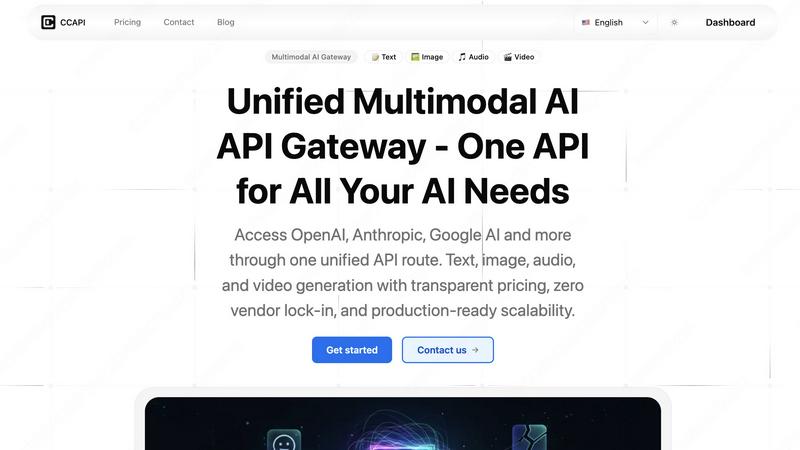
CCAPI is a unified AI gateway that ensures seamless access to multiple AI services for text, image, audio, and video.
Last updated: February 26, 2026

Renderly
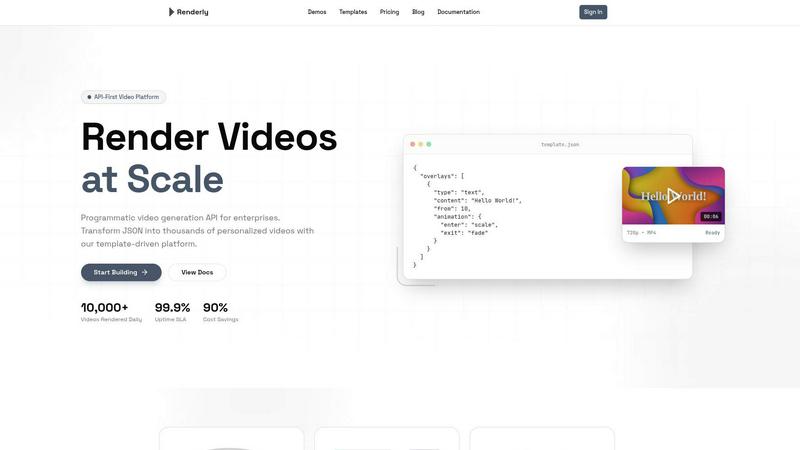
Renderly automates video production at scale, enabling you to generate thousands of personalized videos through a.
Last updated: February 26, 2026
Visual Comparison
CCAPI
Renderly
Feature Comparison
CCAPI
Unified API Access
CCAPI offers a single API endpoint that aggregates the capabilities of multiple AI providers like OpenAI, Anthropic, Google AI, and others. This means developers can utilize a variety of AI models for different tasks (text, image, audio, video) without needing to manage separate API integrations.
Smart Routing
The smart routing feature ensures that if one AI provider experiences downtime, CCAPI automatically reroutes requests to another operational provider. This auto-failover mechanism enables applications to maintain functionality without interruption, providing a robust and reliable service.
Instant Access and No Waitlist
With CCAPI, developers can start using the service immediately without having to join a waitlist. This instant API access is crucial for developers who need to get up and running quickly, allowing for faster deployment of AI-driven features in their applications.
Real-Time Usage Dashboard
Developers have access to a real-time usage dashboard that provides insights into costs, latency metrics, and success rates. This transparency allows for better budget management and performance optimization, ensuring developers know exactly where their resources are being utilized.
Renderly
API-First Architecture
Renderly boasts a RESTful API designed specifically for high-volume video generation. This architecture allows developers to seamlessly integrate video production capabilities into their applications, ensuring a smooth workflow from start to finish.
Template Management
With Renderly's centralized template library, users can easily manage video templates. The JSON-configurable templates support variable replacements for dynamic content, enabling the creation of personalized videos that resonate with specific audiences.
Scalable Infrastructure
Renderly's cloud-native platform is built to automatically scale according to the volume of rendering requests. This means whether you are producing one video or 100,000, Renderly can handle it all without compromising on performance or reliability.
Credit-Based Billing
Renderly offers a transparent pay-per-render pricing model, allowing users to pay only for what they render. This credit-based system also provides volume discounts, making it a cost-effective solution for enterprises looking to produce large quantities of video content.
Use Cases
CCAPI
Content Generation
Developers can leverage CCAPI to create high-quality content across multiple formats. Whether generating articles, social media posts, or marketing materials, the unified access to various AI models ensures that developers can produce engaging content quickly and efficiently.
Video Creation
With the ability to generate videos using models like Seedance 2.0 and Kling 3.0, CCAPI can be utilized in applications that require dynamic visual content. This can be particularly useful for marketing teams looking to create promotional videos or for educational platforms that need instructional content.
Chatbots and Virtual Assistants
CCAPI enables the development of sophisticated chatbots that can handle inquiries and provide information across different modalities. By integrating text, audio, and even video responses, businesses can enhance user interaction and satisfaction.
Multimodal AI Applications
Developers can build applications that require the integration of multiple AI modalities. For instance, an app that generates a video based on a text prompt or combines audio narration with visual content can be easily created using CCAPI's versatile capabilities.
Renderly
Personalized Marketing Videos
Businesses can utilize Renderly to create personalized marketing videos at scale. By leveraging customer data, companies can produce tailored content that speaks directly to individual preferences, increasing engagement and conversion rates.
Social Media Content Creation
Renderly enables marketers to generate bulk social media content effortlessly. Users can produce a large number of videos for campaigns across multiple platforms, ensuring consistent branding and messaging without the manual effort.
Data-Driven Motion Graphics
With Renderly, users can create data-driven motion graphics that dynamically visualize information. This is particularly useful for reports or presentations where complex data needs to be communicated clearly and engagingly.
Automated Video Production for Events
Event organizers can use Renderly to automate the production of highlight reels and promotional videos. By integrating real-time event data, the platform can generate captivating videos that showcase events while they are still ongoing.
Overview
About CCAPI
CCAPI is a revolutionary API designed to provide unified access to multiple leading AI models, including those from OpenAI, Anthropic, Google AI, and more. This platform is tailored for developers who seek an efficient and seamless way to integrate multimodal AI capabilities into their applications. By aggregating various AI providers under a single endpoint, CCAPI enables developers to generate text, images, audio, and video with minimal effort. The main value proposition lies in its smart routing feature, which automatically switches between providers in the event of a failure, ensuring continuous availability and reliability. With a 99.9% success rate and 24/7 monitoring, CCAPI empowers developers to deliver high-quality AI experiences without worrying about downtime or complex integrations.
About Renderly
Renderly is a cutting-edge video infrastructure platform designed to revolutionize how developers and creators produce video content. By automating video production at scale, Renderly caters to a wide array of users, including enterprises, marketers, and content creators who need to generate high volumes of personalized videos quickly and efficiently. With Renderly, users can leverage a programmatic video generation API that transforms JSON data into thousands of unique videos. Whether the requirement is for personalized marketing materials, bulk social media posts, or data-driven animations, Renderly streamlines the entire video creation process. Its user-friendly interface, robust API, and template-driven approach enable users to focus on creativity while the platform handles the technical complexities of video rendering. As a result, Renderly not only enhances production efficiency but also significantly reduces costs, allowing businesses to scale their video strategies effectively.
Frequently Asked Questions
CCAPI FAQ
What types of AI models can I access through CCAPI?
CCAPI provides access to a wide array of AI models from top providers, including OpenAI, Anthropic, Google AI, and more, covering text, image, audio, and video generation.
How does the smart routing feature work?
Smart routing automatically directs requests to the most suitable AI provider based on availability. If one provider fails to respond, CCAPI switches to another operational provider to ensure uninterrupted service.
Is there a waitlist to access CCAPI?
No, CCAPI offers instant access to its API, allowing developers to start using the services immediately without joining a waitlist.
How can I monitor my API usage and costs?
Developers can utilize the real-time usage dashboard provided by CCAPI, which tracks costs, latency, and success rates, giving clear visibility into resource utilization and performance.
Renderly FAQ
What types of videos can I create with Renderly?
Renderly allows users to create a wide range of videos including personalized marketing videos, social media content, data visualizations, and much more. The platform's flexibility supports various formats and styles.
How does Renderly ensure video quality?
Renderly employs advanced rendering technology that guarantees high-quality output. Users can select desired resolutions, such as 720p or higher, ensuring that videos meet professional standards for any application.
Is there a limit to how many videos I can render?
No, Renderly is designed to scale automatically. Whether you need to render one video or thousands, the platform can handle high-volume requests without any performance degradation.
What security measures does Renderly have in place?
Renderly is committed to enterprise-grade security. The platform is SOC 2 compliant and includes data encryption, access controls, and audit logging to ensure the protection of sensitive information throughout the video production process.
Alternatives
CCAPI Alternatives
CCAPI, or the Unified Multimodal AI API Gateway, is a comprehensive solution that provides developers with a single access point to a variety of AI services, including text, image, audio, and video generation. It simplifies the integration process by unifying multiple AI capabilities into one platform, appealing to those in the development category who seek efficiency and versatility in their projects. Users often seek alternatives to CCAPI for various reasons, including pricing structures, specific feature sets, or compatibility with existing platforms. Different projects may require distinct functionalities or a more tailored approach to AI integration, prompting developers to explore options that better align with their unique needs. When choosing an alternative, it is essential to consider factors like ease of use, the range of AI services offered, scalability, and support for various programming languages.
Renderly Alternatives
Renderly is a video infrastructure platform designed to automate video production using code. It belongs to the category of video content creation tools, providing developers and creators the ability to generate a high volume of videos quickly and efficiently. Users often seek alternatives to Renderly for various reasons, including pricing considerations, specific feature requirements, and compatibility with their existing platforms. When evaluating alternatives, it is essential to consider the ease of use, scalability, and the specific functionalities that align with your video production needs. Look for options that provide robust APIs, user-friendly interfaces, and the ability to handle bulk video generation to ensure a smooth transition and effective video automation.